How Red Light Therapy Compares to Blue Light Therapy
You know that feeling when you’re scrolling through skincare treatments online at 11 PM, squinting at your phone screen, trying to figure out why some devices glow red while others pulse with an eerie blue light? Yeah, I’ve been there too. One minute you’re watching TikTok, the next you’re deep in a rabbit hole wondering if you need to add yet another gadget to your already-crowded bathroom counter.
Here’s the thing – and this might surprise you – those colored lights aren’t just fancy marketing gimmicks designed to separate you from your hard-earned cash. There’s actually some pretty solid science behind why certain wavelengths of light can do remarkable things for your skin, your mood, and even your metabolism. But here’s what nobody talks about: red and blue light therapy work in completely different ways, targeting entirely different problems.
It’s kind of like comparing a gentle massage to a targeted workout. Both can be beneficial, but you wouldn’t use them for the same reasons, right?
I get it though – the whole light therapy world feels overwhelming. Walk into any wellness clinic these days and you’re bombarded with panels that look like they belong on a spaceship, each promising to be the answer to whatever’s bothering you. Red light for this, blue light for that, and somewhere in between you’re wondering if you’re about to drop serious money on something that’s basically a glorified lamp.
The truth is, understanding the difference between red and blue light therapy isn’t just about being a savvy consumer – though that’s definitely part of it. If you’re dealing with stubborn acne that won’t quit, persistent pain that’s affecting your daily life, or you’re exploring every possible tool to support your weight loss goals (and let’s be honest, who isn’t these days?), knowing which type of light therapy actually addresses your specific concerns could save you months of frustration and hundreds of dollars.
Here’s what I’ve learned after years of digging into the research and talking to countless patients: red light therapy is like that reliable friend who helps you recover after a tough day – it’s all about healing, reducing inflammation, and getting your cells to work more efficiently. Blue light therapy? That’s your precision-focused friend who tackles specific problems head-on, particularly when it comes to acne-causing bacteria and certain mood disorders.
But – and this is important – they’re not interchangeable. Using blue light when you need red light is like trying to hammer in a screw. It might work eventually, but you’re probably going to be frustrated with the results.
What really gets me excited about this topic is how these therapies are becoming more accessible. You don’t need to visit a fancy clinic anymore (though professional treatments definitely have their place). There are home devices that actually work – when you know what to look for. The trick is understanding what you’re trying to achieve and which wavelength is going to get you there.
Actually, that reminds me of a conversation I had with a patient last week. She’d been using a blue light device for months, religiously following the instructions, wondering why her joint pain wasn’t improving. Turns out, she needed red light therapy – blue light was never going to address inflammation the way she needed. Once we switched her approach… well, let’s just say she’s much happier now.
Over the next few minutes, we’re going to break down exactly how these two powerhouse therapies work differently in your body. I’ll walk you through the specific conditions each one targets, help you figure out which might be right for your situation, and yes – we’ll talk about whether those home devices are worth it or if you should save up for professional treatments.
We’ll also tackle some of the myths floating around out there because, honestly, there’s a lot of misinformation mixed in with the legitimate science. By the time you’re done reading, you’ll know exactly what questions to ask and what to look for, whether you’re shopping for your first device or trying to decide if light therapy fits into your wellness routine at all.
Ready to shed some light on the subject? Let’s dig in.
The Light Spectrum Isn’t Just Pretty Colors
You know how sunlight looks white but actually contains every color of the rainbow? Well, each of those colors has its own personality – and some are way more therapeutic than others.
Think of light like a giant piano keyboard. Red light hangs out on the low, warm end (around 660-850 nanometers, if you’re into the technical stuff), while blue light camps out in the high, energetic range (around 415 nanometers). And just like how different piano keys create different moods in music, different light wavelengths create different responses in your body.
Here’s where it gets interesting – and honestly, a bit weird. Your skin doesn’t just reflect light like a mirror. It actually absorbs specific wavelengths and uses them like tiny cellular instructions. I know, I know… it sounds like something out of a sci-fi movie, but your mitochondria (those little powerhouses in your cells) are surprisingly chatty when it comes to certain types of light.
Red Light: The Gentle Healer
Red light therapy is like that friend who shows up with soup when you’re sick – supportive, nurturing, and works behind the scenes. When red and near-infrared light penetrate your skin (and yes, they actually go pretty deep – we’re talking several centimeters), they have this remarkable ability to boost cellular energy production.
Think of your mitochondria as tiny batteries. Red light essentially gives them a gentle recharge, helping them produce more ATP – which is basically cellular fuel. This translates to faster healing, reduced inflammation, and better collagen production. It’s why you’ll see red light therapy used for everything from wrinkles to wound healing to muscle recovery.
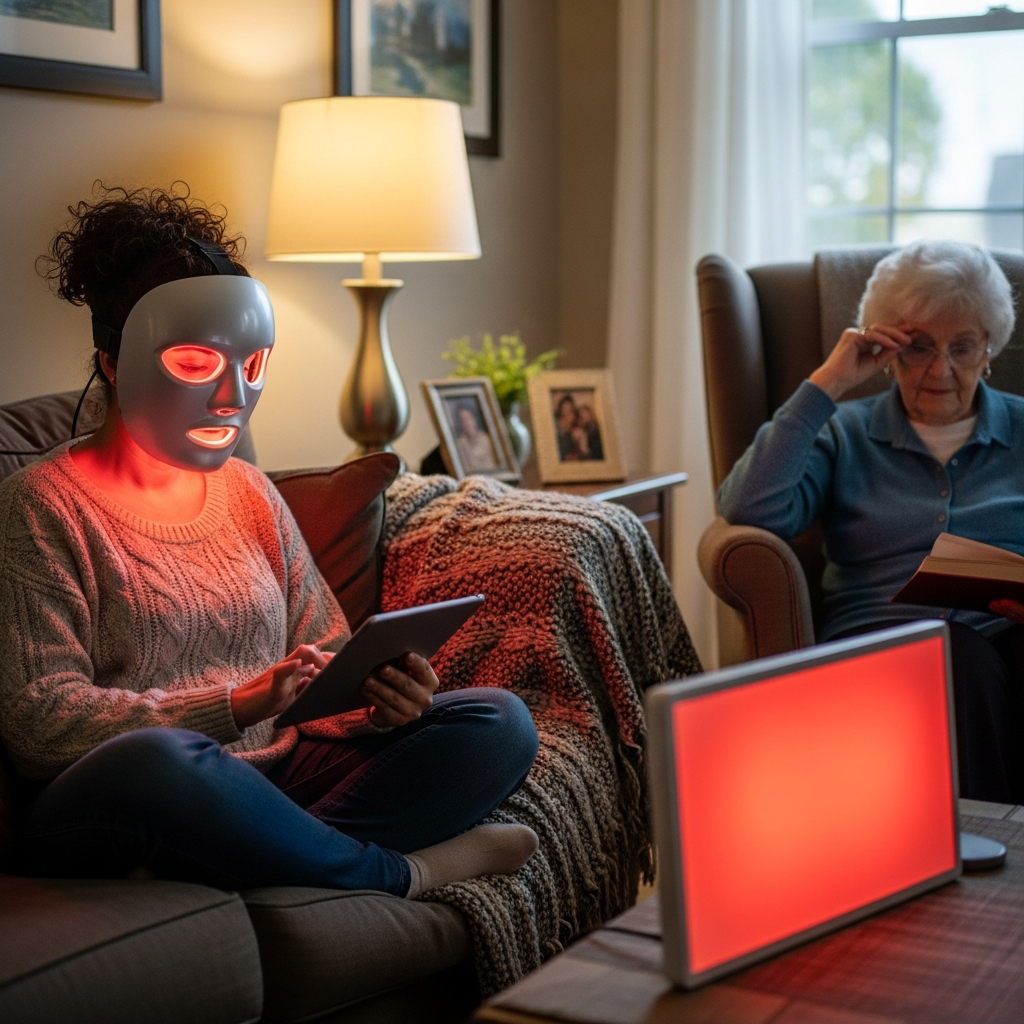
The beauty of red light? It’s incredibly gentle. You won’t feel much of anything during treatment – maybe a subtle warmth, but that’s about it. Some people find it so relaxing they actually fall asleep under the panels.
Blue Light: The Bacterial Bouncer
Blue light, on the other hand, is more like that no-nonsense security guard who doesn’t mess around. It’s got one main job when it comes to therapeutic use: destroying bacteria, particularly the *Propionibacterium acnes* that causes acne breakouts.
Here’s the fascinating part – these acne bacteria actually produce molecules called porphyrins, which are like little light-absorbing antennas. When blue light hits these porphyrins, it creates reactive oxygen species that essentially… well, kill the bacteria. It’s targeted warfare at a microscopic level.
But here’s where blue light gets tricky. While it’s fantastic at zapping acne-causing bacteria, it doesn’t penetrate very deeply into your skin. We’re talking maybe a millimeter or two at most. So if you’re hoping blue light will help with deep tissue issues or muscle recovery – yeah, that’s not happening.
The Penetration Game Changes Everything
This is probably the most important distinction between red and blue light therapy, and it’s something that trips people up constantly. Depth matters – a lot.
Blue light is like trying to paint a house with a fine-tip brush. Great for detail work on the surface, but you’re not covering much ground. Red light? That’s your roller brush – it goes deeper and covers more territory.
This penetration difference explains why red light therapy has such a broader range of applications. When you can reach deeper tissues, you can influence things like circulation, inflammation in joints, and even brain function (yes, really – some research suggests near-infrared light can actually penetrate the skull).
Why Your Body Responds Differently
Here’s something that might seem counterintuitive: your body has completely different cellular machinery for processing red versus blue light. It’s not like your cells are color-blind and treat all light the same way.
Blue light primarily works through photochemical reactions – it literally changes the chemistry of certain molecules. Red light, meanwhile, works more through what scientists call photobiomodulation… which is a fancy way of saying it optimizes how your cells function rather than destroying anything.
Actually, that reminds me of something important – this fundamental difference in mechanism means you can’t really substitute one for the other. It’s not like choosing between vanilla and chocolate ice cream where both will satisfy your dessert craving. These are completely different tools for completely different jobs.
The wavelengths aren’t interchangeable, the depths they reach aren’t comparable, and the cellular responses they trigger? Totally different playbooks.
Making the Right Choice for Your Skin Goals
Here’s the thing about choosing between red and blue light therapy – it’s not really an either-or situation for most people. Your skin has different needs, and honestly? Those needs probably change depending on what’s happening in your life.
If you’re dealing with active breakouts, blue light is your go-to. But here’s what nobody tells you: start with just 10-15 minutes, three times a week. I can’t tell you how many people jump in with daily 30-minute sessions and wonder why their skin looks irritated. Blue light is powerful – treat it with respect.
For anti-aging concerns or if you’re trying to heal from recent breakouts, red light becomes your best friend. The sweet spot? 15-20 minutes, 4-5 times per week. And here’s a little secret from the clinic – red light works even better when your skin is slightly warm. Take a warm (not hot) shower first, or use it after your evening routine when your circulation is already boosted.
Timing Your Treatments Like a Pro
Morning vs. evening makes a bigger difference than you’d think. Blue light therapy works best in the morning – it’s energizing and sets you up for the day. Plus, you’re less likely to accidentally expose yourself to actual blue light from screens afterward, which can interfere with the therapeutic effects.
Red light? That’s your evening ritual. It promotes healing during your body’s natural repair cycle, and honestly, there’s something deeply relaxing about that warm red glow before bed. Just don’t use it right before sleep if you’re sensitive to stimulation – some people find it surprisingly energizing.
Device Selection Reality Check
You don’t need to break the bank, but you also can’t expect miracles from a $30 device. Look for LED panels with at least 50-100 individual lights. Those single-bulb devices? They’re basically expensive mood lighting.
For blue light, you want 415nm wavelength specifically. Don’t settle for “approximately” or “around” that number. For red light, 660nm or 850nm are your targets – and yes, the difference matters more than manufacturers want to admit.
Panel size is where people often go wrong. That cute little handheld device might be perfect for spot treatments, but if you’re trying to treat your entire face… you’ll be there forever, moving it around section by section. A 12×8 inch panel covers most faces in one go.
The Combination Strategy That Actually Works
Here’s where it gets interesting – and where most advice falls short. You can absolutely use both, but timing is everything. Never use them back-to-back on the same day. Your skin needs time to process each treatment.
Try this pattern: Blue light Monday, Wednesday, Friday. Red light Tuesday, Thursday, Saturday. Sunday? Give your skin a complete break. This isn’t just about avoiding overexposure – it’s about letting each therapy do its job without interference.
Some people alternate weeks instead of days, especially if they’re dealing with hormonal acne that flares monthly. Track your skin’s response in a simple journal (or even just photos on your phone). You’ll start to see patterns that help you adjust timing.
Safety Measures Nobody Talks About
Always, always wear the protective eyewear that comes with your device. I don’t care if it makes you look ridiculous – retinal damage isn’t reversible. And if you didn’t get eyewear with your device? That’s a red flag about the manufacturer’s priorities.
Remove all makeup and skincare products before treatment. That expensive serum you love? It can actually block the light wavelengths from reaching your skin effectively. Clean, bare skin absorbs light therapy best.
Start farther away than the instructions suggest, then gradually move closer as your skin adapts. Most people position themselves too close initially and wonder why they’re getting irritation instead of improvement.
When to Reassess Your Approach
Give any new routine at least 6-8 weeks before deciding it’s not working. Skin cell turnover takes time, and real changes happen gradually. But if you’re seeing increased irritation after two weeks, dial back the intensity or frequency.
Watch for subtle changes – reduced inflammation, faster healing of minor cuts, or that hard-to-describe “glow” that people start commenting on. These often appear before dramatic improvements in specific skin concerns.
The bottom line? Start conservative, be consistent, and listen to your skin. It’s surprisingly good at telling you what’s working… if you pay attention.
The Setup Struggle Is Real
Let’s be honest – you’re probably reading this while sitting under harsh fluorescent lights, squinting at your phone screen. The irony isn’t lost on me.
Getting started with light therapy feels like trying to solve a puzzle where half the pieces are missing. You’ve got red light panels that look like they belong in a spaceship, blue light devices that seem more suited for a rave, and conflicting advice everywhere you turn.
The biggest hurdle? Figuring out timing and placement. Red light therapy typically needs you sitting or standing 6-24 inches away for 10-20 minutes. Blue light therapy for seasonal depression wants you even closer – sometimes just 16 inches – for 20-30 minutes, usually first thing in the morning.
Here’s what actually works: start stupidly simple. Pick one device, one time of day, one spot in your house. I know someone who taped a sticky note to her bathroom mirror that just said “10 minutes, red light, coffee time.” She’s been consistent for eight months now because she made it impossible to overthink.
When Your Eyes Feel Like They’re Staging a Revolt
Eye strain and headaches are the uninvited guests that crash your light therapy party. And honestly? They’re pretty common, especially when you’re starting out.
Blue light therapy is the bigger culprit here – that bright, clinical light can make you feel like you’re being interrogated. Some people describe it as “aggressive sunshine” (which… yeah, that tracks). Red light is gentler, but even that can cause issues if you’re staring directly at it like it owes you money.
The solution isn’t to power through the discomfort – that’s how you end up hating something that could actually help. Instead, start with shorter sessions. Maybe 5 minutes instead of 20. Position the light slightly to the side rather than directly in front of your face. For blue light therapy, you don’t need to stare at the device anyway – you can read, eat breakfast, or check emails while the light hits your peripheral vision.
And here’s something nobody tells you: if you wear glasses, clean them first. Seriously. Smudgy lenses can create weird light patterns that strain your eyes even more.
The Consistency Trap (And How to Escape It)
This is where most people crash and burn. You start strong for a week, maybe two… then life happens. The dog needs walking, work gets crazy, or you just forget three days in a row and suddenly you’re googling whether you “ruined everything.”
You didn’t ruin everything. Light therapy isn’t like medication where missing doses derails your progress completely. But consistency does matter – especially with blue light therapy for seasonal depression or sleep issues.
The trick is building what I call “flexible consistency.” Instead of “I must do this at 7 AM every single day,” try “I do this most mornings, and when I can’t, I don’t spiral about it.” Keep your device somewhere you’ll actually see it. Charge it before you need it. Have a backup plan for chaotic mornings.
One woman told me she keeps her blue light device next to her coffee maker. Not because that’s the “optimal” spot, but because she never skips her morning coffee. Sometimes the best solution is working with your existing habits instead of trying to create perfect new ones.
Managing Expectations Without Crushing Dreams
Here’s the thing that trips up almost everyone: light therapy isn’t a light switch (pun absolutely intended). You don’t flip it on and immediately feel transformed.
Red light therapy for skin issues or muscle recovery might show subtle changes after a few weeks. Blue light therapy for seasonal depression often takes 2-4 weeks to really kick in. That’s a long time to maintain faith in something when you’re feeling crappy.
The solution? Track something small and concrete. Not “do I feel better” but “did I fall asleep easier” or “does this spot on my face look less angry.” Take photos if you’re using red light for skin concerns – your brain will forget what you looked like three weeks ago, but your camera won’t.
And remember… sometimes the benefit isn’t dramatic improvement but preventing things from getting worse. That counts too.
What to Actually Expect (And When)
Let’s be honest here – if you’re expecting dramatic changes overnight, you’re setting yourself up for disappointment. Both red and blue light therapy work more like that friend who slowly gets you into better habits… gradual, steady, but definitely real.
For acne treatment with blue light, most people start noticing fewer angry breakouts around the 2-3 week mark. But here’s the thing – your skin might actually look a bit worse before it gets better. That’s totally normal. The light is essentially giving bacteria their eviction notice, and sometimes they throw a little tantrum on their way out.
Red light therapy? That’s playing an even longer game. You might feel slightly more energetic after a few sessions, but the real magic – improved skin texture, reduced inflammation, maybe some pain relief – typically shows up around 4-6 weeks of consistent use. I know, I know… patience isn’t exactly our strong suit these days.
Think of it like going to the gym. You don’t expect to see abs after one workout (though wouldn’t that be nice?). Your cells need time to actually respond to the light signals and start making changes at the molecular level.
Getting Started: Your First Few Sessions
Here’s what I wish someone had told me when I first tried light therapy – start slow. Really slow.
Most devices come with recommendations, but your skin is unique. Maybe start with just 5-10 minutes instead of jumping straight to the full 20-minute session. Some people are more light-sensitive than others, and there’s no prize for being the person who overdoes it on day one.
For blue light, you’ll want to clean your face first (obviously), but skip any products with retinoids or acids that day. Your skin’s about to get worked, and you don’t want to overwhelm it. Red light is generally more forgiving, but still… baby steps.
And please, please wear the eye protection that comes with your device. Your future self will thank you.
Creating a Routine That Actually Sticks
The biggest mistake people make? Treating light therapy like a weekend hobby. Consistency is everything here – think daily vitamins, not occasional spa days.
I’ve found morning works best for most people. Set up your device near where you get ready, maybe while you’re drinking coffee or scrolling through emails. Make it part of your existing routine rather than this big separate thing you have to remember.
Some folks prefer evening sessions – it can be surprisingly relaxing, almost meditative. Just don’t do it right before bed if you’re using blue light… that’s kind of counterproductive for sleep.
When to Reassess and Adjust
Around the 4-week mark, take a step back and honestly evaluate what you’re seeing. Are breakouts less frequent? Does your skin feel different? Any changes in how quickly you recover from workouts or sleep?
This is also when you might want to adjust your routine. Maybe bump up the session time, or try using your device twice daily if you’re seeing good results. Or scale back if you’re experiencing any irritation.
Don’t expect linear progress, though. Some weeks will be better than others – that’s just how healing works. Your body isn’t a machine, and neither is your response to treatment.
Building Long-Term Success
Here’s something most articles won’t tell you – light therapy works best as part of a bigger picture, not as a magic standalone solution.
If you’re using blue light for acne but still sleeping in your makeup and living on stress and energy drinks… well, you’re kind of working against yourself. Same goes for red light therapy – it can absolutely help with recovery and inflammation, but it’s not going to undo completely poor lifestyle choices.
Think of light therapy as a really good supporting actor, not necessarily the star of the show. When combined with decent skincare, reasonable stress management, and basic self-care, that’s when people see the most impressive results.
The good news? Once you find your rhythm and start seeing benefits, maintaining those results is usually pretty straightforward. Most people can scale back to 3-4 sessions per week for maintenance once they’ve reached their initial goals.
Remember, you’re essentially giving your cells a gentle nudge in the right direction. Be patient with the process – and with yourself.
Finding Your Light
So here’s the thing – you’ve now got the inside scoop on both red and blue light therapies, and maybe you’re sitting there thinking, “Great, but which one’s actually going to help *me*?” That’s completely normal. When you’re dealing with weight management challenges, it can feel overwhelming to sort through all these different options and figure out what might actually move the needle for you.
The truth is, both therapies have their place. Red light might be your ally if you’re looking to support muscle recovery after workouts, potentially boost cellular energy, or address some of those stubborn areas where fat seems to cling on for dear life. Blue light, on the other hand, could be a game-changer if sleep issues are sabotaging your weight loss efforts… and honestly, who among us doesn’t have some kind of relationship with their phone or computer screen that could use some work?
But here’s what I really want you to know – these therapies aren’t magic bullets. They’re more like helpful teammates in your overall approach to feeling better in your body. Think of them as the friend who spots you at the gym, not the friend who does all the heavy lifting for you.
Your body is unique. Your schedule, your challenges, your goals – they’re all uniquely yours. What works brilliantly for your neighbor might be completely wrong for you, and that’s not failure… that’s just being human. Some people thrive with red light sessions in the morning, others find blue light blocking glasses before bed transforms their entire sleep game. Some folks need a completely different approach altogether.
The real magic happens when you’re working with someone who gets this – someone who can look at your specific situation and say, “Okay, based on what you’re telling me about your energy levels, your sleep patterns, your workout routine… let’s try this approach.” It’s like having a GPS for your wellness goals instead of wandering around with a torn paper map from 1987.
Ready to Turn On Your Personal Light?
You don’t have to figure this out alone. Actually – you shouldn’t have to. If you’re feeling curious about whether light therapy might fit into your wellness plan, or if you’re just tired of trying to piece together health advice from random internet articles (no offense to this random internet article), we’re here for exactly that kind of conversation.
Our team gets it. We know you’ve probably tried things before that didn’t work out. We know you might be feeling a little skeptical about yet another “promising” approach. That’s okay – bring that skepticism with you. Ask us the tough questions. Tell us about what’s worked, what hasn’t, and what you’re really hoping to achieve.
Whether light therapy ends up being part of your plan or we discover something completely different that makes sense for you, you’ll have a clearer picture of where you’re headed. And honestly? Sometimes just having someone listen to what you’re going through and help you think through your options… that alone can be the first step toward feeling like yourself again.
Ready to have that conversation? Give us a call or shoot us a message. We’re here when you are.