Can Red Light Therapy Reduce Fine Lines and Wrinkles?

You know that moment when you catch your reflection in your phone camera and think, “Wait, is that really me?” The lighting’s harsh, sure, but those lines around your eyes… they weren’t there last year, were they? Or maybe they were, and you’re just noticing them now because your teenager helpfully pointed them out while you were taking a selfie together.
It’s funny how aging sneaks up on us. One day you’re buying your first anti-aging moisturizer as a “preventative measure” (because you’re being proactive, right?), and the next thing you know, you’re standing in the skincare aisle at Target, completely overwhelmed by serums that promise to “turn back time” and wondering if any of this stuff actually works.
Here’s the thing – and I say this as someone who’s tried pretty much every cream, serum, and treatment short of going under the knife – we’re living in this weird beauty paradox. We want to age gracefully, but we also want to look… well, not aged. Social media doesn’t help either, does it? Everyone’s got that perfect filter glow, and suddenly your actual face feels like it needs an upgrade.
That’s where red light therapy comes in, and honestly? When I first heard about it, I was skeptical. It sounds like something out of a sci-fi movie – sitting under red LED lights to make your wrinkles disappear. But then my friend Sarah (you know the type, always trying the latest wellness trend) started raving about this device she bought online. “It’s like having a spa facial every night,” she said, “but without the price tag.”
The more I looked into it, the more intrigued I became. Because here’s what’s interesting about red light therapy – it’s not just another skincare fad that’ll be forgotten next year. The science behind it actually goes back decades, and NASA (yes, that NASA) has been studying it since the ’80s. They weren’t trying to help astronauts look younger, mind you – they were investigating how certain wavelengths of light could help heal wounds and promote tissue repair in space.
But somewhere along the way, researchers noticed something fascinating: the same wavelengths that helped heal injuries also seemed to boost collagen production. And collagen, as you probably know, is basically the scaffolding that keeps our skin looking plump and smooth. When we lose it – which starts happening in our twenties, thanks biology – that’s when fine lines and wrinkles start making their grand entrance.
Now, I’m not saying red light therapy is some magical fountain of youth. If someone’s promising you’ll wake up looking twenty years younger after one session, run. But what if I told you there’s growing evidence that consistent use might actually help your skin produce more collagen naturally? That it might reduce inflammation, improve circulation, and yes – potentially minimize those fine lines that seem to multiply every time you look in the mirror?
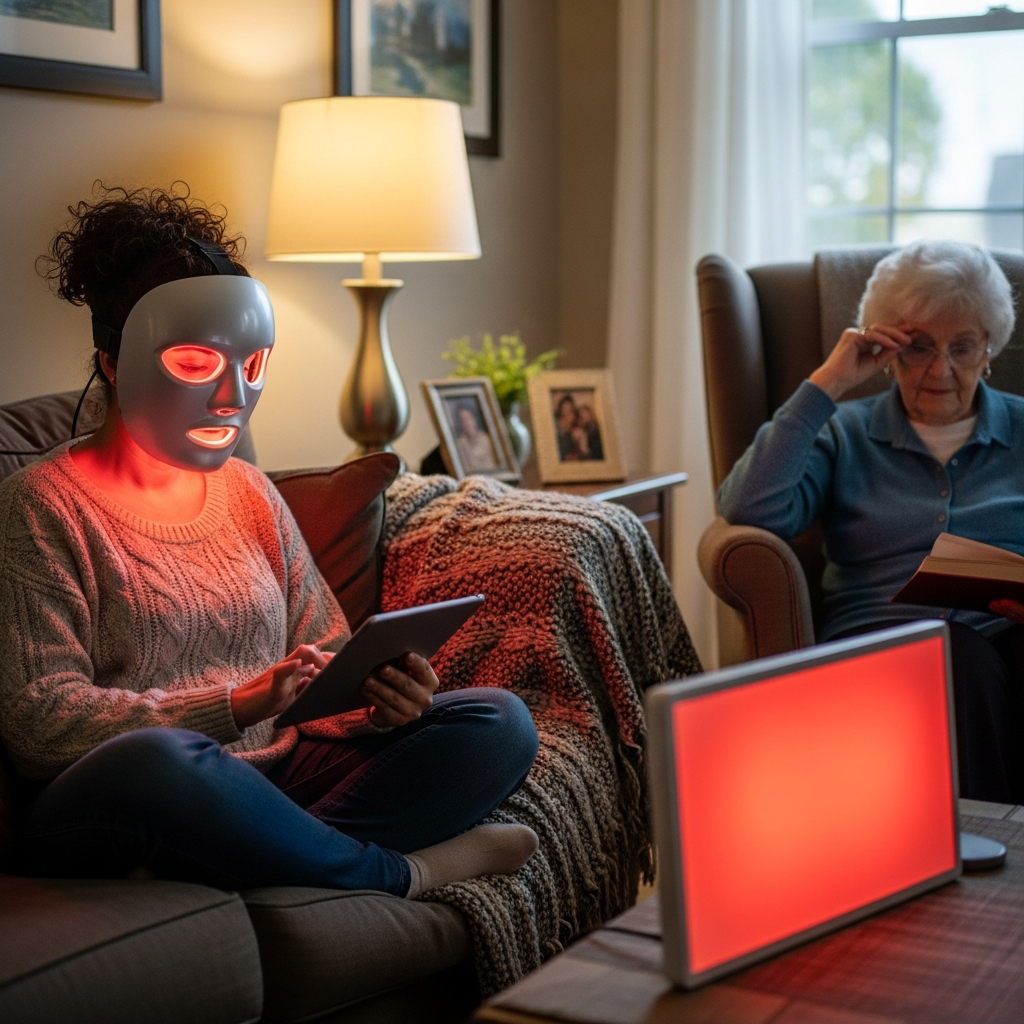
The beauty of red light therapy – pun intended – is that it’s non-invasive. No needles, no downtime, no weird chemical peels that make you look like a tomato for a week. You literally just… sit there. Some people do it while watching Netflix, others during their morning coffee routine. It’s almost too simple, which is probably why so many of us are skeptical at first.
But here’s what we’re going to explore together: does it actually work? How does it work? And perhaps most importantly – is it worth your time and money, or is this just another expensive gadget that’ll end up gathering dust in your bathroom cabinet?
We’ll dig into the actual science (don’t worry, I’ll keep it interesting), look at what dermatologists are saying, and figure out if red light therapy deserves a spot in your anti-aging routine. Because honestly? With all the options out there – from $200 creams to $2000 treatments – wouldn’t it be nice to find something that’s both effective and reasonable?
So grab your coffee (or wine, no judgment), and let’s figure out if red light therapy is the real deal… or just really good marketing.
What Actually Happens When Your Skin Ages
Here’s the thing about aging skin – it’s basically like watching a really well-organized office slowly turn into chaos. When you’re young, your skin cells are like eager interns, cranking out collagen and elastin like there’s no tomorrow. But as we age? Well… let’s just say those interns start calling in sick more often.
Collagen is your skin’s scaffolding – think of it as the steel frame that keeps a skyscraper standing tall. Elastin, on the other hand, is more like a really good bungee cord that snaps everything back into place. When you’re in your twenties, you’re producing both of these like a factory running at full capacity. But here’s where it gets frustrating: starting around age 25 (I know, seems unfair), collagen production drops by about 1% each year.
That means by the time you hit 50, you’ve lost about 25% of your skin’s structural support. No wonder those fine lines start showing up like uninvited party guests.
The Science Behind Light and Your Cells
Now, before you roll your eyes at yet another “miracle” treatment, let’s talk about what red light therapy actually does – and honestly, the science is pretty fascinating, even if it sounds a bit like science fiction.
Red light therapy uses specific wavelengths of light – usually between 630 and 850 nanometers, if you care about the technical stuff. These particular wavelengths can actually penetrate your skin (unlike, say, the light from your phone screen) and reach the mitochondria in your cells.
Remember mitochondria from high school biology? The “powerhouse of the cell”? Well, they weren’t kidding. These little cellular engines produce something called ATP – basically the energy currency your cells use to do… well, everything. Including making collagen and elastin.
Here’s where it gets interesting: certain wavelengths of red light can actually stimulate these mitochondria to work harder. It’s like giving your cellular power plants a shot of espresso. And when your cells have more energy, they’re more likely to get back to doing what they did in your twenties – producing the good stuff that keeps your skin looking plump and smooth.
Why Red Light Specifically?
You might wonder why red light gets all the attention. What about blue light? Green light? (Actually, please don’t try green light at home – different wavelengths do very different things.)
Red and near-infrared light have this unique ability to penetrate deeper into your skin without causing damage. Think of it like this: if your skin were a swimming pool, UV light would be like a belly flop – lots of impact right at the surface, and not in a good way. Red light, though? It’s more like a smooth dive that reaches the deeper layers where the real action happens.
The wavelengths used in red light therapy can reach about 5-10 millimeters into your skin. That might not sound like much, but it’s deep enough to reach your dermis – where all that collagen and elastin production happens.
The Cellular Domino Effect
What happens next is kind of like a really positive domino effect. When those mitochondria get energized, they don’t just make more ATP. They also trigger a cascade of cellular activities that… okay, this is where it gets a bit complicated, but bear with me.
The increased energy production seems to stimulate fibroblasts – these are the cells responsible for making collagen and elastin. It also appears to improve blood circulation in the area (more oxygen and nutrients for your skin cells) and may even help reduce inflammation.
Some research suggests it might also influence something called cytokines – basically chemical messengers that tell your cells what to do. In this case, they’re apparently sending out memos saying “Hey, let’s get back to making this skin look good!”
The Reality Check
Now, before you get too excited and start shopping for red light devices, let’s be realistic about what we’re talking about here. This isn’t a magic eraser for deep wrinkles or a replacement for good skincare basics. Think of red light therapy more like… a really good supporting actor. It’s not going to carry the whole movie, but it might make the lead (that’s your overall skincare routine) look a lot better.
The research is promising, but it’s also relatively new. We’re still figuring out optimal treatment protocols, and results definitely vary from person to person.
Getting Started: Your First Red Light Session
Here’s what nobody tells you about your first red light therapy session – you’re going to feel like you’re doing absolutely nothing. And that’s exactly right.
Start with just 10-15 minutes, about 6-12 inches from your face. I know it seems ridiculously simple, but resist the urge to go longer thinking “more must be better.” Your skin cells are like… well, think of them as little solar panels that can get overwhelmed if you flood them with too much light too fast.
You’ll want to remove makeup completely – even that tinted moisturizer you barely consider makeup. Clean skin absorbs the wavelengths better, and you don’t want any barriers between those photons and your cells.
The Timing Sweet Spot (And Why Consistency Beats Perfection)
Most people ask me, “When’s the best time to do this?” Honestly? Whenever you’ll actually do it consistently. That said, there’s some interesting science around timing…
Morning sessions can help kickstart cellular repair processes for the day ahead. But evening treatments? They might work with your body’s natural repair cycle that ramps up while you sleep. I’ve seen great results with both approaches.
The real secret is the 3-4 times per week schedule. Not daily – your cells need time to actually use all that cellular energy you’re giving them. Think of it like strength training… your muscles don’t grow during the workout, they grow during recovery.
Device Selection: What Actually Matters
Don’t get caught up in the marketing maze of “professional-grade” panels that cost more than your car payment. What you need to look for
Wavelength specificity – You want devices that emit 630-700nm (red) and 810-850nm (near-infrared). If the manufacturer won’t tell you the exact wavelengths, that’s a red flag… pun intended.
Power density – This is measured in mW/cm². You’re looking for at least 20-40 mW/cm² at the treatment distance. Too low and you’re basically getting an expensive nightlight.
Here’s something most people miss: beam angle. Wider angles mean you can treat more area at once, but the light intensity drops off. Focused beams are more intense but cover less ground. Neither is “wrong” – just different approaches.
Maximizing Your Results (The Overlooked Factors)
Your skin’s response to red light therapy isn’t happening in a vacuum. What you do before and after your sessions can make or break your results.
Hydration matters more than you think. Dehydrated cells don’t respond as well to phototherapy. I’m not talking about chugging water during your session – I mean consistently staying hydrated so your cellular processes can actually function optimally.
The supplement connection – This might surprise you, but certain nutrients can enhance your results. Vitamin C supports collagen synthesis that red light stimulates. CoQ10 helps with cellular energy production. I’m not saying you need to become a supplement junkie, but… well, actually, that reminds me of a client who saw dramatic improvements once she addressed her vitamin D deficiency alongside her red light routine.
Sleep quality amplifies everything. Red light therapy works by supporting your body’s natural repair processes, but if you’re only getting 4-5 hours of poor sleep, you’re basically trying to fill a bucket with a giant hole in the bottom.
Tracking Progress (Beyond Just Mirror Gazing)
Take photos. I know, I know – nobody wants more photos of their face, especially close-ups highlighting every fine line. But here’s the thing: changes happen gradually, and your brain adapts to what you see in the mirror every day.
Use the same lighting, same angle, same expression (or lack thereof). Natural window light works best – bathroom lighting is notoriously unflattering and inconsistent.
Keep notes about how your skin feels, not just how it looks. Many people notice improved texture and firmness before visible line reduction. Your skin might feel more… substantial? Plump? These subtle changes often happen weeks before you see dramatic visual differences.
When to Adjust Your Approach
If you’re not seeing changes after 8-10 weeks of consistent use, don’t just give up. Maybe you need to adjust your distance from the device, increase frequency slightly, or – this is important – look at other factors that might be sabotaging your results.
Are you using harsh actives that might be counteracting the anti-inflammatory benefits? Is stress wreaking havoc on your cortisol levels? Sometimes the missing piece isn’t about the red light therapy itself.
When Reality Hits: Why Your First Month Might Feel Disappointing
Here’s what nobody tells you about starting red light therapy – the first few weeks can feel like you’re staring at paint that refuses to dry. You’re diligently holding that device to your face, watching Netflix episodes tick by, and… nothing. Your reflection looks exactly the same.
This is completely normal, but man, it’s frustrating.
The thing is, collagen doesn’t work on your schedule. It’s more like growing a garden than microwaving dinner – you’re literally rebuilding tissue from the inside out. Most people start seeing subtle changes around week 6 to 8, but I’ve had patients who didn’t notice real improvements until month three. That’s a long time to keep faith in a glowing red light.
The solution? Take progress photos. I know, I know – who wants more close-up selfies of their wrinkles? But your eyes adjust to gradual changes, while photos don’t lie. Same lighting, same angle, once a week. You’ll be surprised what you see when you compare month one to month three.
The Consistency Trap (And How to Escape It)
Let’s be honest – doing red light therapy every single day feels impossible some weeks. Life happens. You travel for work, kids get sick, or you’re just too tired to hold a device to your face for 15 minutes after a brutal day.
Then the guilt spiral starts. You missed three days, so obviously you’ve ruined everything, right? Might as well give up…
Actually, that’s not how this works. Think of red light therapy like exercise – missing a few sessions won’t erase your progress, but consistency over months matters more than perfection over weeks.
The real trick? Make it stupidly easy. I tell my patients to do their sessions during activities they already do daily. Morning coffee? Perfect red light time. Watching the evening news? Even better. One patient does hers while checking work emails (multitasking win). Another uses a hands-free panel while doing her skincare routine.
The Device Dilemma: Expensive Doesn’t Always Mean Better
Here’s where things get messy – the red light therapy market is basically the Wild West right now. You’ve got $50 handheld devices next to $2,000 professional panels, and honestly? The price tags don’t always match the quality.
I’ve seen people drop serious cash on fancy devices that barely emit the right wavelengths, while others get great results from more affordable options that actually deliver what they promise.
What actually matters: Look for devices that specify their wavelengths (you want 660nm and 850nm for skin benefits) and power density. Those Instagram ads with devices that look like tiny lightsabers? Probably not powerful enough to penetrate beyond your surface skin.
The frustrating part is that you often can’t tell if a device is working until you’ve used it consistently for months. By then, return windows have closed.
Managing Expectations When Everyone Else Seems to Glow
Social media makes red light therapy look like magic – dramatic before-and-after photos, glowing testimonials, people who seemingly erased decades overnight. Then there’s you, three months in, squinting at your reflection trying to decide if that line by your eye is actually softer or if you’re just hoping really hard.
This is where I see people get discouraged and quit right before they might start seeing real results.
Here’s the thing – red light therapy isn’t Botox. It’s not going to give you dramatic, immediate changes. What it can do is gradually improve skin texture, reduce fine lines (not deep wrinkles – different beast entirely), and give you that subtle glow that makes people ask if you’ve been on vacation.
The Plateau Problem
Around month four or five, many people hit a wall. The initial improvements seem to stall, and you start wondering if you’ve reached your skin’s red light limit.
This plateau is actually normal – it often means you need to adjust your approach. Maybe increase session length, change angles, or take a brief break to let your skin reset. Some practitioners recommend cycling on and off every few months rather than using it indefinitely.
The key is recognizing that skincare isn’t linear. Sometimes the best thing you can do is stick with what’s working, even when progress feels invisible. Your skin might be building collagen reserves that won’t show up for another month.
Trust the process, even when the process feels like it’s testing your patience.
What You Can Realistically Expect (And When)
Let’s talk turkey about timelines – because I know you’re probably wondering when you’ll start seeing those fine lines soften up. The honest answer? It’s not going to happen overnight, and anyone who tells you otherwise is selling you something.
Most people start noticing subtle changes around the 4-6 week mark. And I mean *subtle* – we’re talking about your skin looking a little more… awake? A bit more even-toned? Your partner might not notice yet, but you’ll catch yourself in the bathroom mirror thinking, “Huh, something looks different.”
The real improvements – the kind where your coworker asks if you’ve been using a new moisturizer – typically show up around the 8-12 week point. That’s when collagen production has had time to ramp up and actually make a visible difference. Think of it like starting a workout routine… you feel stronger before you look stronger, you know?
Here’s what’s completely normal during those first few weeks: absolutely nothing dramatic. Maybe your skin feels a tiny bit firmer after treatments. Maybe it doesn’t. Some people notice their complexion looks brighter almost immediately – that’s usually improved circulation doing its thing. Others don’t see squat for two months and then suddenly realize their crow’s feet aren’t as pronounced.
The Treatment Schedule That Actually Works
Most clinics recommend starting with 2-3 sessions per week for the first month, then scaling back to once or twice weekly for maintenance. This isn’t arbitrary – your skin cells need time to respond and regenerate between sessions.
I’ve seen people get impatient and try daily treatments, thinking more is better. Plot twist: it’s not. Your skin can actually get overwhelmed, and you might end up with irritation instead of improvement. It’s like watering a plant – consistency matters more than intensity.
A typical treatment lasts 10-20 minutes, depending on the device and area being treated. You’ll lie there while red and near-infrared light does its work (honestly, it’s pretty relaxing). No pain, no downtime, no weird peeling phases. You can literally get a treatment on your lunch break and go back to work.
Reading the Signs: Good Changes vs. Red Flags
Here’s what you *want* to see: gradual improvement in skin texture, fewer visible fine lines, maybe some reduction in dark spots or redness. Your skin might feel firmer or more elastic. Some people notice their makeup goes on smoother – that’s often one of the first signs that things are working.
What should make you pause? Any unusual irritation, persistent redness that lasts more than an hour after treatment, or skin that feels overly sensitive. While red light therapy is generally super safe, everyone’s skin is different. If something doesn’t feel right, speak up.
Also – and this is important – don’t expect miracles with deep wrinkles or significant sun damage. Red light therapy is fantastic for prevention and mild to moderate improvement, but it’s not going to erase decades of photo-aging. Think enhancement, not erasure.
Your Next Steps (Without the Sales Pitch)
If you’re intrigued, start with a consultation at a reputable clinic. Ask to see before-and-after photos (real ones, not stock images), and don’t be shy about inquiring about their specific protocols and equipment. Not all red light devices are created equal.
Budget-wise, expect to invest several hundred to a few thousand dollars depending on your treatment plan. Many clinics offer package deals that bring the per-session cost down. Some people also invest in at-home devices for maintenance – just know that professional-grade equipment is typically more powerful.
Consider combining treatments with good skincare habits. Red light therapy works beautifully alongside retinoids, vitamin C serums, and proper sun protection. Actually, that sun protection part isn’t optional – there’s no point in stimulating new collagen if you’re going to fry it with UV rays.
And here’s something I always tell patients: take progress photos. Seriously. Changes happen so gradually that you might not notice them day-to-day. But comparing photos from month one to month three? That’s when most people become believers.
The bottom line? Red light therapy isn’t magic, but it’s pretty darn impressive when done consistently over time. Just manage your expectations, be patient with the process, and remember – good skin is a marathon, not a sprint.
The Glow Forward
Look, I get it. You’re probably sitting there thinking about everything we’ve covered – the science, the studies, the realistic timelines – and maybe feeling a little overwhelmed. That’s completely normal. When you’re dealing with aging skin, there’s this constant tug-of-war between hope and skepticism, isn’t there?
Here’s what I want you to remember: red light therapy isn’t some miracle overnight fix. It’s not going to erase decades in a few sessions (I wish it were that simple). But what the research does show us is pretty encouraging – this gentle, non-invasive treatment can genuinely help your skin produce more collagen, reduce inflammation, and yes… soften those lines that have been bothering you.
The beauty of red light therapy – and I mean this literally – is that it works with your body’s natural healing processes. You’re not forcing change with harsh chemicals or invasive procedures. You’re simply giving your cells the energy boost they need to do what they already know how to do. It’s like… well, think of it as a really good night’s sleep for your skin cells.
But here’s the thing that matters most: consistency beats perfection every time. Whether you end up trying red light therapy, exploring other treatments, or combining approaches – the key is finding something you can actually stick with. Because the most effective skincare routine is the one you’ll actually do.
I’ve seen people get so caught up in finding the “perfect” solution that they never actually start anywhere. Don’t let that be you. Your skin doesn’t need perfection – it needs patience, consistency, and maybe a little help from modern science.
And honestly? While we’re talking about fine lines and wrinkles, let’s not forget that aging is a privilege not everyone gets to experience. Those laugh lines around your eyes? They’re evidence of a life well-lived, of joy shared and smiles given freely. Red light therapy can help you feel more confident in your skin, but it shouldn’t make you forget that your worth isn’t measured by the smoothness of your complexion.
You Don’t Have to Figure This Out Alone
If you’re feeling ready to explore what red light therapy – or any other treatment option – might look like for you, we’re here to help. Not to pressure you, not to oversell you on unrealistic promises, but to have an honest conversation about what’s possible.
Our team understands that skincare decisions aren’t just about vanity – they’re about feeling comfortable and confident in your own skin. We’ll walk through your specific concerns, discuss realistic expectations, and help you create a plan that actually fits your life and budget.
You can schedule a consultation where we’ll talk through everything – no pressure, no hard sell, just real answers to your real questions. Because you deserve to work with people who see you as a whole person, not just a set of skincare concerns.
Ready to have that conversation? Give us a call or shoot us a message. We’re genuinely excited to meet you and help you feel amazing in your skin – whatever that looks like for you.