9 Reasons Red Light Therapy Is Popular for Skin Care
You know that moment when you catch your reflection in a store window and think, “When did my skin start looking so… tired?” Maybe it’s the fine lines that seem to have appeared overnight, or that stubborn acne that decided your thirties were the perfect time for a comeback tour. Or perhaps it’s just that overall dullness – like someone dimmed your natural glow without asking permission.
I’ve been there. We all have.
And if you’re like most people, you’ve probably tried everything. The $200 serum that promised miracles (spoiler alert: it didn’t deliver). The dermatologist visits that left your wallet lighter but your skin concerns unchanged. That DIY mask recipe your friend swore by… which mostly just made you smell like a salad.
Here’s the thing – we’re living in what I like to call the “skincare overwhelm era.” Walk down any beauty aisle and you’ll find hundreds of products, each claiming to be THE solution. It’s enough to make your head spin, and honestly? Most of us just end up more confused than when we started.
But lately, there’s been buzz about something different. Something that doesn’t come in a jar or require a prescription. Red light therapy – and before you roll your eyes thinking this sounds like some sci-fi fantasy, hear me out.
I’ll admit, when I first heard about people sitting in front of glowing red panels like they were warming themselves by a campfire, I was skeptical. It seemed too simple, too… futuristic? But then I started digging into the research, talking to dermatologists, and – most importantly – listening to real people who’d actually tried it.
The results were surprising.
We’re talking about NASA technology (yes, really – they developed it for space missions) that’s now sitting on bathroom counters across the country. Professional athletes use it. Hollywood stars swear by it. Your neighbor might have one tucked away in her bedroom. And unlike that expensive cream that promised to turn back time, this actually has decades of scientific research backing it up.
But here’s what I love most about red light therapy – it’s not trying to be everything to everyone. It doesn’t promise to solve world hunger or give you the skin of a twenty-year-old overnight. Instead, it works on something much more fundamental: giving your skin cells the energy they need to do their job better.
Think of it like this… you know how you feel more energetic after spending time in natural sunlight? Well, red light therapy is kind of like giving your skin cells that same energizing boost, but without any of the damage that comes with UV rays. It’s like vitamin D for your face, minus the sunburn risk.
Now, I’m not here to tell you this is a magic bullet – nothing ever is, despite what Instagram ads might claim. But what I can share with you is why so many people are adding those glowing red panels to their skincare routines, and more importantly, whether it might make sense for your particular skin concerns.
Some folks see changes in just a few weeks. Others take a couple months. And yes, some people don’t see dramatic results at all – though they often report that their skin just feels… better somehow. Healthier. More like itself.
The beauty of red light therapy is in its simplicity. No complicated ingredient lists to decipher. No wondering if that burning sensation means it’s “working” or means you should rinse it off immediately. Just you, some time to relax, and light wavelengths that penetrate deep enough to actually reach the cells that matter.
Over the next few minutes, we’re going to explore exactly why this technology has captured the attention of everyone from biohackers to busy moms who just want something that actually works. We’ll look at what the science says, what real users experience, and – perhaps most importantly – how to figure out if this might be the missing piece in your own skincare puzzle.
Because honestly? You deserve to feel confident in your skin again.
What Exactly Is Red Light Therapy? (And Why Everyone’s Talking About It)
Picture your skin cells as tiny little solar panels. Just like plants soaking up sunlight for photosynthesis, your cells have this fascinating ability to absorb specific wavelengths of light and convert them into energy. That’s essentially what red light therapy does – it bathes your skin in concentrated red and near-infrared light wavelengths, typically between 630 and 850 nanometers.
Now, I know what you’re thinking… this sounds like something straight out of a sci-fi movie, right? Trust me, I had the same reaction when I first heard about it. But here’s the thing – this isn’t some newfangled wellness trend. NASA actually pioneered much of this research back in the 1990s, studying how specific light wavelengths could help heal wounds and regenerate tissue for astronauts on long space missions.
The technical term is “photobiomodulation” – which, honestly, sounds way more complicated than it needs to. Think of it like giving your cells a gentle energy drink, minus the jitters and crash.
The Science Behind the Glow (Without Getting Too Nerdy)
Your cells contain these microscopic powerhouses called mitochondria – you probably remember them from high school biology as “the powerhouse of the cell.” Well, turns out they weren’t wrong. These little energy factories have light-sensitive enzymes that respond to red and near-infrared light like flowers turning toward the sun.
When exposed to the right wavelengths, your mitochondria ramp up production of ATP (adenosine triphosphate) – basically cellular fuel. More fuel means your cells can work harder at repairing damage, producing collagen, and all those other good housekeeping tasks that keep your skin looking healthy.
It’s a bit like having a turbo button for your skin’s natural repair processes. The light doesn’t heat your tissue (that would be counterproductive), but it does penetrate several millimeters deep, reaching the dermis where most of the interesting collagen-producing action happens.
Red Light vs. Near-Infrared: The Dynamic Duo
Here’s where it gets slightly confusing – and I’ll admit, it took me a while to wrap my head around this too. Red light therapy actually uses two different types of light that work in tandem.
Visible red light (around 660 nanometers) is what you can see – that bright red glow that makes you look like you’re in a retro photo booth. This wavelength is fantastic for surface-level skin concerns and has been shown to stimulate collagen production in the upper layers of skin.
Near-infrared light (around 850 nanometers) is invisible to the naked eye but penetrates deeper into tissue. Think of it as red light’s more mysterious cousin. While you can’t see it working, it’s busy stimulating cellular processes in the deeper layers of your dermis.
Most quality devices combine both wavelengths because… well, why choose sides when you can have the best of both worlds?
The At-Home Revolution (And Why Your Dermatologist Isn’t Worried)
Not too long ago, getting red light therapy meant booking appointments at high-end spas or dermatology clinics. These professional-grade devices could cost tens of thousands of dollars and required trained operators. But technology has this wonderful habit of becoming more accessible over time – just look at computers, smartphones, or GPS systems.
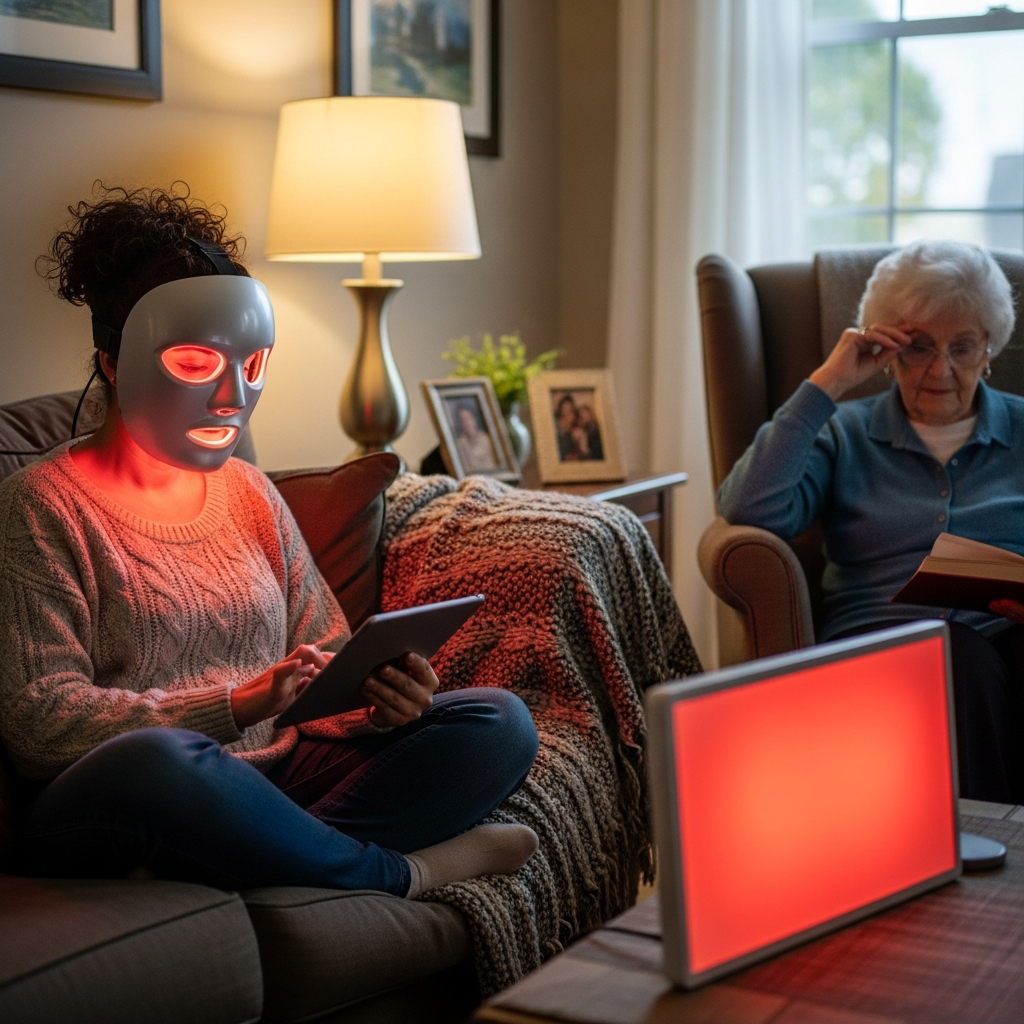
Today’s at-home devices range from small handheld units (think the size of a hairbrush) to full-face panels that look like something from a space station. The power output is lower than professional equipment, which means you need longer treatment times, but the convenience factor is hard to beat.
Actually, that reminds me of something interesting – many dermatologists are increasingly supportive of at-home red light therapy. Unlike some DIY beauty treatments that make them cringe, red light therapy has a solid safety profile when used correctly. The worst thing that typically happens? You might fall asleep during treatment (guilty as charged).
Setting Realistic Expectations (Because Patience Is Hard)
Here’s the thing about red light therapy – it’s not magic. I know, I know… disappointing, right? But understanding what it can and can’t do is crucial for managing expectations.
The cellular changes happen relatively quickly, but visible results? That’s more of a marathon than a sprint. Most people start noticing subtle improvements around the 4-6 week mark, with more significant changes developing over months of consistent use.
It’s like strength training for your skin – you wouldn’t expect to see muscle definition after one gym session, and the same principle applies here.
Getting Started: Your First Red Light Session
Look, I’m going to be honest with you – walking into your first red light therapy session can feel a bit… weird. You’re basically standing in front of what looks like a giant heat lamp, and it’s totally normal to wonder if you’re doing it right.
Start with just 10-15 minutes, three times a week. I know, I know – you want faster results and you’re tempted to camp out under those lights for an hour. Don’t. Your skin needs time to adapt, and overdoing it can actually cause irritation (learned that one the hard way from too many eager patients).
Position yourself about 6-12 inches from the device. Close enough to feel warmth, but not so close that it’s uncomfortable. Think of it like finding the perfect spot by a campfire – you want the glow, not the burn.
The Timing Sweet Spot (And Why Most People Get This Wrong)
Here’s where most people mess up – they think more is always better. But red light therapy is more like watering a plant than filling a bathtub. Consistency beats intensity every single time.
The magic happens at 10-20 minutes per session. After about 20 minutes, your cells basically say “thanks, we’re good” and stop responding as well. It’s like they’ve hit their daily dose of cellular energy.
Morning sessions work beautifully because you’re jumpstarting your skin’s natural repair processes. But honestly? The best time is whatever time you’ll actually stick to. I’ve had patients see amazing results with late-night sessions while binge-watching Netflix.
What to Expect (The Real Timeline, Not the Instagram Version)
Week 1-2: Probably nothing dramatic. Maybe your skin feels a bit… brighter? More awake? That’s normal.
Week 3-4: This is usually when people start texting me photos. Fine lines might look softer, and that general “tired skin” look starts lifting.
Month 2-3: Now we’re talking. This is typically when the real magic happens – improved texture, better tone, and that subtle glow that makes people ask what you’ve been doing differently.
Don’t expect overnight miracles (despite what those before-and-after posts suggest). Real skin changes take time, and anyone promising instant results is probably selling something sketchy.
Safety First: The Non-Negotiables
Your eyes are not invited to this party. Ever. Even if the device manufacturer says it’s “eye-safe,” just don’t risk it. Grab some protective eyewear or simply keep your eyes closed – I’m not kidding about this one.
Remove all skincare products before your session. That fancy vitamin C serum? It needs to go. Some ingredients can actually increase photosensitivity, and others just create a barrier that blocks the light from doing its thing.
If you’re pregnant, nursing, or taking photosensitizing medications (like certain antibiotics or blood pressure meds), have a chat with your doctor first. Better safe than sorry.
Maximizing Your Results: The Insider Tips
Here’s something most people don’t know – gentle exfoliation before red light therapy can actually boost results. Dead skin cells scatter light, so a quick swipe with a soft washcloth helps the light penetrate better.
Hydrate like crazy. I mean it. Red light therapy kickstarts cellular repair, and your cells need water to do their job properly. Aim for half your body weight in ounces daily… yes, I know, everyone says this, but it actually matters here.
Consider combining it with other treatments – but strategically. Red light pairs beautifully with gentle facials or light microneedling (done by professionals, please). But space them out. Don’t overwhelm your skin with too much at once.
Troubleshooting Common Issues
Skin looking a bit red after sessions? That’s usually normal in the first few weeks – your circulation is improving. But if you’re looking like a lobster, dial back the intensity or duration.
Not seeing results after 6-8 weeks? Check your device quality (cheap knockoffs are everywhere), make sure you’re consistent, and verify you’re at the right distance. Sometimes it’s the simple stuff.
And here’s a reality check – red light therapy works amazingly well for some skin concerns and just okay for others. It’s fantastic for overall skin health and fine lines, but if you’re dealing with deep acne scars or significant sun damage, you might need additional treatments. That’s not failure – that’s just being realistic about what any single treatment can accomplish.
The Reality Check: What Actually Goes Wrong
Let’s be honest – red light therapy sounds almost too good to be true, doesn’t it? And while the science is solid, the day-to-day reality of using it? Well, that’s where things get interesting.
The biggest complaint I hear from people is simple: nothing’s happening. They’ve been religiously standing in front of their device for two weeks, expecting their skin to transform overnight like some sort of sci-fi movie. But here’s the thing – red light therapy operates on what I call “plant time,” not “microwave time.” You know how you plant a seed and then… wait? Same concept here.
Most people start seeing subtle changes around the 4-6 week mark. Not dramatic, Instagram-filter changes, but real ones – maybe their skin feels firmer when they wash their face, or someone mentions they look “well-rested” when they definitely aren’t. The trick is taking progress photos. Trust me on this one. Your brain adapts to gradual changes, but photos don’t lie.
The Consistency Trap (And How to Escape It)
Here’s what happens: Week one, you’re motivated. You’ve got your routine down. Week two, life happens. Your device sits in the corner, collecting dust and guilt in equal measure.
The solution isn’t willpower – it’s making it stupidly easy. I tell my patients to treat their red light device like a toothbrush. Same time, same place, every day. Some people do it while checking emails in the morning. Others make it their wind-down ritual while watching Netflix.
One woman told me she puts her device right next to her coffee maker. While the coffee brews, she gets her light therapy. Genius, right? The key is piggybacking onto something you already do automatically.
The Distance Dilemma
This one trips up almost everyone. Too close and you’re worried about… well, I’m not sure what people think will happen (you won’t burst into flames). Too far and you might as well be getting therapy from the moon.
Most devices work best at 6-12 inches away. But here’s what the manuals don’t tell you – your skin will actually tell you the right distance. Start at 12 inches and gradually move closer over several sessions. You should feel gentle warmth, like sitting in mild sunshine. Hot or uncomfortable? Back up. Nothing at all? Move closer.
And yes, you can absolutely overdo it. More isn’t always better – something we seem to forget in our “if some is good, more must be better” culture.
The Expectations Game
I’ve had people ask if red light therapy will make them look 20 years younger. Others worry it won’t do anything at all. The truth? It’s somewhere in the middle, and that middle ground is actually pretty wonderful.
Think of red light therapy as really good skincare, not cosmetic surgery. It’s going to help your skin function better – produce more collagen, heal more efficiently, maintain better hydration. But it’s not going to completely restructure your face or erase decades of sun damage in a month.
Set realistic expectations by thinking about it this way: if you started exercising regularly, you wouldn’t expect to look like a fitness model after a few sessions, but you’d definitely notice improvements in how you feel and function. Same principle applies here.
The Time Investment Reality
Twenty minutes doesn’t sound like much until you’re standing there, holding perfectly still, wondering if you remembered to feed the cat. Some days, those twenty minutes feel eternal.
Here’s what works: audiobooks, podcasts, meditation apps, or even just planning your day. Some people use it as thinking time – no phones, no distractions, just them and their thoughts. Others turn it into entertainment time.
The key is reframing it. Instead of “I have to do this,” try “I get to do this for myself.” Small shift, big difference in how it feels.
When Progress Feels Slow
Remember, your skin replaces itself roughly every 28 days. Real, lasting changes happen in skin-time, not social-media-time. Keep taking those progress photos, trust the process, and remember – the best skincare routines are the ones you can stick with long-term, not the ones that promise overnight miracles.
Setting Realistic Expectations – When Will You Actually See Results?
Here’s the thing about red light therapy – it’s not going to transform your skin overnight, and anyone who tells you otherwise is probably trying to sell you something. I know, I know… we all want that instant gratification, but your skin cells have their own timeline, and they’re not exactly speed demons.
Most people start noticing subtle changes around the 4-6 week mark. And by subtle, I mean *really* subtle – maybe your skin feels a bit smoother when you’re doing your evening routine, or that persistent dullness starts to fade just a touch. It’s the kind of change that creeps up on you, then one day you catch yourself in good lighting and think, “Huh, something’s different.”
The real magic typically happens between weeks 8-12. That’s when collagen production really gets going (remember, your skin is basically rebuilding itself from the inside out), and you might start seeing improvements in fine lines, skin texture, and overall radiance. Some lucky folks see changes sooner, others need a bit more time – genetics, age, and skin condition all play their part here.
But here’s what I always tell people: take progress photos. Seriously. Your brain is terrible at remembering what your skin looked like three months ago, and those day-to-day changes are so gradual you’ll miss them entirely. Natural lighting, same angle, same time of day – trust me on this one.
What’s Normal vs. When to Worry
First few sessions? You might feel… absolutely nothing. That’s completely normal. Your skin isn’t going to tingle or glow immediately – this isn’t a chemical peel or retinol treatment. Red light therapy is more like going to the gym for your skin cells – the workout happens at a cellular level, not on the surface.
Some people experience slight warmth during treatment, which is totally fine. Others report their skin feeling a bit “tight” afterward, almost like you’ve had a gentle facial. What you shouldn’t experience is burning, blistering, or any kind of pain. If that happens, stop immediately and check your device settings (or better yet, consult with a professional).
Here’s something interesting – some people go through what I call the “purge phase” around week 2-3. It’s not a true purge like you’d get with certain skincare ingredients, but rather your skin temporarily looking a bit congested as cellular turnover increases. If this happens, don’t panic and abandon ship. It usually resolves within a week or two.
Creating Your Red Light Routine
Consistency beats intensity every single time. I’d rather you do 10 minutes three times a week for three months than blast your face for 30 minutes once a week. Your skin responds better to regular, moderate doses of light therapy than sporadic intense sessions.
Most at-home devices recommend starting with 10-20 minutes per session, 3-5 times per week. Professional treatments might be shorter but more intense – typically 10-15 minutes once or twice weekly. The key is finding a routine you can actually stick with… because a fancy device gathering dust in your bathroom cabinet isn’t helping anyone.
And please, for the love of all that’s holy, clean your face first. I can’t tell you how many people forget this basic step. You want that light penetrating clean skin, not bouncing off yesterday’s makeup and today’s SPF.
Patience Is Your Best Friend (Unfortunately)
Look, I get it. We live in an age of instant everything – instant messages, instant coffee, instant gratification. But your skin? It’s been perfecting its renewal process for millions of years, and it’s not about to speed up just because you bought a red light device.
Think of it this way: you didn’t develop those fine lines or lose that youthful glow overnight, so it’s unrealistic to expect them to disappear that quickly either. Red light therapy is playing the long game, working with your body’s natural processes rather than against them.
The good news? Once you start seeing results, they tend to build on themselves. It’s like compound interest for your face – the benefits accumulate over time, creating more dramatic improvements than you might expect from such a gentle treatment.
Just remember to manage your expectations, stay consistent, and give your skin the time it needs to respond. And maybe invest in a good concealer while you wait… we’ve all been there.
You know what? After diving into all these benefits – from smoother skin to better healing – it’s pretty clear why so many people are getting curious about red light therapy. It’s not some miracle cure (wouldn’t that be nice?), but it’s one of those treatments that just… makes sense. Your skin cells getting a gentle energy boost, collagen production ramping up naturally, inflammation calming down – it’s like giving your skin the support it’s been asking for.
The Real Talk About Results
Here’s the thing though – and I’m being completely honest with you here – red light therapy isn’t going to transform your skin overnight. You’re not going to wake up tomorrow looking like you’ve had a Hollywood makeover. What you might notice, especially after a few weeks, is subtler changes. Your skin feeling a bit firmer. Those fine lines looking less… pronounced. Maybe that stubborn breakout healing faster than usual.
And honestly? Sometimes the biggest change is just feeling like you’re actively doing something good for your skin. There’s something powerful about that – taking those few minutes for yourself, knowing you’re supporting your body’s natural healing process.
It’s Not Just About Vanity
What I love most about red light therapy is that it goes beyond just “looking good” (though that’s a nice bonus). When your skin is healthier – when it’s healing properly, producing collagen, managing inflammation – you often feel more comfortable in your own skin. Literally and figuratively.
Plus, for those dealing with specific skin concerns like acne scars or signs of aging, having another tool in your toolkit can feel pretty empowering. It’s not about chasing perfection… it’s about supporting your skin in being the healthiest version of itself.
Finding What Works for You
The reality is that everyone’s skin is different. What works amazingly for your friend might be just okay for you – and that’s completely normal. Your skin has its own unique needs, its own timeline for healing and renewal.
That’s actually where working with professionals becomes really valuable. They can help you figure out if red light therapy makes sense for your specific situation, how to combine it with other treatments you might be using, and what realistic expectations look like for your skin type and concerns.
You Don’t Have to Figure This Out Alone
Look, navigating all the different skin care options out there can feel overwhelming sometimes. There’s always some new treatment or device promising amazing results, and it’s hard to know what’s worth your time and money.
If you’re curious about red light therapy – or honestly, any aspect of taking better care of your skin – we’re here to help you sort through it all. No pressure, no pushy sales pitch. Just honest conversations about what might work for you and what your skin actually needs right now.
Feel free to reach out whenever you’re ready. Whether you have specific questions about red light therapy or you just want to talk through your skin care goals, we’d love to help you figure out the next steps that make sense for you.