How Red Light Therapy Improves Skin Elasticity
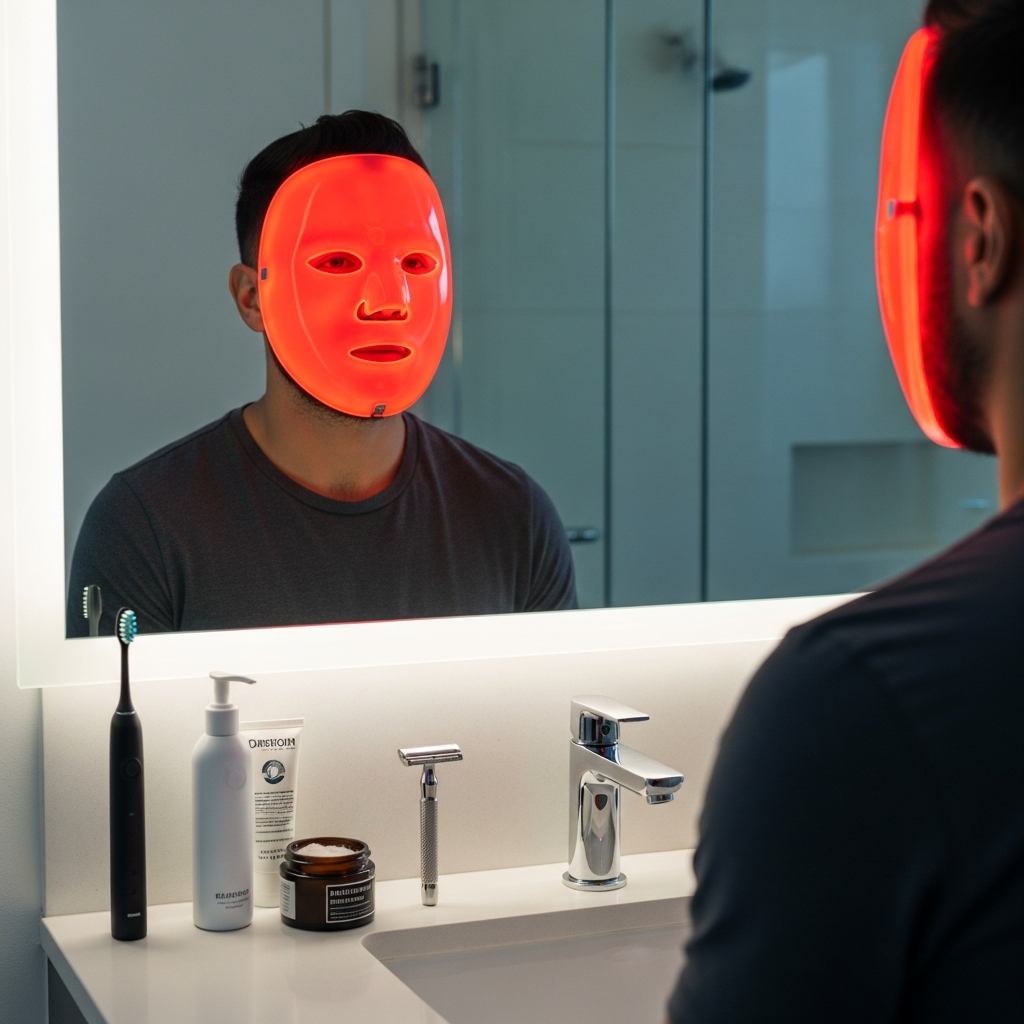
You’re standing in the bathroom mirror — probably in that specific lighting that seems designed to highlight every single thing you wish you couldn’t see — and you notice it. Not dramatically, not all at once. Just a subtle shift. The skin along your jaw doesn’t quite sit where it used to. There’s a softness around your cheeks that feels different from a year ago. You reach up and press gently, and when you let go, it takes just a beat longer than you remember for things to bounce back.
Sound familiar? Yeah. Most of us have had that exact moment.
Here’s the thing – that little “bounce-back test” you just did instinctively in your bathroom? That’s actually a pretty decent informal assessment of skin elasticity. And elasticity – the skin’s ability to stretch, flex, and return to its original shape – is one of the first things that quietly starts to shift as we get older. It’s not the wrinkles people usually see first. It’s the *texture*. The way skin just feels… less taut. Less resilient. Like a rubber band that’s been left in a drawer too long.
The frustrating part is that this isn’t vanity. Well – okay, it’s a little bit vanity, and that’s completely fine and human. But it’s also biology. Pure, unavoidable, written-into-your-DNA biology. Your skin is a living organ, and like every other organ in your body, it changes over time. Collagen production slows. Elastin fibers break down. The structural scaffolding that holds everything firm and plump gradually gets… thinner. Most people start noticing it somewhere in their 30s, though sun exposure, stress, and sleep habits can move that timeline around quite a bit.
So what do you do with that information? You could accept it completely and move on – which is genuinely a valid choice. Or you could look for ways to support your skin from the inside out, rather than just slathering on another cream that promises miracles and delivers mostly moisturizer.
That’s actually where red light therapy comes into the conversation. And I’ll be honest with you – when I first started reading about it, I was skeptical. It sounds a little… sci-fi? Sitting near panels of red light to improve your skin? It feels like something that should come with a tinfoil hat. But the research behind it is surprisingly solid, and it’s been accumulating for decades – not just in beauty circles but in legitimate clinical and dermatological settings.
Red light therapy works at a cellular level, and once you understand the mechanism, the results make a lot more sense. We’re talking about specific wavelengths of light – typically in the 630 to 850 nanometer range – that actually penetrate into the skin’s deeper layers and interact with the mitochondria in your cells. Think of mitochondria as tiny power stations. When red light hits them, it essentially gives them a boost, stimulating increased energy production. And when your skin cells have more energy? They get to work. Collagen synthesis ramps up. Fibroblast activity increases. The very cells responsible for maintaining your skin’s structure start doing their jobs more effectively.
In the sections ahead, you’re going to get a real, honest look at what red light therapy actually does for skin elasticity – not the overhyped marketing version, but the science-backed explanation of what’s happening beneath the surface. We’ll talk about what the clinical studies actually show (spoiler: the results are legitimately interesting), how consistent treatment differs from one-off sessions, and what kinds of improvements are realistic to expect and over what timeframe. Because honestly, one of the biggest problems in this space is the gap between wild promises and actual outcomes, and you deserve straight information.
We’ll also touch on how red light therapy fits into a broader approach to skin health – because it’s not a magic wand, and pretending otherwise wouldn’t be doing you any favors.
If you’ve been curious about whether this is worth exploring – whether it’s genuinely science or mostly sparkly wellness marketing – stick around. By the time you’ve finished reading, you’ll have a clear, grounded picture of exactly what red light therapy can (and can’t) do for your skin’s elasticity, and whether it might be worth adding to your routine.
And hey – no tinfoil hat required.
What’s Actually Happening Under Your Skin
Before we get into how red light therapy does its thing, it helps to understand what’s going on beneath the surface in the first place. And look – skin biology can get complicated fast, so let’s keep this grounded in what actually matters.
Your skin’s elasticity – that springy, snap-back quality that makes skin look young and plump – depends almost entirely on two proteins: collagen and elastin. Think of collagen as the mattress springs inside your skin. It provides structure, firmness, and support. Elastin is more like… a rubber band woven through all those springs. It’s what allows your skin to stretch when you smile or squint, then return to its original shape.
When you’re young, your body produces both of these in generous amounts. But starting somewhere in your mid-to-late twenties (frustrating, right?), production starts declining. By the time you hit your forties, you’re working with significantly less of both. Sun exposure accelerates this. Stress accelerates this. Poor sleep, smoking, sugar – all of it accelerates this. The result is skin that starts to look less like a fresh peach and more like… well, you know.
The Cellular Energy Problem Nobody Talks About
Here’s where it gets interesting – and a little counterintuitive at first.
Red light therapy doesn’t directly inject collagen into your skin or apply some topical filler. Instead, it works at a level most people never think about: your cells’ energy production. Inside nearly every cell in your body, you have tiny structures called mitochondria. You probably remember these from high school biology as “the powerhouse of the cell” – and that description is actually accurate for once.
Mitochondria produce a molecule called ATP (adenosine triphosphate), which is essentially cellular fuel. When your cells have plenty of ATP, they can do their jobs well – including producing collagen and elastin, repairing damage, and managing inflammation. When they’re running low on fuel? Everything slows down. Repair processes stall. Collagen production drops. Your skin starts showing it.
Think of it like a factory with a power outage. The workers are still there, the equipment still exists, but without electricity, nothing gets made.
Why Red Light Specifically
This is the part that confused me the first time I heard it, honestly. Why *red* light? Why not any other color?
It comes down to wavelength. Light travels in waves, and different wavelengths interact with biological tissue in different ways. Red light – specifically in the range of 630 to 700 nanometers – and near-infrared light (around 800 to 850 nanometers) happen to be absorbed particularly well by a molecule inside your mitochondria called cytochrome c oxidase. That’s a mouthful, but here’s the simple version: it acts like a light-sensitive switch inside the mitochondria.
When red or near-infrared light hits that switch, it essentially reboots the cell’s energy production. ATP output increases. The cellular factory gets its power back.
And here’s the thing – this isn’t fringe science anymore. There’s a substantial and growing body of research supporting this mechanism, sometimes called photobiomodulation. NASA actually contributed early research here while studying wound healing for astronauts, which is a fun fact that makes the whole thing feel slightly more credible.
What This Means for Collagen
So when those skin cells – particularly fibroblasts, which are the specific cells responsible for manufacturing collagen and elastin – get that boost in cellular energy, something measurable happens. They become more active. They produce more collagen. They send out signals that encourage tissue remodeling and repair.
It’s worth noting that collagen production isn’t instant. Your body builds collagen gradually, over weeks and months. So red light therapy isn’t a quick fix – it’s more like consistently watering a plant versus expecting it to grow after one good soaking. The changes accumulate.
There’s also an anti-inflammatory component worth mentioning. Chronic low-grade inflammation is one of the sneaky, underappreciated causes of collagen breakdown. Red light therapy appears to help calm that inflammatory environment, which means less ongoing damage even as new collagen is being built. You’re essentially working on two fronts at once.
The fundamentals here aren’t magic. They’re biology – fairly well-understood biology, applied in a specific and targeted way. That’s what makes it worth taking seriously.
Getting the Wavelength Right (This Actually Matters)
Most people grab whatever red light device is cheapest and wonder why nothing’s happening after three weeks. Here’s what they’re missing – not all red light is created equal when it comes to collagen and elasticity specifically.
For skin elasticity, you want wavelengths in the 630-660nm range for surface-level collagen work, and 810-850nm (near-infrared) if you want to hit the deeper dermal layers where elastin actually lives. The sweet spot? A device that delivers both. Single-wavelength panels aren’t bad, but they’re leaving results on the table. When you’re shopping, ignore the marketing language and look for actual wavelength specs in the product documentation. If a company won’t tell you their exact nanometer output… walk away.
Distance and Duration – The Two Things Everyone Gets Wrong
People either press their face directly against the panel (too close, you’re essentially just getting warm) or sit so far back that the irradiance drops off and you might as well be in ambient light. For most home panels, 6-12 inches is your target distance. Think of it like the sweet spot when you’re warming your hands by a fire – too close and it’s uncomfortable, too far and you feel nothing.
Duration is where the other mistake happens. More is not more here. Collagen synthesis responds to a specific dose of light energy – scientists call this the Arndt-Schulz principle, basically meaning there’s an optimal dose and going beyond it actually starts to work against you. For skin elasticity goals, 10-20 minutes per session is the practical window. Past that, you’re not banking extra collagen. You’re just… sitting there.
Consistency Beats Intensity Every Single Time
This is the thing nobody wants to hear but absolutely everyone needs to. Three sessions a week, maintained for 12+ weeks, will outperform daily sessions you do for a month and then abandon. Collagen remodeling is slow by nature – we’re talking about a structural protein that takes weeks to synthesize and mature.
Actually, think of it like watering a plant. You can’t dump a month’s worth of water on it once and expect magic. The cells respond to regular, predictable light exposure. Pick three days that already have a natural anchor – maybe Monday, Wednesday, Friday mornings before your shower – and attach your sessions to something you already do. That’s what makes it stick.
Prep Your Skin Before Each Session
This one’s genuinely underutilized. Clean skin absorbs light more effectively than skin coated in SPF, serums, or even natural oils. Wash your face first – not because the products are harmful, but because you’re essentially clearing the path. Some people swear by doing their session after a gentle exfoliation (two or three times a week max, not every time), and there’s decent logic there. Fresh skin cells are more photoreceptive.
Skip the retinol on the nights you’re doing red light therapy. Retinol makes your skin more light-sensitive in ways that can tip from beneficial into irritating, especially if you’re newer to both.
Pair It With the Right Topicals Afterward
The window immediately after your session – we’re talking 5 to 10 minutes – is when your skin is genuinely more receptive to what you put on it. Blood flow is up, cell activity is elevated. This is exactly when a vitamin C serum earns its keep, because it directly feeds into the collagen synthesis pathway that red light just activated. Follow that with a good peptide moisturizer and you’re stacking two approaches that work beautifully together.
Hyaluronic acid is another good call here, particularly if elasticity loss is accompanied by the kind of surface dryness that makes fine lines look worse than they are.
Track What’s Actually Changing
Take photos in consistent lighting every four weeks – same spot, same angle, same time of day. Elasticity improvements are subtle and gradual, and without documentation most people give up right before results become visible, usually around the 8-10 week mark.
You might also try the pinch test – gently pinch the skin on your cheekbone, release it, and see how quickly it snaps back. It’s not scientific, but it gives you a tactile benchmark. After a few months of consistent sessions, most people notice the difference before they see it.
The Consistency Problem (And Why It Trips Almost Everyone Up)
Here’s the thing nobody tells you when you first get excited about red light therapy – it’s boring. Like, genuinely, sit-still-and-wait boring. And unlike a workout where you feel the burn, or a face mask where you see immediate tightening, red light therapy just… happens. Quietly. Invisibly. Over weeks and months.
That’s actually the biggest challenge most people face. Not the cost, not the science, not finding a device. It’s maintaining the habit when you’re not seeing dramatic before-and-after results in week two.
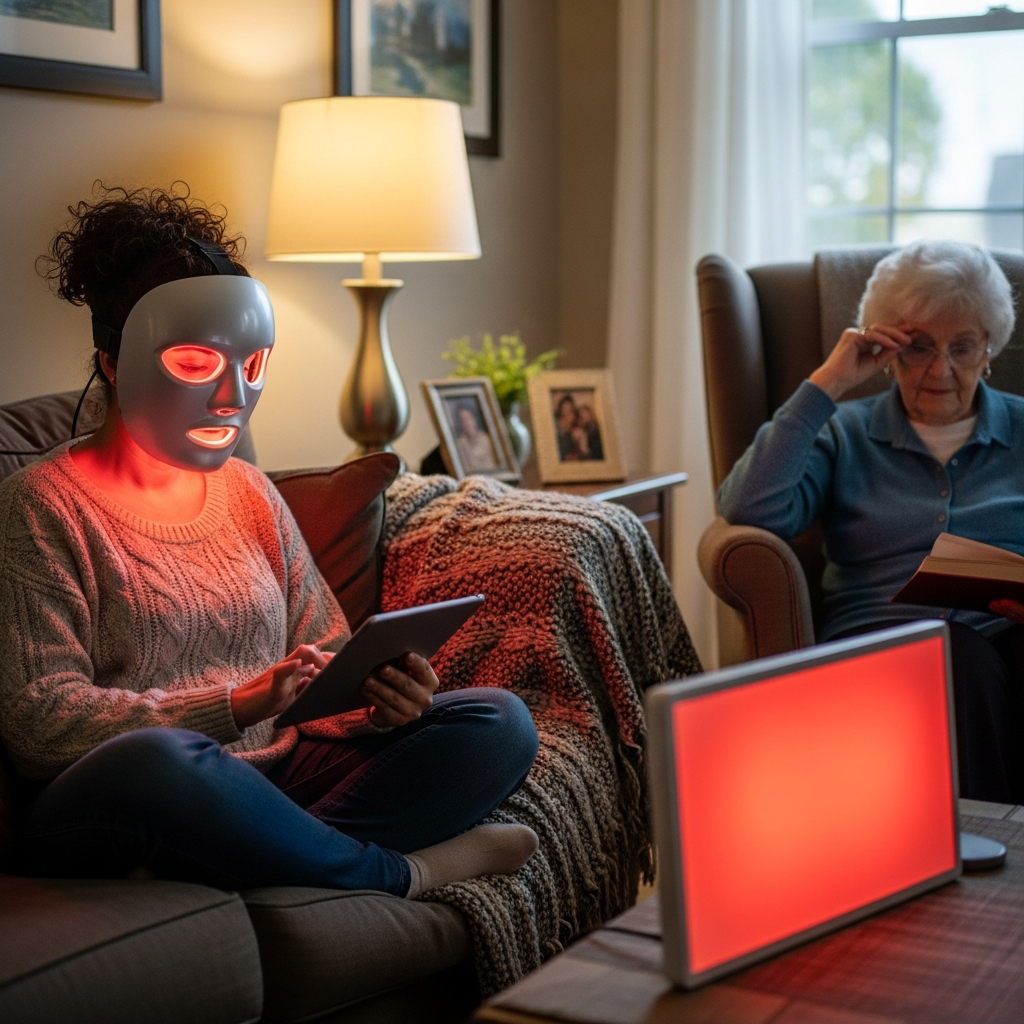
The solution isn’t willpower – it’s design. Stack your sessions onto something you already do without thinking. Watch your nightly show with the device positioned in front of you. Do it while you’re reading before bed. Make it the thing you do while your coffee brews in the morning. When you remove the “finding time” problem, consistency gets dramatically easier.
Distance and Positioning – Getting It Wrong Without Knowing It
Most people assume more intensity means faster results, so they press the device close to their skin. Others, worried about safety, hold it too far away. Both are mistakes.
Red light therapy has what’s called an optimal treatment window – most clinical-grade panels work best somewhere between 6 and 12 inches from your skin, depending on the specific device. Too close and you’re actually reducing the therapeutic effect (and potentially causing unnecessary heat). Too far and the irradiance drops off significantly – the energy literally doesn’t reach the dermal layers where collagen synthesis happens.
Pull out your device manual. Actually read it. If you bought a cheaper device without clear guidance, look up the specific model’s irradiance specifications. This sounds tedious, but getting distance right might be the difference between seeing results and wondering why nothing’s changing.
When Your Skin Gets Worse Before It Gets Better
Some people – not everyone, but enough that it’s worth mentioning – notice their skin looking a bit dull, slightly irritated, or even breaking out in the first couple weeks. Frustrating doesn’t begin to cover it.
What’s actually happening is often a cellular housecleaning process. Red light stimulates mitochondrial activity, which can kickstart some turnover before the good stuff becomes visible. Think of it like reorganizing a messy room – things look worse right before they look better.
The honest solution here? Give it six weeks before you make any judgments. Take photos on day one (nobody remembers what their skin actually looked like, and you’ll gaslight yourself into thinking nothing changed). Check back at week three and week six. The comparison usually tells a different story than the mirror does on a random Tuesday morning.
Device Quality – Where People Often Shortchange Themselves
This one’s awkward to talk about because nobody wants to hear “you might need to spend more money.” But it’s genuinely true that the $40 handheld wand from a random online retailer is not doing what a properly calibrated clinical device does.
The critical specs are wavelength and power density (irradiance). For skin elasticity specifically, you want devices emitting in the 630-660nm range for surface-level skin work, with deeper tissue benefits coming from near-infrared around 810-850nm. Cheap devices often emit outside these windows, or claim wavelengths they’re not actually delivering.
You don’t necessarily need to buy a $600 panel for your home. But you should either invest in a reputable device with verified specs, or access clinical-grade equipment through a professional setting where you know exactly what you’re getting.
Expecting Red Light to Work Alone
Here’s a real honest moment – if you’re significantly dehydrated, sleeping four hours a night, and eating in ways that drive inflammation, red light therapy is fighting uphill against all of that. It’s not magic. It’s a powerful tool that works with your biology, not around it.
Collagen synthesis requires adequate protein and vitamin C. Skin elasticity is tanked by chronic stress and poor sleep. You don’t have to be perfect – nobody is – but treating red light as one piece of a bigger picture gives it the conditions it needs to actually deliver results.
Think of it like watering a plant. The light helps it grow, but you still need soil. The two work together.
What to Actually Expect (And When)
Let’s be honest with each other for a second. Red light therapy isn’t magic. It’s not going to turn back the clock twenty years in a single session, and anyone who tells you otherwise is selling something. What it *is* – when used consistently and correctly – is a genuinely effective way to support your skin’s natural repair processes over time. The timeline just looks a little different than most people hope for.
Here’s the realistic version: most people start noticing subtle changes somewhere around the six to eight week mark. Not dramatic transformation – more like catching your reflection and thinking “huh, my skin looks… good today?” That slightly firmer feel around your jawline. A little more glow. Friends might comment that you look rested. That’s usually the first sign things are working.
Full, visible improvements in elasticity? You’re probably looking at three to six months of regular sessions. That’s not a flaw in the therapy – that’s just how collagen works. Your body needs time to actually build new structural proteins, not just get a temporary boost.
The First Few Weeks Feel Like Nothing
This is the part nobody warns you about, and it trips people up constantly. During weeks one through four, you might feel like you’re doing something completely pointless. Your skin looks the same. Maybe you’re slightly more hydrated, maybe not. You’re showing up, doing the sessions, and… nothing obvious is happening.
But here’s what’s actually going on beneath the surface – your skin cells are responding to the light, mitochondrial activity is picking up, and the early stages of collagen synthesis have started. You just can’t see it yet. Think of it like planting seeds in winter. The ground looks exactly the same. The seeds are very much not the same.
Stick with it through this phase. Seriously. This is where most people quietly give up, which means they never get to see the results they were working toward.
What “Results” Actually Look Like
Managing expectations here matters a lot, because “improved elasticity” can mean different things depending on where you’re starting from.
If you’re in your thirties and dealing with early skin laxity, you might see fairly noticeable tightening – skin that snaps back more readily, smoother texture, better definition. If you’re in your fifties or sixties with more significant changes, the improvement will likely be more subtle – a softening of deeper lines, skin that looks healthier and more hydrated, a reduction in that papery quality. Both of those are real, meaningful outcomes. They’re just not identical.
Red light therapy works *with* what your skin can do, not instead of it. It’s supporting your biology, not overriding it. Which means the healthier your overall foundation – sleep, hydration, sun protection, nutrition – the more you’re going to get out of it.
Setting Up a Realistic Routine
Consistency is genuinely everything here. Three to five sessions per week is the sweet spot for most people – enough stimulation to keep those cellular processes active without overdoing it. Sessions are typically ten to twenty minutes, so we’re talking about carving out maybe an hour total across your week.
Actually, one thing worth mentioning: more is not better with red light therapy. There’s a dosing curve, and oversaturating your skin with light doesn’t accelerate results – it can actually blunt them. Follow the recommended session lengths and give your skin recovery time between sessions.
Keep a simple photo log. Just your phone camera, same lighting, same angle, once a month. It’s the single best thing you can do to stay motivated, because progress in skin texture and elasticity is genuinely hard to perceive day-to-day. A side-by-side from month one to month four tells a completely different story.
When to Check In With Your Provider
If you’re using red light therapy as part of a broader wellness or medical plan – which is often the smartest approach – loop in your provider around the eight to twelve week mark. They can assess what’s happening objectively, adjust session frequency if needed, and potentially recommend complementary approaches that work synergistically with what you’re already doing.
Some people see wonderful results from red light therapy alone. Others get even better outcomes when it’s combined with other skin health strategies. Your provider can help you figure out which category you’re in, rather than guessing.
The bottom line? Give it real time, be consistent, and try not to judge it week by week. Your skin is doing more than it’s showing you.
Here’s a warm, natural conclusion for your article
—
So here’s what it really comes down to: your skin has an incredible ability to respond, adapt, and – with the right support – actually rebuild itself. Red light therapy isn’t some miracle promise or overnight transformation. It’s science working *with* your body’s own systems, nudging your cells to do what they were always designed to do. Produce collagen. Repair. Renew.
And honestly? That’s kind of beautiful.
The research we’ve looked at isn’t wishful thinking. The wavelengths, the cellular response, the measurable improvements in firmness and elasticity – this is real, documented biology. Your skin’s fibroblasts are genuinely responsive to this kind of light energy, and for a lot of people, consistent treatment translates to skin that feels more like *theirs* again. Softer. More resilient. Less like something that’s just been through the wringer.
Which, let’s be honest… it has. Life does that.
This Isn’t Just About Vanity (Though That’s Okay Too)
There’s nothing wrong with wanting to feel good in your skin. Wanting to look in the mirror and feel *recognized* by the face looking back at you – that’s deeply human. But beyond the cosmetic, improved skin elasticity actually matters for how your skin functions, how it heals, how it holds up over time. So whether you’re drawn to red light therapy because you want to address fine lines, loose skin after weight loss, or just that general dullness that seems to creep in somewhere around your late thirties… all of those are completely valid reasons to explore it.
You don’t have to justify wanting to take care of yourself.
Where to Go From Here
If you’ve been reading through all of this and feeling that little flicker of *maybe this could work for me* – pay attention to that. Not every treatment is right for every person, and the best next step isn’t necessarily booking the first appointment you find online. It’s having an actual conversation with someone who understands your health history, your skin’s specific needs, and how red light therapy might fit into a broader picture of your wellness.
That’s exactly the kind of conversation we love having.
If you’re curious about whether red light therapy might be a good fit for where you are right now, we’re genuinely here for that. No pressure, no hard sell – just a real talk about what your options look like and what kind of support would actually make sense for you. You can reach out to our team anytime to ask questions or schedule a consultation, and we promise it’ll feel more like talking to a knowledgeable friend than sitting through a sales pitch.
You’ve been taking care of everyone else for a long time, probably. Maybe it’s time to put a little of that energy back toward yourself. Your skin – and honestly, the rest of you – has earned it.