How a Red Light Therapy Mask Improves Skin Health
You know that moment when you catch your reflection in a store window and think, “Who is that tired-looking person staring back at me?” Yeah… we’ve all been there. Maybe it’s the stress lines that seem to have appeared overnight, or the way your skin just looks – well, *blah* – despite trying every cream in the skincare aisle.
I was talking to Sarah last week (she’s one of our patients), and she said something that really stuck with me: “I feel like my skin is betraying me. I’m doing everything right – drinking water, eating well, getting sleep when I can – but I still look exhausted.” Sound familiar?
Here’s the thing though – what if I told you there’s this fascinating piece of technology that looks like something straight out of a sci-fi movie, but actually works by tapping into the same light wavelengths that help plants grow? And no, I’m not talking about some sketchy late-night infomercial gadget. I’m talking about red light therapy masks, and honestly… the science behind them is pretty incredible.
Now, I’ll admit it – when I first heard about people strapping LED lights to their faces, I was skeptical. My initial thought was, “Great, another beauty trend that’s all hype and no substance.” But then I started digging into the research (occupational hazard of being in healthcare), and what I found actually surprised me.
Red light therapy isn’t some new-age wellness fad that popped up on social media last week. It’s been studied for decades, originally developed by NASA – yes, *that* NASA – to help astronauts heal faster in space. Pretty cool origin story, right? Turns out, specific wavelengths of red and near-infrared light can actually communicate with our cells at a molecular level, essentially giving them a gentle nudge to work more efficiently.
Think of it like this: remember when you were a kid and your phone battery would die, but sometimes if you plugged it in and gave it just the right amount of charge, it would suddenly spring back to life? That’s kind of what’s happening with your skin cells when they’re exposed to therapeutic red light. They get this little energy boost that helps them repair, regenerate, and function like they did when you were… well, younger.
But here’s what really matters to you – and this is where it gets exciting – we’re not just talking about some subtle, “maybe I look slightly less tired” kind of improvement. The research shows red light therapy can target some of the most frustrating skin concerns that keep us up at night (ironically enough). We’re talking about those fine lines that make you avoid certain angles in photos, the stubborn acne that should have disappeared after your teens but apparently didn’t get the memo, and that overall dullness that no amount of highlighter can fix.
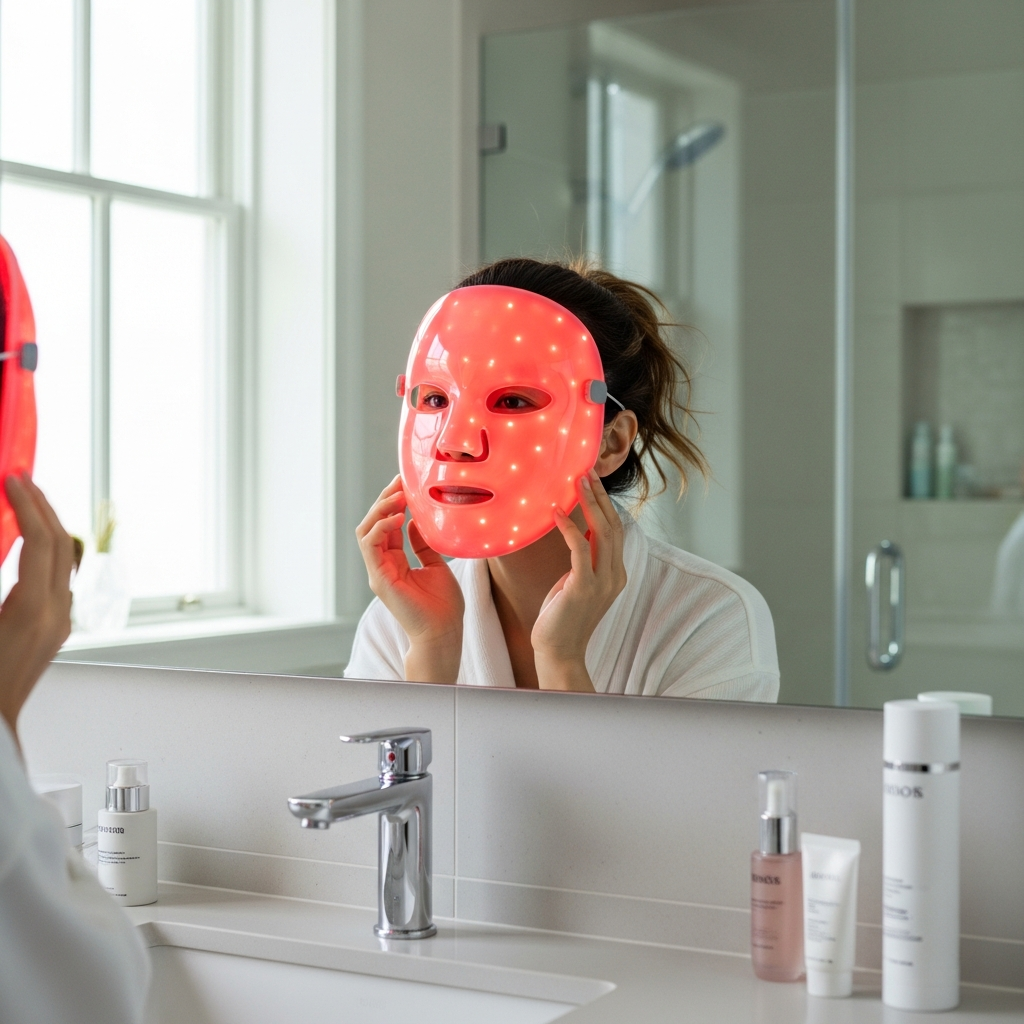
What I love about red light therapy masks – and why I think they’re worth your attention – is that they work with your skin’s natural processes rather than against them. No harsh chemicals, no painful procedures, no downtime where you have to hide from the world. Just you, a mask that looks admittedly a bit extraterrestrial, and about 10-20 minutes of your day.
Of course, like anything worth doing, there’s a right way and a wrong way to approach this. Not all red light masks are created equal (shocking, I know), and understanding what to look for can save you from wasting money on something that’s basically a fancy night light. Plus, there are some people who should definitely talk to their doctor first – which we’ll get into.
Actually, that reminds me of another conversation I had recently. My neighbor mentioned she’d been thinking about trying red light therapy but felt overwhelmed by all the information (and misinformation) out there. “I don’t want to become a guinea pig,” she said, “but I also don’t want to miss out on something that could actually help.”
That’s exactly why I wanted to break this down for you – to cut through the marketing hype and give you the real scoop on what red light therapy masks can and can’t do, how they actually work (the science is fascinating, but I promise to keep it digestible), and most importantly, how to know if this might be right for your skin and your life.
So grab your favorite beverage, get comfortable, and let’s explore whether this glowing face mask trend might just be the skin game-changer you’ve been looking for…
What Exactly Is Red Light Therapy, Anyway?
You know that feeling when you step outside on a sunny day and your face just… feels better? There’s something about natural light that seems to wake up your skin. Well, red light therapy is kind of like bottling up the best parts of that experience – minus the UV damage, obviously.
At its core, we’re talking about specific wavelengths of light (usually between 660-850 nanometers, if you care about the nerdy details). Think of it like a very precise flashlight that speaks your skin’s language. Unlike the harsh fluorescent bulbs in your office that make everyone look like extras from a zombie movie, red light delivers energy that your cells can actually use.
The whole thing sounds a bit sci-fi when you first hear about it – I get that. Shining colored lights on your face to improve your skin? It’s the kind of thing that makes you wonder if someone’s trying to sell you snake oil. But here’s where it gets interesting…
Your Skin Cells Are Basically Tiny Power Plants
This is where things get genuinely fascinating, even if the science makes your eyes glaze over sometimes. Every cell in your body contains these little powerhouses called mitochondria – think of them as microscopic batteries that keep everything running smoothly.
As we age (and I’m talking starting in our twenties, which is honestly just rude), these cellular batteries start losing their charge. It’s like having an old phone that dies by 3 PM even though you barely used it. Your skin cells become sluggish, producing less collagen, taking longer to repair damage, and generally acting like they need a strong cup of coffee.
Red light therapy works by giving these mitochondria a gentle energy boost. The specific wavelengths penetrate your skin – not too shallow, not too deep – and get absorbed by something called cytochrome c oxidase. That’s a mouthful, I know, but basically it’s like flipping the “on” switch for cellular energy production.
The Penetration Game – It’s All About Depth
Here’s something that confused me at first: not all light is created equal when it comes to reaching your skin cells. Blue light (the stuff that keeps you awake when you’re scrolling your phone at midnight) barely makes it past the surface. UV light goes deeper but… well, we all know how that story ends.
Red and near-infrared light hit that Goldilocks zone – not too shallow, not too deep, but just right. We’re talking about penetrating roughly 1-2 centimeters into your tissue, which means it can reach the dermis where all the good stuff happens. That’s where your collagen factories are churning away, where blood vessels deliver nutrients, where the real action takes place.
Think of it like watering a plant. You don’t want to just sprinkle the leaves (that’s what most topical treatments do), and you don’t want to flood the roots with a fire hose. You want steady, gentle hydration that reaches exactly where it needs to go.
Why Your Skin Actually Responds to This
The counterintuitive part? Your skin doesn’t just passively receive this light therapy – it actively responds to it. When those mitochondria get their energy boost, they start producing something called ATP (adenosine triphosphate, but let’s just call it cellular fuel).
More cellular fuel means your skin cells can do their jobs better. They produce more collagen – that’s your skin’s scaffolding that keeps everything tight and smooth. They increase blood flow, bringing fresh nutrients and carting away waste products. They even ramp up the production of antioxidants, giving you better natural protection against environmental damage.
It’s like having a really good manager at work – suddenly everyone’s more productive, communication improves, and things just… function better.
The Time Factor – Patience, Grasshopper
Here’s something that trips people up: red light therapy isn’t an instant gratification kind of thing. Your skin didn’t develop fine lines overnight (even though it sometimes feels that way), and it’s not going to reverse them after one session either.
We’re talking about encouraging biological processes that typically take weeks to months. New collagen production, cellular turnover, improved circulation – these are marathon changes, not sprint results. Most people start noticing subtle improvements around the 4-6 week mark, with more dramatic changes showing up after 12 weeks of consistent use.
Actually, that reminds me of learning to play piano… you practice daily, and for weeks it feels like you’re making no progress, then suddenly your fingers find the rhythm and it all clicks into place.
Getting the Most Bang for Your Buck: Usage Frequency That Actually Works
Here’s what nobody tells you about red light therapy masks – more isn’t always better. I see people going overboard, thinking daily 20-minute sessions will fast-track their results. Actually? You might be wasting your time… and potentially irritating your skin.
Start with 3-4 sessions per week, 10-15 minutes each. Your skin needs recovery time between treatments – think of it like strength training for your face. The mitochondria in your cells need time to process all that cellular energy you’re feeding them.
After about 3-4 weeks, you can bump up to daily use if your skin’s loving it. But watch for signs of overdoing it: increased redness that doesn’t fade within an hour, or that tight, slightly irritated feeling. Your skin will tell you when it’s had enough.
The Secret Timing Most People Get Wrong
Timing isn’t just about duration – it’s about when you use your mask. The sweet spot? About 30 minutes after your evening skincare routine, but here’s the kicker… skip the heavy creams beforehand.
That expensive night moisturizer you love? It’s actually blocking the light wavelengths from penetrating effectively. I know, I know – it feels wrong to skip your beloved routine. But red light works best on clean, product-free skin.
If you absolutely must use something (maybe your skin gets tight without moisture), stick to a thin layer of hyaluronic acid serum. It won’t interfere with light penetration, and actually – the increased circulation from the therapy helps your skin absorb it better afterward.
Distance and Positioning: The 6-Inch Rule
Most masks come with vague instructions about positioning, but here’s what actually matters: keep that mask about 6 inches from your face. Closer isn’t better – you need the light to disperse evenly across your skin.
I see people pressing these masks right against their faces, thinking they’re maximizing contact. Wrong move. You’re creating hot spots and uneven coverage. The light needs space to work its magic.
And please, please don’t wear it while scrolling your phone. The blue light from your screen can actually counteract some of the benefits you’re trying to achieve. Use this time to meditate, listen to a podcast, or just… breathe. Revolutionary concept, right?
What to Expect Week by Week (The Real Timeline)
Week 1-2: Honestly? You might not see much. Maybe your skin feels a tiny bit more supple, but don’t panic if you’re not glowing yet. Your cells are just getting started with increased collagen production.
Week 3-4: This is where things get interesting. You’ll probably notice your skin texture smoothing out first – those little bumps and rough patches start evening out. Fine lines around your eyes might look softer, though it’s subtle.
Week 6-8: Now we’re talking. This is typically when people start getting compliments. Your skin tone becomes more even, and there’s this subtle luminosity that’s hard to describe but impossible to miss.
Month 3 and beyond: The good stuff. Deeper lines start softening, your skin develops this resilient quality, and sun damage begins fading. This is when red light therapy shifts from “nice experiment” to “non-negotiable part of my routine.”
Troubleshooting Common Hiccups
Getting headaches? You’re probably using it too close to your eyes or for too long. Some masks can be pretty intense, especially the higher-powered ones. Try closing your eyes and backing off the duration.
Not seeing results after a month? Check your mask’s wavelength specifications. You want devices that emit light in the 660-850 nanometer range. Anything outside that sweet spot won’t penetrate deep enough to trigger the cellular changes you’re after.
Skin looking dull instead of glowing? This might sound counterintuitive, but you could be overexfoliating in combination with the therapy. Red light is already encouraging cell turnover – adding aggressive exfoliation on top can overwhelm your skin’s renewal process.
The Maintenance Phase Nobody Talks About
Here’s something most articles won’t tell you – once you hit your results sweet spot (usually around month 3-4), you don’t need to maintain the same intensive schedule. Drop down to 2-3 times per week for maintenance.
Your skin will hold onto those improvements for a while, but completely stopping will gradually reverse the benefits over 2-3 months. Think of it like working out – you can ease up on the intensity once you reach your goals, but you can’t stop entirely and expect to maintain the results.
When Red Light Therapy Feels Like Another Failed Promise
Let’s be real – you’ve probably tried a dozen different skincare solutions that promised the world and delivered… well, not much. So when you hear about red light therapy masks, there’s this little voice in your head going “Yeah, right. Another expensive gadget that’ll end up in my bathroom drawer.”
I get it. The skepticism is actually healthy here. But the difference with red light therapy is that the science is pretty solid – NASA didn’t develop this technology for fun. The challenge isn’t whether it works (it does), but whether you can actually stick with it long enough to see results.
And that’s where most people stumble.
The Consistency Trap (And How to Escape It)
Here’s what typically happens: You buy the mask, use it religiously for a week, maybe two. you’re feeling good about yourself – you’re finally doing something proactive for your skin. Then life happens. You skip a day. Then three days. Before you know it, the mask is gathering dust and you’re back to feeling frustrated.
Sound familiar?
The thing about red light therapy is that it’s not a quick fix – you need consistent use over weeks to see real changes. Your skin cells don’t just flip a switch and start producing more collagen overnight. They need time and regular stimulation.
Here’s what actually works: Start ridiculously small. Don’t aim for the recommended 15-20 minutes every day right off the bat. Start with 5 minutes, three times a week. I know it sounds too easy, but that’s the point. You want to build the habit before you worry about perfect optimization.
Once you’ve done that consistently for two weeks (and I mean consistently – mark it on your calendar), then bump it up. The goal is to make it so automatic that skipping feels weird.
The “Is This Actually Working?” Anxiety
Around week three or four, you’ll start second-guessing everything. Your skin might look exactly the same to you, and you’ll wonder if you’re just throwing money at another skincare myth.
This is normal. Actually, it’s so normal that I should probably warn everyone about it upfront.
Your skin renews itself roughly every 28 days, but the deeper changes that red light therapy promotes – increased collagen production, improved cellular function – take longer to become visible. We’re talking 6-12 weeks for most people to see significant changes.
The solution? Take photos. I know, I know – nobody wants pictures of their bare face under harsh lighting. But here’s the thing: your brain adapts to gradual changes. You literally can’t see the improvement happening day by day because you look at yourself constantly. Photos don’t lie, and they don’t have the same bias your mirror does.
Take them in the same lighting, same angle, same time of day. Do it weekly, not daily (daily photos will just drive you crazy). Trust me on this one.
The Time Crunch Reality Check
“I don’t have 20 minutes to just sit there” – probably the most common complaint I hear. And honestly? Fair point. Life is busy, and sitting still with a mask on can feel like a luxury you can’t afford.
But here’s where you can get creative. Those 15-20 minutes don’t have to be meditation time. You can use your mask while
– Checking emails (though maybe avoid video calls…) – Listening to podcasts or audiobooks – Doing gentle stretches – Planning your week – Having your morning coffee
The key is pairing it with something you already do or enjoy. Make it part of your routine, not an addition to it.
When Your Skin Freaks Out Initially
Sometimes – not always, but sometimes – your skin might look slightly worse before it looks better. Maybe a little more red than usual, or you break out slightly in the first week or two.
Don’t panic. This isn’t necessarily a bad reaction (though if you experience serious irritation, definitely stop and consult a dermatologist). Sometimes it’s just your skin adjusting to increased cellular activity.
Think of it like starting a new workout routine – your muscles might be sore at first, but that doesn’t mean exercise is bad for you. Your skin might just need a few sessions to adjust to the increased circulation and cellular regeneration.
If you’re concerned, dial back the frequency for a week. Use it every other day instead of daily. Most people find their skin settles down quickly once it adapts.
The bottom line? Red light therapy masks work, but they require patience and consistency – two things that don’t come naturally when you’re frustrated with your skin. Start small, track your progress, and give it time. Your future self will thank you.
What You Can Realistically Expect (And When)
Look, I’m going to be straight with you about timelines because – honestly – the skincare world is full of promises that sound too good to be true. And usually? They are.
With red light therapy, you’re not going to wake up tomorrow looking like you’ve had a professional facial. This isn’t magic – it’s science, and science takes time to work its way through your skin cells.
Most people start noticing subtle changes around the 4-6 week mark. We’re talking about things like… your skin feeling a bit more plump when you touch it, or maybe your partner mentions you look well-rested (even when you definitely aren’t). The really visible stuff – reduced fine lines, more even tone, that healthy glow everyone’s chasing – that typically shows up between 8-12 weeks of consistent use.
Actually, that reminds me of something important. When I say “consistent,” I mean it. Using your mask three times one week and then forgetting about it for ten days isn’t going to cut it. Think of it like going to the gym – sporadic efforts get sporadic results.
The First Month: What’s Really Happening
During those first few weeks, you might feel like nothing’s happening. Don’t panic. Your skin is actually working overtime beneath the surface, ramping up collagen production and improving cellular turnover. It’s like renovating a house – most of the important work happens behind the walls before you see the pretty new paint.
Some people experience what I call the “adjustment phase” – maybe a little redness right after treatment (totally normal and usually fades within an hour), or even a minor breakout as your skin adjusts to increased cellular activity. If this happens to you, don’t throw in the towel. Your skin is essentially learning a new routine.
The key here is patience mixed with realistic expectations. You’re not going to look ten years younger, but you very well might look like the best version of yourself right now.
Beyond the 12-Week Mark
Here’s where things get interesting. After about three months of regular use, most people hit what I like to call the “maintenance sweet spot.” Your skin has adapted, the initial improvements have settled in, and you start seeing the cumulative effects of all that cellular repair work.
This is when people often ask me: “So… do I need to keep using it forever?” And honestly? That depends on what you want. Think of red light therapy like exercise for your face. You can stop, but you’ll gradually lose the benefits you’ve built up. Most of our clients find a rhythm that works – maybe daily use for the first few months, then scaling back to 3-4 times a week for maintenance.
Making It Actually Work in Your Life
Let’s talk logistics because having a fancy mask is pointless if it sits in your bathroom drawer collecting dust.
The best time? Really depends on your schedule. Some people love the morning ritual – it’s energizing and sets a positive tone for the day. Others prefer evening sessions while watching Netflix or catching up on podcasts. The “right” time is whatever time you’ll actually stick with.
And here’s a practical tip nobody talks about: charge the thing regularly. I can’t tell you how many people get derailed simply because their mask died mid-session and they forgot to plug it in.
When to Check in With Yourself
Mark your calendar for the 6-week point. Seriously – put it in your phone right now. Take a good, honest look at your skin. Are you seeing any positive changes? Even subtle ones? If yes, keep going – you’re on the right track.
If you’re not seeing anything at all by 8-10 weeks… that’s worth a conversation with someone who knows your specific situation. Sometimes it’s as simple as adjusting your routine or addressing other factors that might be working against you.
The Reality Check You Need to Hear
Red light therapy isn’t going to fix everything, and it definitely won’t work miracles if the rest of your skincare routine is a disaster. You still need sunscreen (please, for the love of all that’s good, wear sunscreen). You still need to stay hydrated, get decent sleep, and not pick at your face.
Think of your red light mask as one really good player on your skincare team – valuable, effective, but not expected to carry the entire game alone.
The bottom line? Give it time, be consistent, and adjust your expectations to reality rather than Instagram filters. Your skin will thank you for the patience.
Your Skin’s New Best Friend
You know what’s funny? We spend so much time looking for complicated solutions when sometimes the simplest approaches work best. That’s exactly what makes this whole red light therapy thing so refreshing – it’s not asking you to overhaul your entire life or follow some impossible routine.
Think about it… you get to lie there for 10-20 minutes while gentle light does the heavy lifting. No harsh chemicals, no painful procedures, no wondering if you’re doing it “right.” It’s like giving your skin cells a gentle wake-up call – hey, remember how to make collagen? Remember how to heal faster? Let’s get back to work.
And honestly, that’s what I love most about this approach. Your skin already knows what to do. Those mitochondria in your cells? They’ve been waiting for this kind of energy boost. The collagen production, the improved circulation, the faster healing – it’s all stuff your body wants to do anyway. The red light just gives it the nudge it needs.
I’ve seen people get so excited about their results that they start taking selfies again… or stop avoiding mirrors… or finally feel comfortable going makeup-free to the grocery store. Those might sound like small things, but they’re not, are they? When you feel good about your skin, it changes how you move through the world.
But here’s the thing – and I can’t stress this enough – what works for your friend or your neighbor might need tweaking for you. Maybe you need longer sessions, or maybe your skin responds better to different wavelengths. Maybe you’re dealing with specific concerns like acne scars or age spots that need a more targeted approach. That’s totally normal, by the way.
The beauty of working with professionals (like us!) is that we can help you figure out exactly what your skin needs. We’ve seen thousands of different skin types and concerns, and we know how to adjust treatments to get you the best results. Plus, we can combine red light therapy with other approaches – sometimes a little vitamin C serum here, some gentle exfoliation there… it all works together.
Your skin has been with you through everything – late nights, stress, sun exposure, hormonal changes, all of it. It deserves some TLC, don’t you think? And the great news is that it’s never too late to start giving your skin the support it needs to look and feel its best.
If you’re curious about whether red light therapy might be right for you, or if you have questions about how it might work with your current routine… just give us a call. Seriously. We love talking about this stuff, and there’s no pressure – we just want to help you figure out what might work best for your unique situation.
Your skin (and your confidence) will thank you for taking that first step. And honestly? We’d love to be part of that journey with you.
Ready to see what red light therapy can do for your skin? Reach out to our team – we’re here to answer your questions and help you create a plan that actually fits your life.