How Red Light Therapy Improves Blood Circulation
Your hands are freezing again. It’s 72 degrees in your office, but your fingers feel like you’ve been making snow angels for an hour. You rub them together, blow on them, maybe even stick them under warm water in the bathroom sink – but twenty minutes later? Ice cubes again.
Sound familiar? You’re not alone in this daily struggle with poor circulation. And honestly, it might be more than just annoying cold hands and feet…
Here’s what your body’s trying to tell you: when your blood isn’t flowing the way it should, everything else starts to feel off too. Your energy crashes around 2 PM (even after that third cup of coffee). Your legs feel heavy walking up stairs. Those little cuts and scrapes take forever to heal. Your brain feels foggy, like you’re thinking through molasses.
The thing is, we’ve been taught to just… live with it. Pop some iron supplements. Drink more water. Exercise more – which sounds great in theory, but when you’re already exhausted, that last thing you want to do is hit the gym.
But what if I told you there’s something that doesn’t require you to change your entire lifestyle? Something that’s been hiding in plain sight, backed by real science, yet somehow flying under the radar of most wellness conversations?
Enter red light therapy.
Now, before you roll your eyes and think “Oh great, another trendy gadget,” hear me out. This isn’t some Instagram wellness fad that’ll disappear next month. We’re talking about specific wavelengths of light – the same ones your body has been responding to for millions of years – that can literally wake up your circulation at the cellular level.
Think about it this way: you know how plants lean toward sunlight? How you naturally feel more energized on bright, sunny days? Your cells are having conversations with light all the time. They just need the right frequency to really listen.
And when it comes to blood flow, red light therapy is like having a really persuasive conversation with your circulatory system. It doesn’t force anything – it just gently encourages your blood vessels to do what they’re supposed to do: deliver oxygen and nutrients where they need to go, when they need to get there.
I’ve been writing about health and wellness for years, and I’ll be honest – I was skeptical at first. Another light therapy? Really? But then I started digging into the research (and trust me, there’s a lot of it), and talking to people who’ve actually tried it. The stories are… well, they’re pretty compelling.
Like Sarah, who couldn’t feel her toes for months after a particularly stressful period at work. Or Mike, whose hands were so cold his wife refused to let him touch her (fair enough, honestly). These aren’t dramatic before-and-after transformation stories – they’re real people who noticed real changes in how their bodies felt day to day.
The beauty of understanding how red light therapy works for circulation is that it explains so many other things too. Why people report sleeping better. Why wounds heal faster. Why that afternoon energy crash becomes less… crashy.
In this article, we’re going to walk through exactly what happens when red light meets your blood vessels – and it’s more fascinating than you might think. We’ll talk about the specific wavelengths that matter (because not all red light is created equal), how long it actually takes to see results (spoiler: it’s not overnight, but it’s not forever either), and what you should realistically expect.
I’ll also share some practical stuff – like what to look for if you’re considering trying it, how to avoid the overpriced gadgets that don’t actually work, and why timing matters more than you’d think.
Because here’s the thing: better circulation isn’t just about warm hands and feet. It’s about your body working the way it’s supposed to. And that? That changes everything.
The Circulation Highway System
Think of your circulatory system like a massive highway network – you’ve got major interstates (arteries), smaller roads (veins), and tiny neighborhood streets (capillaries) all working together to keep traffic flowing. When everything’s humming along smoothly, nutrients and oxygen zip around your body like packages on the world’s most efficient delivery route.
But here’s where it gets interesting… sometimes this highway system hits traffic jams. Maybe the roads narrow a bit, or the traffic signals aren’t timed quite right. That’s essentially what happens when circulation slows down – and it’s way more common than you’d think.
What Actually Is Red Light Therapy?
Okay, so red light therapy sounds a bit like something from a sci-fi movie, right? I get it. But it’s actually pretty straightforward – we’re talking about specific wavelengths of light, typically between 660 and 850 nanometers, that can penetrate your skin without any heat or UV damage.
You know how plants use light for photosynthesis? Well, your cells have their own version of this process. When red and near-infrared light hits your tissues, it kickstarts something called photobiomodulation – which is basically a fancy way of saying “light makes your cells work better.”
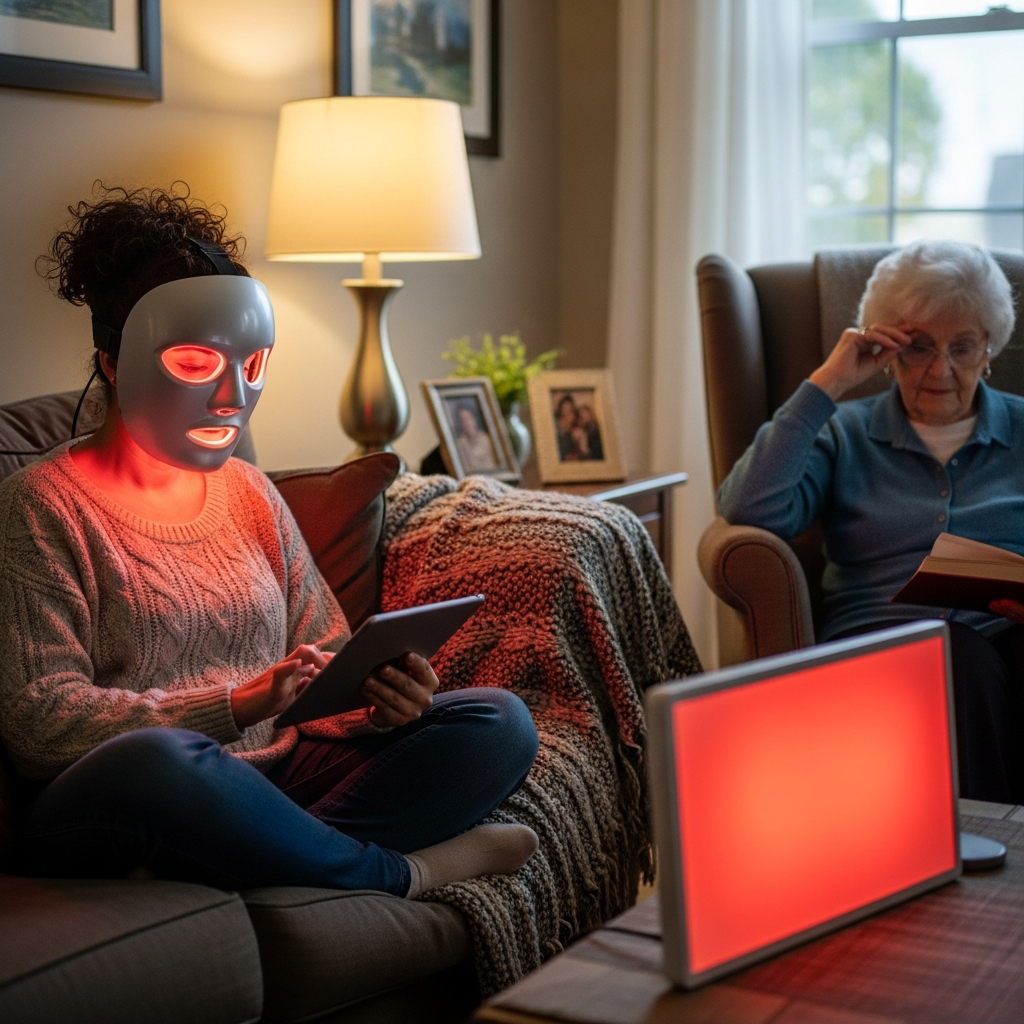
The devices themselves look surprisingly ordinary… LED panels, handheld wands, even full-body beds that remind me of tanning booths (minus the harmful UV rays, of course).
The Cellular Power Plant Connection
Here’s where things get genuinely fascinating – your cells contain these tiny powerhouses called mitochondria. Think of them as microscopic batteries that keep everything running. When red light photons reach these mitochondria, they essentially give them a little energy boost.
It’s like plugging your phone into a charger, except instead of electricity, we’re using specific light wavelengths. The mitochondria absorb this light energy and convert it into ATP – the cellular currency your body actually uses for, well, everything.
And here’s the cool part: when your cells have more energy, they can do their jobs better. Including the job of maintaining healthy blood vessels and circulation.
Why Circulation Actually Matters More Than You Think
Most of us don’t really think about circulation until something goes wrong. But your blood is constantly making deliveries – oxygen to your muscles, nutrients to your organs, and picking up waste products along the way. It’s also your body’s heating and cooling system, immune cell transport network, and chemical messenger service all rolled into one.
Poor circulation isn’t just about cold hands and feet (though that’s definitely annoying). When blood flow slows down, you might notice slower healing, muscle fatigue, brain fog… your body’s basically running on a slower internet connection.
The Nitric Oxide Game Changer
Now here’s something that might sound counterintuitive – red light therapy appears to boost something called nitric oxide production. I know, I know… nitric oxide sounds like something you’d put in a race car, not your body.
But nitric oxide is actually one of your blood vessels’ best friends. It acts like a natural signal telling your blood vessels to relax and widen – imagine traffic lanes suddenly expanding during rush hour. More space means better flow, and better flow means everything downstream works more efficiently.
The research suggests that red light wavelengths can stimulate the enzyme that produces nitric oxide, essentially giving your circulation system a green light to open up those pathways.
The Anti-Inflammatory Bonus
Here’s something that often surprises people – chronic inflammation is like having tiny roadblocks scattered throughout your circulation highway. Red light therapy seems to help dial down this inflammation, which is… well, it’s kind of like having a really good road crew constantly clearing debris.
When inflammation decreases, blood vessels can function more normally. It’s not magic – it’s just removing some of the obstacles that were slowing things down in the first place.
The whole process is surprisingly gentle. You’re not forcing anything to happen; you’re just giving your body’s natural systems a little extra support to do what they’re already designed to do. Pretty elegant when you think about it.
Getting Started Without Breaking the Bank
Look, you don’t need to drop a thousand dollars on some fancy professional setup right out of the gate. I’ve seen too many people get analysis paralysis shopping for the “perfect” device while missing out on actual benefits.
Start with a handheld device in the 660-850nm range – that sweet spot where your blood vessels really respond. You can find decent ones for under $200. Just make sure it’s got actual power behind it (look for at least 100mW/cm² irradiance). Those cheap Amazon knockoffs that barely glow? Skip ’em. They’re like trying to tan with a flashlight.
The 20-Minute Rule (And Why More Isn’t Better)
Here’s something most people get wrong – they think more time equals better results. Not true. Your cells can only absorb so much light energy before they basically go “thanks, we’re full.”
Stick to 10-20 minutes per treatment area. I usually tell my clients to start with 10 minutes and work up. You’re not cooking a turkey here… you’re gently nudging your mitochondria awake. Any longer and you might actually suppress the benefits – it’s called biphasic dosing, and it’s why that friend who sits under red light for an hour isn’t getting better results than you.
Target Your Trouble Spots First
Don’t try to light up your entire body like a Christmas tree. Pick your worst circulation areas and focus there. For most people, that’s
The lower legs (especially if you sit at a desk all day) – hold the device about 6-8 inches away, slowly move it in overlapping circles. Your calves will thank you.
Hands and wrists – this one’s huge if you’re dealing with cold fingers or that “pins and needles” feeling. The skin is thinner here, so the light penetrates beautifully.
Behind your neck and shoulders – where stress loves to camp out and strangle your blood flow. You might need someone to help you here, unless you’re unusually flexible.
The Distance Game Nobody Talks About
Here’s a little secret the device manufacturers don’t always make clear: distance matters more than you think. Too close and you’re wasting photons on surface heating. Too far and you’re basically doing nothing.
The magic zone is usually 6-12 inches from your skin. Start closer for deeper penetration (like those stubborn calf muscles), farther for sensitive areas (face, anywhere with thin skin). You should feel gentle warmth, not like you’re getting a sunburn.
Actually, that reminds me – if you’re feeling significant heat, you’re probably too close. Red light therapy isn’t supposed to feel like much of anything in the moment.
Creating Your Routine (The Consistency Secret)
This isn’t like popping a pill where you see results in 30 minutes. Think of it more like… watering a garden. Consistent, gentle attention beats sporadic intense sessions every time.
I recommend starting with every other day for the first two weeks. Your body needs time to upregulate all those cellular processes we’re trying to enhance. After that, you can go daily if you want, but honestly? Three times a week often works just as well.
Pick a time that actually works with your life. If you’re not a morning person, don’t convince yourself you’ll do this at 6 AM. I do mine while watching Netflix – it’s become this weirdly relaxing ritual.
What to Watch For (The Good and the Concerning)
In the first week or two, you might notice your skin looks a bit more… vibrant. That’s increased blood flow doing its thing. Some people get mild fatigue initially – your cells are basically hitting the gym for the first time in a while.
But here’s what should make you pause: significant skin irritation, worsening of any existing conditions, or feeling worse overall after a few weeks. While rare, some people are more light-sensitive than others.
Keep a simple log – nothing fancy, just how you feel before and after sessions. You’d be surprised how many patterns emerge when you’re actually paying attention.
Maximizing Your Investment
Want to supercharge your results? Stay hydrated. Seriously. Good circulation depends on proper blood volume, and dehydration makes everything sluggish.
Also, try gentle movement after your sessions. Nothing crazy – just some stretching or a short walk. You’ve just given your circulation system a tune-up; a little movement helps distribute all that improved blood flow.
One last thing – be patient with yourself. Most people start noticing real changes around the 4-6 week mark. I know, I know… we live in an instant gratification world. But your body’s been developing circulation patterns for years. Give it time to rewrite the program.
The Reality Check: It’s Not Always Smooth Sailing
Let’s be real – red light therapy sounds almost too good to be true, doesn’t it? You sit under some fancy lights for a few minutes and suddenly your circulation improves? I get why people are skeptical. And honestly… some of the challenges you’ll face aren’t exactly what the glossy marketing materials tell you about.
The biggest hurdle? Patience. We live in an instant gratification world, but red light therapy works more like that friend who’s always fashionably late – it shows up, but on its own timeline. Most people expect to feel their circulation improving after a week or two. Reality check: meaningful changes typically take 6-8 weeks of consistent use. That’s roughly the time it takes your body to start producing new capillaries and strengthening existing blood vessels.
I’ve seen too many people give up after three weeks because they don’t feel dramatically different. But here’s the thing – circulation improvements often happen so gradually that you don’t notice them… until suddenly you realize your hands aren’t constantly cold anymore, or that nagging leg pain has quietly disappeared.
The Consistency Trap (And How to Escape It)
Here’s where most people stumble: maintaining a regular routine. It’s like going to the gym – everyone starts with great intentions, but life happens. You miss a day, then two, then suddenly it’s been a week and your red light device is collecting dust.
The solution isn’t to beat yourself up or create some impossible schedule. Instead, think small. Really small. Start with just 5 minutes, three times a week. Not every day – that’s setting yourself up for failure. Pick three specific days (maybe Monday, Wednesday, Friday) and treat it like brushing your teeth. Non-negotiable, but not overwhelming.
Pro tip: piggyback the sessions onto something you already do religiously. I have clients who use their red light therapy while checking emails in the morning, or while watching their evening Netflix episode. The key is making it so easy that skipping feels harder than just doing it.
The “Am I Doing This Right?” Anxiety
This one’s huge. People buy a device, read conflicting information online, and then spend half their session wondering if they’re positioned correctly, using the right wavelength, or if that weird tingling sensation means something’s wrong (spoiler alert: it usually doesn’t).
First, that tingling? Totally normal. It’s often a sign that blood flow is increasing – which is exactly what we want. But if you’re concerned about anything unusual, definitely check with your healthcare provider.
Distance matters more than you might think. Too far away and you’re basically getting an expensive nightlight experience. Too close and you might feel uncomfortably warm. The sweet spot is usually 6-12 inches from your skin – close enough to feel gentle warmth, but not like you’re sitting by a campfire.
The Investment Hesitation
Let’s talk money because I know it’s on your mind. Quality red light therapy devices aren’t cheap – good ones typically run $200-800. That’s not pocket change, especially when you’re already investing in your health through our weight loss program.
But here’s how I tell my clients to think about it: break down the cost per session. If you use a $400 device three times a week for a year, that’s about $2.50 per session. Compare that to massage therapy or other circulation-boosting treatments… suddenly it doesn’t seem so steep.
Still nervous about the investment? Start small. Some companies offer 30-60 day return policies. Use that time – really use it. Track how you feel, take photos if you’re targeting skin health, note any changes in energy or pain levels.
Managing Expectations (The Honest Version)
Red light therapy isn’t magic. It won’t transform your circulation overnight, cure everything that ails you, or replace other healthy habits. What it can do is provide gentle, consistent support for your body’s natural healing processes.
Some people see dramatic improvements – their chronic cold hands warm up, their energy increases, their skin looks healthier. Others notice subtler changes that compound over time. Both experiences are completely valid and normal.
The key is approaching it as one piece of your wellness puzzle, not the entire solution. It works beautifully alongside proper nutrition, regular movement, and stress management – all things we’re already working on together in your weight loss journey.
Think of red light therapy as a supportive friend rather than a miracle worker, and you’ll be much happier with the results.
What You Can Realistically Expect (And When)
Here’s the thing about red light therapy and circulation – it’s not like flipping a switch. You know how your grandmother always said good things take time? Well, she wasn’t wrong.
Most people start noticing subtle changes around the 2-3 week mark. And I mean subtle – maybe your hands don’t feel quite as cold during your morning coffee, or you’re not reaching for that extra blanket while watching TV. It’s easy to dismiss these early signs, but they’re actually your circulatory system starting to respond.
The more noticeable improvements? Those typically show up between weeks 4-8. This is when you might actually catch yourself thinking, “Huh, my legs don’t feel as heavy after work” or “That tingling in my fingers seems… better?”
Don’t expect miracles overnight, though. Your circulatory system has been dealing with whatever issues brought you here for months or years – it needs time to remodel and rebuild those tiny capillary networks.
Signs You’re on the Right Track
The improvements often creep up on you. One day you’ll realize you haven’t been unconsciously rubbing your cold hands together, or that your spouse hasn’t complained about your icy feet in bed (you know what I’m talking about).
Here’s what to watch for
– Better temperature regulation – especially in your extremities – Reduced swelling after long days on your feet – Less of that heavy, tired feeling in your legs – Faster healing from minor cuts or bruises – Improved energy levels (better circulation means better oxygen delivery, after all)
Actually, that last one surprises a lot of people. They come in thinking about circulation, but then mention feeling more energetic. Makes perfect sense when you think about it – your cells are getting better nourishment.
Your Treatment Schedule Reality Check
Most clinics recommend starting with 3-4 sessions per week for the first month. I know, I know – that sounds like a lot. But think of it like going to the gym… you wouldn’t expect results from one workout a week, right?
After that initial intensive period, many people can maintain their improvements with 2-3 sessions weekly. Some folks even drop down to once or twice a week for maintenance once they’ve hit their goals.
The sessions themselves are pretty straightforward – usually 10-20 minutes under the red light panels. You can read, meditate, or just zone out. It’s actually kind of peaceful… like a little forced break from your day.
When to Be Patient (And When to Speak Up)
Look, I’m going to be honest with you. Some people see dramatic improvements in a few weeks. Others take a couple months to really feel the difference. There’s no one-size-fits-all timeline here.
Your starting point matters a lot. If you’ve been dealing with poor circulation for years, it’s going to take longer than someone who’s just starting to notice cold hands. Age plays a role too – not to be ageist, but a 30-year-old’s system typically responds faster than a 70-year-old’s.
That said, if you’re not noticing anything after 6-8 weeks of consistent treatment, that’s worth discussing with your practitioner. Maybe the intensity needs adjusting, or perhaps there are other factors we need to address.
Making the Most of Your Investment
Red light therapy works best when it’s part of a bigger picture. I always tell my clients – don’t just lie there and expect magic.
Keep moving, even if it’s just a daily walk around the block. Stay hydrated (your blood literally needs water to flow properly). And please, if you’re still smoking… well, you know what I’m going to say about that.
Some people also find that gentle massage or stretching after their sessions seems to amplify the effects. Nothing fancy – just giving your newly energized circulation a little extra encouragement.
The Bottom Line on Expectations
Red light therapy isn’t going to transform you into someone with perfect circulation overnight. But for many people, it provides that gentle, consistent improvement that makes daily life more comfortable.
Think of it as giving your circulatory system a supportive nudge rather than a complete overhaul. Sometimes that’s exactly what your body needs to start functioning better on its own.
The key is consistency and patience – two things that aren’t exactly our society’s strong suits, but they’re essential here. Give your body time to respond, and most importantly, pay attention to the small improvements along the way.
You know what strikes me most about all this? It’s how something as simple as light – something we take for granted every single day – can have such a profound impact on our health. I mean, think about it… you’re literally bathing your cells in healing wavelengths that wake up your circulation, reduce inflammation, and help your body remember how to heal itself properly.
And here’s the thing that really gets me excited – this isn’t some experimental treatment that might work someday. People are seeing real results right now. Better wound healing, less pain, improved energy levels… it’s happening because their blood is finally flowing the way it should.
The Ripple Effect
What I love most about improved circulation is how it touches everything else in your body. When your blood flows better, your metabolism gets a boost. Your skin looks healthier. You sleep better because your tissues are getting the oxygen they need. Even your mood can improve – and honestly, who couldn’t use that these days?
It’s like fixing the plumbing in an old house. Once the water flows properly again, suddenly everything else starts working better too. Your plants perk up, the pressure improves, and you stop hearing those weird gurgling sounds at night…
But here’s what I want you to really understand – red light therapy isn’t a magic wand you wave once and everything’s perfect. (Though wouldn’t that be nice?) It’s more like exercise for your circulation. Consistent sessions, the right wavelengths, proper duration… these details matter if you want real results.
Finding Your Path Forward
Maybe you’re sitting there thinking, “This sounds great, but where do I even start?” Or perhaps you’re wondering if this could help with that nagging issue you’ve been dealing with – the slow-healing cut, the cold hands and feet, or that general feeling of being… well, stuck.
I get it. There’s so much information out there, and frankly, some of it’s pretty confusing. Red light this, near-infrared that, wavelengths and joules and treatment protocols… it can make your head spin faster than a carnival ride.
That’s exactly why we’re here, though. Every single person who walks through our doors (or calls, or emails) brings a unique situation. Your circulation challenges aren’t the same as your neighbor’s, and your treatment plan shouldn’t be either.
You Don’t Have to Figure This Out Alone
Look, I know taking that first step can feel overwhelming. Maybe you’ve tried other approaches that didn’t work, or you’re not sure if this is right for your specific situation. Those feelings? Completely normal. Actually, most of our clients felt exactly the same way before they reached out.
We’d love to chat with you about what you’re dealing with and help you understand if red light therapy might be a good fit. No pressure, no sales pitch – just honest conversation about your health goals and how we might be able to help you achieve them.
Give us a call when you’re ready. We’re here to listen, answer your questions, and help you take the next step toward better circulation and better health. Because everyone deserves to feel their best… and that includes you.