8 Benefits of Red Light Therapy for Skin Rejuvenation

You’re standing in your bathroom at 7 AM, and there it is again – that little line around your eye that wasn’t there last month. Or maybe it was, and you’re just noticing it now because the morning light is hitting your face at exactly the wrong angle. You lean closer to the mirror, squinting (which, ironically, probably makes more lines), and wonder when your skin started looking so… tired.
Sound familiar?
Here’s the thing – and I’m speaking as someone who’s spent way too much time researching this stuff after my own 3 AM “when did I start looking like my mother” mirror moment – we’re all chasing that elusive goal of skin that looks healthy, vibrant, and maybe just a little bit younger than our actual age. Not necessarily twenty-five-again younger (though if that happened, who’s complaining?), but that version of ourselves that looks well-rested even after a Netflix binge.
The beauty industry knows this. They’ve built empires on our collective desire to turn back the clock, selling us everything from $200 serums with ingredients we can’t pronounce to procedures that require actual recovery time. And while some of these work… well, let’s just say your wallet feels significantly lighter even if your skin doesn’t look significantly different.
But what if I told you there’s something that sounds almost too simple to be true? Something that involves literally just sitting under a specific type of light for about ten to twenty minutes? You’d probably think it was another one of those “miracle” treatments that promises everything and delivers nothing, right?
I thought the same thing when I first heard about red light therapy. I mean, come on – special lights that somehow convince your skin to produce more collagen and heal itself faster? It sounded like something out of a sci-fi movie, not a legitimate skincare treatment. But then I started digging into the research (occupational hazard of working in medical weight loss – we’re trained to be skeptical of anything that sounds too good to be true), and honestly? The science is pretty compelling.
Red light therapy, or photobiomodulation if you want to get technical about it, isn’t some new-age wellness trend that’ll disappear in six months. It’s actually been around since the 1960s, when NASA – yes, that NASA – started experimenting with specific wavelengths of light to help astronauts heal wounds faster in space. Turns out, when you expose skin cells to certain types of red and near-infrared light, something pretty amazing happens at the cellular level.
Your mitochondria – those little powerhouses inside your cells that your high school biology teacher probably made you memorize – start working more efficiently. Think of it like giving your skin cells a really good cup of coffee. They wake up, get energized, and start doing their jobs better: producing collagen, repairing damage, reducing inflammation, and basically acting like younger versions of themselves.
Now, I know what you’re thinking. You’ve heard promises like this before. The cream that was supposed to erase wrinkles overnight. The device that was going to tighten everything up in two weeks. The supplement that promised to give you “baby skin” (which, let’s be honest, sounds kind of weird when you really think about it).
But here’s what makes red light therapy different – and why I’m actually excited to share this with you. First, the research isn’t coming from companies trying to sell you something. It’s coming from legitimate medical journals and university studies. Second, unlike a lot of skincare treatments, this one actually has a logical, understandable mechanism for how it works. And third… well, you don’t have to take my word for it.
In this deep-dive into red light therapy for skin rejuvenation, we’re going to explore eight specific benefits that researchers have documented. We’ll talk about what’s actually happening when that red light hits your skin, why certain wavelengths matter more than others, and honestly – because I know you’re wondering – whether this is something you can actually do at home or if you need to invest in expensive spa treatments.
Most importantly, we’ll cut through the hype and give you the real story. Because your skin deserves better than empty promises and your time is too valuable to waste on treatments that don’t deliver.
What’s Actually Happening When Red Light Hits Your Skin
Okay, let’s talk about what red light therapy actually *is* – because honestly, when I first heard about it, I thought it sounded like something out of a sci-fi movie. You’re basically shining specific wavelengths of light on your skin to… make it better? It seems almost too simple to work.
But here’s the thing – your cells are surprisingly chatty when it comes to light. Think of it like this: if your skin cells were plants, red light therapy would be like giving them the perfect grow light. Not the harsh fluorescents that make everyone look terrible in office bathrooms, but that warm, golden-hour kind of light that makes everything look amazing.
The science behind it centers on something called photobiomodulation – which is just a fancy way of saying “light changes how cells behave.” When red and near-infrared light (we’re talking wavelengths between 630-850 nanometers, if you’re into specifics) penetrates your skin, it gets absorbed by tiny powerhouses in your cells called mitochondria.
Your Cellular Power Plants Get a Boost
Remember mitochondria from high school biology? Those little organelles your teacher called “the powerhouse of the cell”? Well, they weren’t kidding around. These microscopic factories produce ATP – basically cellular energy currency. And when red light hits them, it’s like someone just plugged them into a better power source.
The mitochondria start cranking out more ATP, which means your cells suddenly have more energy to do all the things they’re supposed to do: repair damage, produce collagen, fight inflammation… you know, all that good stuff that keeps your skin looking healthy instead of like you’ve been living on coffee and stress for the past decade.
What’s wild is that this isn’t some new-age wellness trend – NASA actually developed red light therapy in the 1990s to help plants grow in space and heal astronauts’ wounds faster. Leave it to rocket scientists to figure out how to hack our biology with light.
The Wavelength Sweet Spot (And Why Color Matters)
Not all light is created equal, though. You can’t just hold a flashlight up to your face and call it therapy – trust me, I’ve seen people try. The magic happens in that specific red to near-infrared range.
Think of it like a key fitting into a lock. Blue light (the stuff that keeps you up at night when you’re scrolling your phone) does completely different things to your cells than red light does. Green light? Different story entirely. But red light in that 630-850nm range? That’s the sweet spot where your mitochondria perk up and pay attention.
The deeper wavelengths – the near-infrared ones around 810-850nm – can actually penetrate further into your skin. We’re talking about reaching deeper layers where your collagen-producing fibroblasts hang out, not just the surface level stuff.
It’s Not Magic, But It Might Feel Like It
Here’s where things get a bit counterintuitive… Red light therapy doesn’t feel like much of anything when you’re actually doing it. There’s no heat (well, maybe a little warmth), no tingling, no immediate dramatic transformation. It’s honestly kind of anticlimactic the first time you try it.
This threw me off initially because we’re so used to skincare that *does* something noticeable – acids that tingle, retinoids that make you peel, facials that leave you red and puffy. Red light therapy is more like… sitting under a gentle lamp for 10-20 minutes while your cells quietly get their act together.
The changes happen at a cellular level over time. It’s less like a dramatic makeover and more like gradually turning up the brightness on your skin’s natural repair processes. Your fibroblasts start producing more collagen, your circulation improves, inflammation calms down – but these aren’t instant gratification kind of changes.
The FDA Weighs In (Sort Of)
The FDA has actually cleared several red light therapy devices for treating wrinkles and muscle pain, which gives this whole thing some legitimate medical backing. It’s not just wellness marketing fluff – there’s real research showing measurable improvements in skin texture, fine lines, and overall skin health.
That said, the beauty industry has definitely jumped on this bandwagon with everything from $30 handheld devices to $3,000 full-body panels. The quality and effectiveness can vary dramatically, which is… well, par for the course in the skincare world, isn’t it?
Finding the Right Device (Without Breaking the Bank)
Look, I get it – you walk into this world of red light therapy and suddenly you’re staring at devices ranging from $50 to $5,000. It’s like shopping for a car when you just wanted a bicycle.
Here’s what actually matters: wavelength and power density. You want something that delivers 660-850 nanometers (that’s the sweet spot for skin benefits) with at least 100 milliwatts per square centimeter. Don’t let fancy marketing fool you – those tiny handheld devices that look like space-age wands? Most of them are too weak to do much beyond drain your wallet.
For home use, I typically recommend starting with a panel that’s at least 12×8 inches. Yes, it’ll cost you a few hundred dollars, but think about it this way… that’s maybe three facials at a high-end spa. And this thing will work for years.
Pro tip: Check if the device has been tested by third parties. If a company won’t share their actual power output measurements, that’s usually a red flag waving in the wind.
Timing That Actually Works (Not the Fairy Tale Version)
Forget what you’ve heard about “just 5 minutes a day!” That might work for maintenance once you’ve been doing this for months, but when you’re starting out? You need consistency and adequate exposure time.
Start with 10-15 minutes, 4-5 times per week. I know, I know – that feels like a lot when you’re juggling work, family, and trying to remember if you fed the dog. But here’s the thing about red light therapy… it’s cumulative. Those first few weeks when you’re thinking “Is this even doing anything?” – your cells are actually ramping up collagen production. You just can’t see it yet.
Most people start noticing real changes around week 6-8. That’s when the “before” photos you hopefully took start looking dramatically different from what you see in the mirror.
Setting Up Your Treatment Space (The Details Nobody Talks About)
Your bathroom mirror isn’t going to cut it. Sorry, but it’s true.
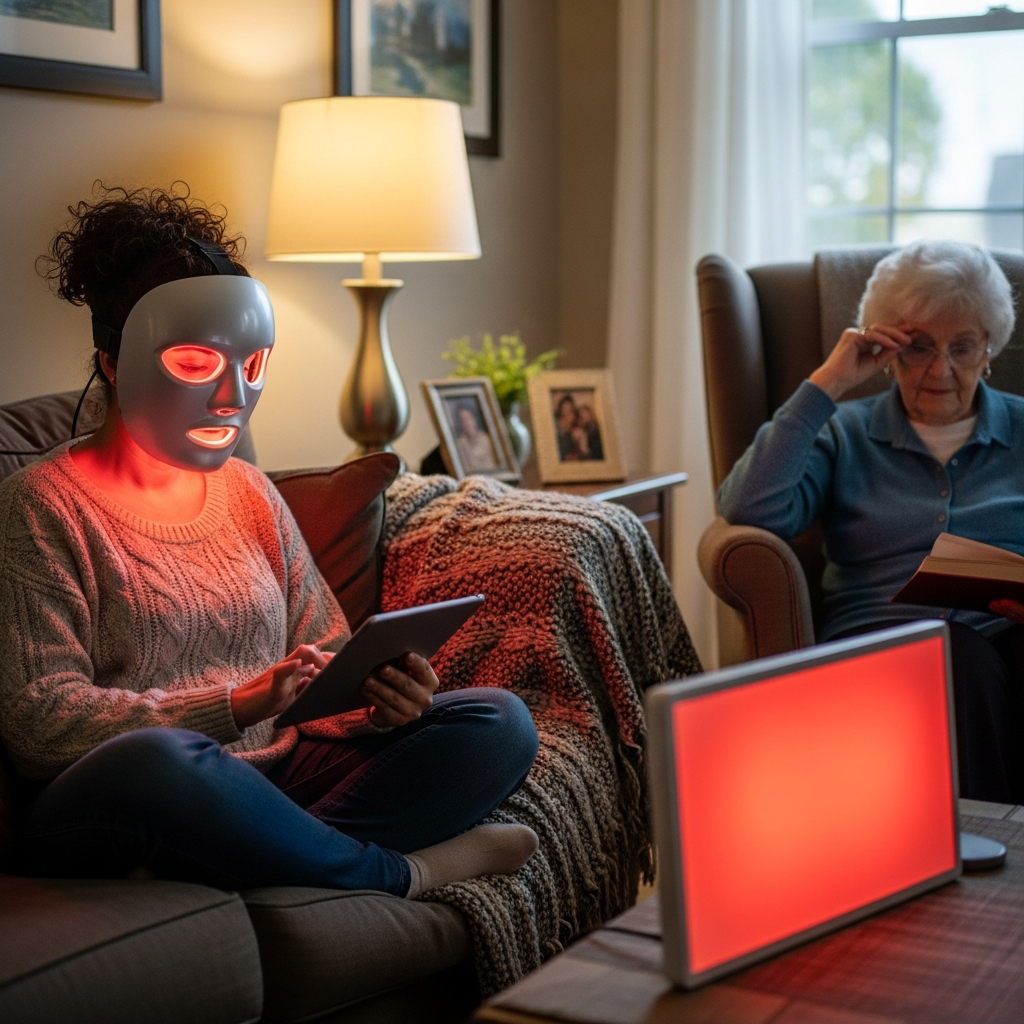
Find a space where you can sit comfortably about 6-12 inches from your device – close enough to get good light penetration, far enough that you’re not getting overheated. I’ve seen people try to multitask during treatments, scrolling their phones or watching TV. Don’t. The light can interfere with your device’s sensors, and honestly? This is your time.
Remove all makeup, skincare products, even that tinted moisturizer you swear is “barely there.” These create barriers that reduce light penetration by up to 70%. Clean skin is happy skin when it comes to red light therapy.
And here’s something most people don’t realize – protect your eyes. Either close them during treatment or use the safety goggles that should come with your device. Red light isn’t dangerous like UV, but prolonged exposure can cause temporary vision changes that… well, let’s just avoid that entirely.
Making It Stick When Life Gets Messy
The biggest challenge isn’t finding the right device or learning the science – it’s actually doing it consistently when your schedule implodes (which, let’s be honest, happens to all of us).
I tell my patients to stack the habit. Pick something you already do religiously – maybe that’s your morning coffee or evening skincare routine – and attach red light therapy to it. While your coffee brews? Perfect treatment time. Right after you cleanse your face but before moisturizer? Even better.
Keep a simple log for the first month. Nothing fancy – just check marks on a calendar. There’s something oddly satisfying about seeing those marks add up, and it helps you spot patterns. Maybe you skip weekends, or maybe Wednesdays are consistently tough. Once you see the pattern, you can plan around it.
The Real Talk About Results
Here’s what nobody wants to tell you: red light therapy isn’t magic. It won’t turn back the clock 20 years or erase deep wrinkles overnight. But what it will do – consistently, reliably – is improve your skin’s overall health and appearance in ways that feel almost… effortless.
Most people notice better skin texture first, then improved tone, and finally those deeper benefits like reduced fine lines. Be patient with the process, but don’t be passive. Take photos, pay attention to how your skin feels, and adjust your routine based on what you’re seeing.
The best results come when you think of red light therapy not as a quick fix, but as a long-term investment in your skin’s health. Kind of like how regular exercise doesn’t give you abs after one workout, but it absolutely transforms your body over time.
The Reality Check: What Actually Goes Wrong
Let’s be honest – red light therapy sounds amazing in theory, but then you get that fancy device home and… well, life happens. You’re not alone if you’ve struggled with consistency, questioned whether it’s actually working, or felt overwhelmed by all the conflicting advice out there.
The biggest challenge? Consistency. It’s like going to the gym or drinking enough water – we all know we should do it, but somehow three weeks in, that red light device becomes an expensive paperweight on your nightstand. And unlike popping a vitamin, red light therapy requires you to actually stop what you’re doing for 10-20 minutes. When you’re already juggling work, family, and that never-ending to-do list, finding those precious minutes can feel impossible.
Then there’s the waiting game. We’re so used to instant gratification (hello, same-day delivery) that waiting 4-6 weeks to see real skin improvements feels like an eternity. You find yourself staring in the mirror after week two, wondering if you’re imagining that tiny improvement or if your brain is just playing tricks on you.
The “Am I Doing This Right?” Spiral
Here’s something nobody talks about: device anxiety. You’ve invested in this LED panel or handheld device, and suddenly you’re second-guessing everything. How close should you be? Is 15 minutes enough, or should it be 20? What if you missed a day – does that reset your progress?
The instruction manuals don’t help much either. They’re usually written by engineers, not real people dealing with real skin concerns. You’ll read something like “maintain optimal distance for therapeutic efficacy” when what you really need to know is: can you scroll Instagram while doing this, or do you need to sit there like a meditation monk?
And let’s talk about the setup hassle. Unlike skincare that you can slap on while brushing your teeth, red light therapy requires a bit more… coordination. Finding a comfortable position, setting timers, making sure you’re hitting the right areas – it’s not exactly grab-and-go convenient.
Making It Actually Work for Your Life
The key to consistency isn’t willpower – it’s smart habit stacking. Pick something you already do religiously (morning coffee, evening TV, checking emails) and attach your red light session to it. I know someone who does her treatment every morning while her coffee brews. Fifteen minutes later, she’s caffeinated and glowing.
For the “am I doing this right” anxiety, here’s the truth: you’re probably overthinking it. Most devices are pretty forgiving. If you’re roughly the right distance away (usually 6-12 inches) and hitting your target area, you’re doing fine. Missing a day won’t ruin everything – your skin isn’t keeping a perfect attendance record.
Want to make setup easier? Create a dedicated spot. Whether it’s a specific chair with good back support or a bathroom counter setup, having a designated “red light zone” eliminates decision fatigue. You’re not hunting for the perfect angle every single time.
The Impatience Problem (And How to Handle It)
While you’re waiting for those collagen-boosting benefits to kick in, focus on what you can control. Take progress photos – not the flattering, filtered kind, but honest, same-lighting, same-angle shots. Your memory is terrible at tracking gradual changes, but photos don’t lie.
Also, pay attention to how your skin feels, not just how it looks. Many people notice their skin feels smoother or more hydrated within the first couple weeks, even before visible changes appear. That’s still progress worth celebrating.
When to Worry (And When Not To)
Here’s what’s normal: initial breakouts (your skin is detoxing), slight redness immediately after treatment (that fades within an hour), and absolutely zero visible changes for the first 2-3 weeks.
What’s not normal: persistent irritation, worsening skin conditions, or any kind of burning sensation. If you’re dealing with active acne, rosacea, or other inflammatory conditions, check with a dermatologist before starting – not because red light is dangerous, but because timing matters with skin treatments.
The bottom line? Red light therapy works, but it works slowly and requires patience. Kind of like growing a garden – you can’t rush the process, but with consistent care, you’ll eventually see the results.
What to Expect (And When to Expect It)
Let’s be honest – we live in an instant gratification world where we want results yesterday. But red light therapy? It’s more like that slow-simmering soup that gets better over time rather than the microwave dinner approach.
Most people start noticing subtle changes around the 2-3 week mark. I’m talking really subtle – maybe your skin feels a bit softer, or that persistent dryness isn’t quite as… persistent. Don’t expect to wake up looking like you’ve had a facelift after your first session. That’s not how this works, and anyone telling you otherwise is probably trying to sell you something.
The real magic happens between weeks 4-8. This is when you might catch yourself in the mirror and think, “Huh, my skin looks… different.” Maybe it’s a little more even-toned, or those fine lines around your eyes seem less pronounced. Your friend might ask if you’re using a new moisturizer – that kind of subtle but noticeable improvement.
For more dramatic results – we’re talking significant improvement in deeper wrinkles, sun damage, or scarring – you’re looking at 3-6 months of consistent treatment. Think of it like going to the gym. You don’t expect abs after one workout, right? Same principle applies here.
Your Treatment Schedule (Because Consistency Matters)
Here’s where people often trip themselves up – they go hard for two weeks, don’t see dramatic results, and give up. Don’t be that person.
Most clinics recommend starting with 3-4 sessions per week for the first month. Each session typically runs 15-20 minutes, so we’re not talking about a huge time commitment here. It’s less time than you probably spend scrolling through Instagram each morning (no judgment – we’ve all been there).
After that initial month, you’ll likely drop down to 2-3 sessions per week for maintenance. Some people find once a week works for them long-term, while others prefer twice weekly. Your skin will basically tell you what it needs – you just have to listen.
And yes, you can absolutely do red light therapy alongside your regular skincare routine. Actually, it might make your favorite products work even better since the light therapy can improve circulation and cellular turnover. Just avoid any harsh chemical peels or retinoids immediately before or after treatment – your skin needs a little breathing room.
The Reality Check Section
Look, I need to level with you about a few things. Red light therapy isn’t going to turn back time 20 years. If you’re expecting it to completely erase deep wrinkles or significant sun damage… well, you might want to adjust those expectations a bit.
What it *can* do is give you healthier, more vibrant skin. Think of it as hitting the refresh button rather than the complete reset. Some days you’ll love what you see, other days you might wonder if it’s doing anything at all. That’s totally normal – skin improvement isn’t always linear.
Also, results vary wildly between people. Your friend might see amazing results in 4 weeks while it takes you 8. That doesn’t mean it’s not working – it just means your skin has its own timeline. Age, skin type, lifestyle factors, even genetics all play a role here.
Maximizing Your Results (The Things That Actually Matter)
Want to get the most bang for your buck? Here’s what actually moves the needle…
Stay hydrated. Seriously. Your skin is about 30% water, and red light therapy works better when your cells are properly hydrated. Aim for those 8 glasses a day – your skin will thank you.
Sleep matters more than you think. Your skin does most of its repair work while you’re sleeping, and red light therapy essentially gives that natural process a boost. Skimping on sleep is like trying to charge your phone with a broken cable.
Don’t skip the sunscreen just because you’re doing light therapy. UV damage can undo a lot of your progress, and frankly, it’s counterproductive to work on skin rejuvenation while simultaneously damaging it with sun exposure.
Moving Forward
Ready to give red light therapy a shot? Start with realistic expectations and a commitment to consistency. Take some baseline photos (trust me on this – progress is easier to see when you can compare), establish a routine you can actually stick to, and give it at least 6-8 weeks before making any major judgments.
Remember, this isn’t about chasing perfection – it’s about giving your skin the best possible foundation to look and feel healthier. Sometimes the best results are the ones that happen so gradually, you almost don’t notice them… until one day you do.
Your Skin’s New Best Friend
You know what I love most about red light therapy? It’s not another miracle cure that promises everything and delivers nothing. It’s just… science doing its thing, quietly and consistently, helping your skin remember how to be its best self.
Think about it – we’ve covered how those gentle red wavelengths can boost collagen production, calm inflammation, speed up healing, and even help with acne. That’s a pretty impressive resume for something that basically just involves standing in front of some special lights for a few minutes. No needles, no downtime, no wondering if you’ll look like a tomato for the next week.
But here’s the thing that really gets me excited about all this: red light therapy isn’t asking your skin to do anything unnatural. It’s not forcing changes or shocking your system into submission. Instead, it’s like giving your cellular machinery a gentle nudge – “Hey, remember how you used to make all that beautiful collagen? Let’s try that again.”
And honestly? That approach just feels… right. Especially when you’re already dealing with the stress of trying to lose weight, change your lifestyle, maybe feeling frustrated with how your body’s been responding to everything you’ve thrown at it. Your skin doesn’t need more stress. It needs support.
I’ve seen so many people light up (pun intended) when they start seeing those subtle improvements – smoother texture here, less redness there, maybe that stubborn acne finally calming down. It’s not dramatic overnight transformation, but it’s real. Consistent. The kind of change that makes you catch yourself in the mirror and think, “Oh, hello there.”
What’s really beautiful is how this can fit into everything else you’re doing for your health. Red light therapy plays well with others – it’s not going to interfere with your weight loss medications, your skincare routine, or that new exercise plan you’ve been trying to stick to. If anything, it might help your skin handle all those changes a little better.
The research keeps growing, too. Scientists are discovering new benefits seemingly every month, from wound healing to muscle recovery. Your skin might just be the beginning of what red light therapy can do for you.
Ready to See What’s Possible?
Look, I get it if you’re feeling a bit skeptical or overwhelmed. You’ve probably tried plenty of things that promised great results and left you disappointed. But here’s what I know: the right support makes all the difference.
Our team has helped so many people integrate red light therapy into their wellness routines, and we’d love to chat with you about whether it might be a good fit for your goals. No pressure, no sales pitch – just real conversation about what you’re hoping to achieve and how we might help you get there.
Why not give us a call? We can talk through your specific concerns, answer any questions you have, and help you figure out if this could be the missing piece in your wellness puzzle. Because honestly? You deserve to feel confident in your skin again.