Advantages of Red Light Therapy for Anti-Aging
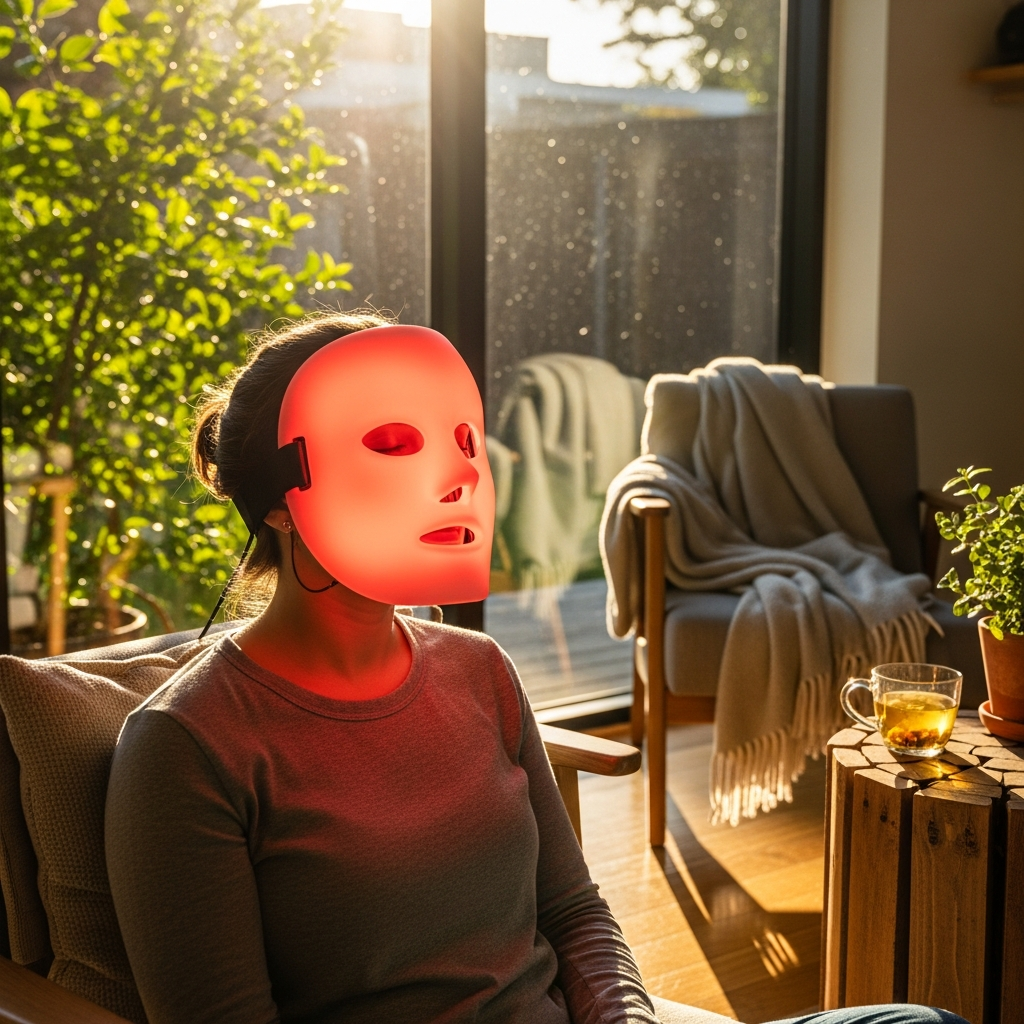
You’re standing in your bathroom at 7 AM, and there it is again – that moment when the mirror seems particularly unforgiving. Maybe it’s the new line that’s appeared seemingly overnight near your eyes, or the way your skin just looks… tired. You’ve probably found yourself wondering (like I have, if I’m being honest) when exactly your face started telling the story of every late night, every stressful deadline, every year that’s passed.
Here’s the thing – you’re not imagining it. Your skin really is changing, and while there’s nothing wrong with aging gracefully, there’s also nothing wrong with wanting to feel confident in your own skin. That’s where this whole red light therapy conversation gets interesting.
Now, before you roll your eyes and think “here we go with another miracle cure,” hang on. I get it. We’ve all been burned by skincare promises that sound too good to be true. LED face masks that look like something out of a sci-fi movie, creams that cost more than your monthly grocery budget, treatments with names you can’t pronounce… It’s exhausting, honestly.
But red light therapy? It’s different. Not because it’s perfect or because it’ll turn back the clock overnight (spoiler alert: nothing will), but because there’s actually some solid science behind it. And more importantly – at least to me – it makes sense when you understand what’s really happening to your skin as you age.
Think about it this way: your skin cells are like tiny factories that have been working 24/7 for years. Just like any hardworking machinery, they start to slow down. They don’t produce collagen as efficiently, they don’t repair damage as quickly, and they definitely don’t bounce back from that weekend where you forgot to take off your makeup before bed. Red light therapy is essentially like giving those cellular factories a tune-up… or maybe a really good cup of coffee.
The technology isn’t new, actually. NASA originally developed it for growing plants in space (I know, random, right?), but researchers noticed something interesting – it also helped heal wounds faster. From there, it was a pretty natural leap to wondering what it might do for aging skin.
What I love about red light therapy is that it works with your body’s existing systems rather than against them. Instead of stripping away layers or injecting foreign substances, specific wavelengths of red and near-infrared light penetrate your skin and basically wake up your cells’ natural repair processes. It’s like reminding your skin how to be its best self again.
You’ve probably seen those LED panels at your dermatologist’s office, or maybe you’ve noticed celebrities posting selfies with those slightly ridiculous-looking light masks. The treatment has been quietly gaining traction among people who take their skincare seriously – not just because it’s trendy, but because they’re seeing real results.
We’re talking about improvements in fine lines, skin texture, firmness, and even that elusive “glow” that everyone’s always chasing. Some people notice changes in just a few weeks, though like most good things in life, the best results come with consistency and patience.
Throughout this article, we’re going to explore exactly how red light therapy works its magic on aging skin. I’ll walk you through the science (don’t worry, I’ll keep it interesting), share what you can realistically expect, help you navigate the overwhelming number of device options out there, and give you the honest truth about potential drawbacks.
We’ll also talk about how to fit it into your existing routine without adding another complicated step to your already busy life. Because let’s be real – if it’s not practical, you’re probably not going to stick with it, right?
Most importantly, I want to help you figure out if red light therapy is worth your time and investment. Not every anti-aging approach works for everyone, and I’d rather you make an informed decision than get swept up in the latest skincare hype.
Ready to find out if this could be the missing piece in your anti-aging puzzle?
What Actually Happens When Red Light Hits Your Skin
Look, I’ll be honest – when I first heard about red light therapy, I thought it sounded like something out of a sci-fi movie. Shining colored lights on your face to look younger? Come on. But here’s the thing… your cells are basically tiny factories that run on energy, and red light therapy is like giving them premium fuel instead of regular unleaded.
When specific wavelengths of red and near-infrared light (we’re talking 660 to 850 nanometers, if you want to get technical) penetrate your skin, they’re absorbed by something called mitochondria. Think of mitochondria as the power plants inside each cell – they’re literally what keep everything running. And just like how a car engine runs better with the right octane fuel, your mitochondria work more efficiently when they get these particular light wavelengths.
The science calls this “photobiomodulation,” which honestly sounds way more complicated than it is. It’s basically your cells saying “oh hey, thanks for the energy boost” and then getting back to work with renewed enthusiasm.
The Collagen Connection (And Why It Gets Tricky)
Here’s where things get interesting – and slightly counterintuitive. Most anti-aging treatments work by creating controlled damage to trigger healing. Chemical peels burn off layers, microneedling pokes holes, lasers create tiny injuries… it’s like renovating a house by first tearing down walls.
Red light therapy? It’s more like giving your construction crew better tools and extra coffee breaks. Instead of breaking things down to build them back up, it’s encouraging your skin cells – particularly the fibroblasts that make collagen – to simply work better at their existing job.
Collagen production naturally starts declining in your twenties (I know, cruel timing), dropping about 1% per year. By the time you hit forty, you’re looking at significantly less of the stuff that keeps your skin plump, smooth, and bouncy. Traditional treatments try to shock your system into making more collagen through injury response. Red light therapy whispers sweetly to your fibroblasts, “Hey, remember how good you used to be at this? Let’s try that again.”
Breaking Down the Wavelength Mystery
This part used to confuse me completely, so don’t feel bad if it seems arbitrary. Why red light specifically? Why not blue or green or that lovely purple color from those Instagram face masks?
It comes down to what scientists call the “optical window” of skin. Shorter wavelengths (like blue light) get absorbed too quickly – they barely make it past the surface. Longer wavelengths just pass right through without doing much of anything. But red and near-infrared light? They hit that Goldilocks zone – not too shallow, not too deep, but just right for reaching the dermis where all the good stuff happens.
Near-infrared light (which you can’t actually see) penetrates even deeper than visible red light. It’s like having a regular flashlight versus one of those high-powered ones that can shine through fog – both illuminate, but one reaches further.
The ATP Energy Boost Effect
Remember those mitochondria I mentioned? They produce something called ATP – think of it as cellular currency. When your mitochondria are running efficiently, they pump out more ATP. More ATP means your cells have more energy to do… well, everything they’re supposed to do.
For your skin cells, this translates to better repair processes, more efficient collagen synthesis, improved circulation, and even enhanced removal of cellular waste products. It’s like the difference between trying to clean your house when you’re exhausted versus when you’ve had a great night’s sleep and your favorite coffee.
Why This Isn’t Just Another Beauty Fad
The thing that actually convinced me this wasn’t just expensive mood lighting was the research backing it up. We’re talking peer-reviewed studies, not just influencer testimonials. NASA originally developed this technology for healing astronauts’ wounds in space (because apparently even rocket scientists need good skincare).
But here’s what I find most compelling – red light therapy doesn’t promise overnight miracles. It’s more like… compound interest for your face. Small improvements that build on each other over time, working with your body’s natural processes rather than against them.
Getting Started Without Breaking the Bank
Look, you don’t need to drop $3,000 on some fancy LED panel right out of the gate. I’ve seen too many people do that – get all excited, buy the Rolls Royce of red light devices, use it twice, and then… well, you know how that story ends.
Start with a handheld device in the $150-300 range. The key specs you’re hunting for? 660nm and 850nm wavelengths – that’s your sweet spot for skin penetration. And here’s something most people don’t know: power density matters more than total power. Look for at least 100mW/cm² at 6 inches away. Anything less is basically an expensive nightlight.
I always tell my clients to try it on a small patch of skin first – maybe that stubborn crow’s foot area or those laugh lines that aren’t so funny anymore. Give it two weeks of consistent use before deciding if you want to upgrade to a larger panel.
The 20-Minute Rule (And Why Timing Actually Matters)
Here’s where people mess up constantly – they think more is better. Twenty minutes max per treatment area. I cannot stress this enough.
Your mitochondria are like tiny factories, and you can actually overwhelm them. Think of it like watering a plant… a little bit regularly keeps it thriving, but dump a bucket on it and you’ll drown the poor thing. Same principle applies here.
The sweet spot is 10-20 minutes, 3-4 times per week. Not daily – your cells need time to actually use all that lovely ATP you’re helping them produce. And distance? Keep that device 6-12 inches from your skin. Too close and you’re wasting energy on heat instead of penetration.
Morning vs. Evening: When Your Skin is Actually Listening
Your circadian rhythm affects everything, including how your skin responds to red light therapy. Most people don’t realize this, but there’s actually an optimal time…
Morning sessions work beautifully because you’re kickstarting your cellular energy production for the day. It’s like giving your mitochondria their morning coffee. Plus, if you’re dealing with any morning puffiness (hello, under-eye bags), the improved circulation can help with that too.
But here’s a little secret – evening sessions about an hour before bed can actually improve your sleep quality. The red light helps regulate melatonin production, and better sleep means better skin repair overnight. It’s like getting a two-for-one deal.
The Consistency Trap (And How to Actually Stick With It)
I’m going to be brutally honest here – red light therapy only works if you actually do it. Revolutionary concept, right? But seriously, I see this pattern all the time: people are religious about it for three weeks, then life happens, and suddenly that device is collecting dust next to their unused exercise bike.
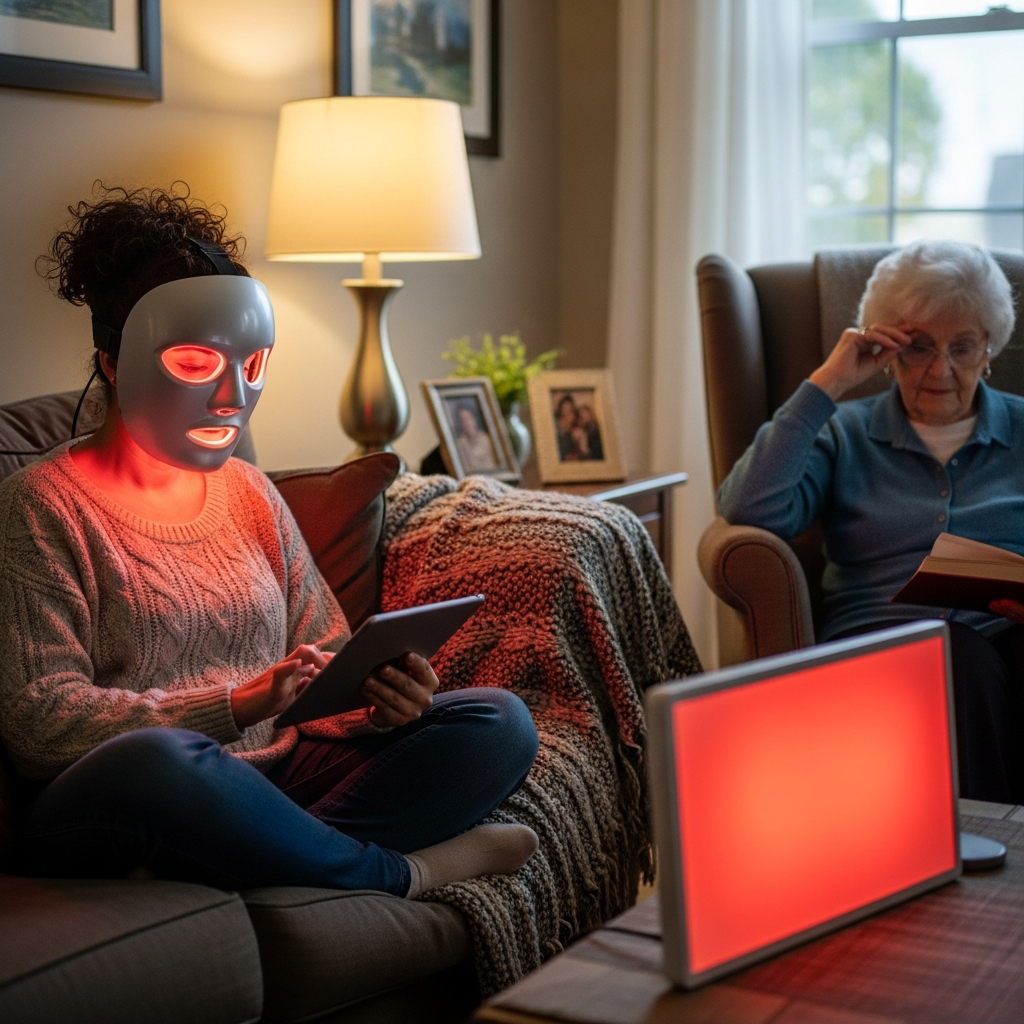
Here’s what works: stack it with something you already do religiously. Watching Netflix? Perfect red light time. Doing your evening skincare routine? Even better. I have one client who does her sessions while her coffee brews every morning – brilliant, because she’s never skipping coffee.
Set a phone reminder, but make it specific. Not “red light therapy” but “Netflix + face glow time.” Your brain responds better to positive associations than clinical reminders.
What Actually Happens (Managing Your Expectations)
Let’s talk reality check. You’re not going to wake up looking like you had a facelift after one session. In fact, you might not notice anything for the first few weeks, and that’s completely normal.
Week 2-3: You might notice your skin feeling a bit more… awake? Hard to describe, but there’s often this subtle plumping effect. Week 4-6: Friends start asking if you’re using a new moisturizer or got more sleep Week 8-12: That’s when the real magic happens – fine lines softening, skin texture improving, maybe even some age spot fading
The key is taking progress photos in the same lighting, same angle, same time of day. Trust me on this one – your brain adapts to gradual changes, but photos don’t lie. I recommend weekly selfies in natural morning light by a window.
And remember, red light therapy isn’t just about vanity metrics. Better cellular function means better overall skin health – improved healing, reduced inflammation, stronger barrier function. Sometimes the best benefits are the ones you can’t see in the mirror.
“But I Don’t Have Time for Another Thing…”
Let’s be real here – you’re probably already juggling seventeen different skincare products, trying to drink more water, and promising yourself you’ll finally start that exercise routine. The last thing you want is someone telling you to add *another* step to your routine.
Here’s the thing about red light therapy though… it’s actually kind of the lazy person’s anti-aging treatment (and I mean that in the best way possible). You literally just sit there. No rubbing, no waiting for things to dry, no complicated application techniques.
The trick? Stack it with something you’re already doing. Watch Netflix, check emails, have your morning coffee. I know people who do their red light sessions while brushing their teeth – talk about efficiency. One client told me she does hers during her kids’ homework time. “They think I’m in some fancy spa, but really I’m just multitasking,” she laughed.
The Patience Problem (Because Nothing Happens Overnight)
This might be the hardest part, honestly. We live in a world of instant everything, and red light therapy… well, it doesn’t work that way. You’re not going to wake up after one session looking like you’ve had a facelift.
Most people start seeing subtle changes around the 4-6 week mark. That’s weeks, not days. And the improvements are gradual – your skin might feel a bit firmer, fine lines might look softer, but it’s not the dramatic transformation you see in those before-and-after ads (you know, the ones that are probably heavily edited anyway).
The solution? Take photos. I’m serious about this one. Your brain adapts to gradual changes – it’s why you don’t notice your hair growing until someone points it out. Set up consistent lighting, same angle, same time of day. Take a photo before you start, then every two weeks. You’ll be surprised what you notice when you compare them side by side.
Also – and this is important – celebrate the small wins. Maybe your skin feels smoother to the touch, or your makeup goes on more evenly. These aren’t placebo effects; they’re real improvements that matter in your day-to-day life.
The “Am I Doing This Right?” Anxiety
There’s something uniquely frustrating about staring at a panel of red lights and wondering if anything’s actually happening. Unlike a face mask where you can feel it tingling, red light therapy is… quiet. No dramatic sensations, no immediate feedback.
Distance matters – but not as much as the manufacturers want you to think. The sweet spot is usually 6-12 inches from your skin. Closer isn’t necessarily better; you just risk overheating. I’ve seen people practically press their faces against the device, thinking more contact equals better results. Not true.
Duration is where people really overthink things. Start with 10-15 minutes. Your skin needs time to adapt, just like when you start a new workout routine. Some people jump straight into 30-minute sessions and wonder why their skin looks irritated.
One practical tip that actually works: set a gentle timer on your phone and use that time for something enjoyable. Meditation, podcasts, planning your weekend – whatever makes those 15 minutes feel less like “treatment time” and more like “me time.”
The Investment Hesitation
Good red light devices aren’t cheap – we’re talking several hundred dollars for quality equipment. And unlike that impulse buy moisturizer, this feels like a commitment.
Here’s how I suggest people think about it: break down the cost per treatment. If you spend $400 on a device and use it five times a week for two years… that’s about 50 cents per session. Compare that to professional LED treatments (often $75-150 per session) or even high-end serums that need constant replenishing.
But – and this is crucial – don’t buy the cheapest option thinking you’ll “upgrade later if it works.” Weak devices lead to weak results, which leads to disappointment and abandoned routines. It’s better to wait and save for something that’ll actually deliver.
Making It Stick When Motivation Fades
The novelty wears off. That shiny new device becomes just another thing on your bathroom counter. This happens to everyone – don’t take it personally.
The secret is removing friction, not adding motivation. Keep your device plugged in and easily accessible. If you have to dig it out of a drawer and find an outlet every time… well, you know how that story ends.
Create visual reminders that don’t feel nagging. Some people put a small sticky note on their bathroom mirror – not a guilt-inducing command, just a gentle “hey, remember me?”
What You Can Actually Expect (And When)
Let’s be honest – you’re probably wondering if this whole red light thing is going to work for you, and more importantly, *when* you’ll actually see something happening. I get it. We live in a world of Instagram filters and miracle cream promises, so it’s refreshing when someone gives you the real timeline.
Here’s the truth: red light therapy isn’t a magic wand you wave over your face for instant results. It’s more like… well, think of it like strength training for your cells. You wouldn’t expect to see muscle definition after one workout, right? Same principle applies here.
Most people start noticing subtle changes around the 4-6 week mark. And I mean subtle – maybe your skin feels a bit firmer when you’re doing your nighttime routine, or that fine line near your eye doesn’t look quite as pronounced in your morning mirror check. These aren’t dramatic before-and-after photo moments yet, but they’re real improvements that build momentum.
The more significant changes – the ones that make your friends ask if you’ve been getting enough sleep or started a new skincare routine – those typically show up between 8-12 weeks of consistent use. Your skin might have better texture, more even tone, maybe some of those deeper lines have softened a bit. It’s the kind of improvement that creeps up on you until one day you realize… hey, I actually look pretty good.
The Reality Check Nobody Talks About
Now, let’s talk about what won’t happen. Red light therapy isn’t going to erase 20 years of sun damage in a month. It won’t turn back the clock to your college yearbook photo (sorry). And if you’re expecting dramatic, surgical-level results… well, you might want to adjust those expectations.
What it *will* do is work with your body’s natural healing processes to gradually improve skin quality from the inside out. Think of it as supporting your skin’s natural renovation project rather than performing a complete demo and rebuild.
Some sessions will feel more effective than others – that’s completely normal. Maybe you had a stressful week, didn’t sleep well, or your hormones are doing their monthly dance. Your skin responds to all of that. Don’t let a few “meh” sessions discourage you from the bigger picture.
Making It Work in Real Life
Consistency is everything here – and I know, I know, that’s easier said than done when you’re juggling work, family, and trying to remember if you actually brushed your teeth this morning. But here’s the thing: even 10-15 minutes three times a week is infinitely better than an hour-long session once every two weeks.
Find a routine that actually fits your life. Maybe it’s while you’re having your morning coffee and checking emails. Or during that weird 20-minute window between dinner and bedtime routines. Some people love making it their “me time” – dim the lights, put on a podcast, and just… breathe for a few minutes.
Your Next Steps (The Practical Stuff)
If you’re ready to give this a try, start simple. You don’t need to invest in the most expensive device on the market right away. Many clinics offer trial sessions or package deals that let you test the waters without diving into the deep end financially.
Keep a simple log – nothing fancy, just notes on your phone about what you notice. “Week 3: skin feels smoother after cleansing” or “Week 7: that spot near my cheekbone looks less noticeable.” These little observations will help you track real progress when your brain tries to convince you nothing’s happening.
Most importantly? Give it a fair shot. Three weeks isn’t enough time to judge whether red light therapy is working for you. Your skin cells need time to respond, regenerate, and show you what they’ve been up to behind the scenes.
Remember, this isn’t about chasing perfection or trying to look 25 forever. It’s about supporting your skin’s health in a way that helps you feel confident and comfortable in your own face – lines, character marks, and all. Sometimes the best anti-aging strategy is simply helping your skin be the healthiest version of itself.
Your Skin’s Best Friend Might Be Hiding in Plain Light
You know what’s amazing? We’ve been chasing expensive creams, invasive procedures, and miracle serums this whole time… when something as simple as red light has been quietly working its magic all along. It’s like finding out the answer to your biggest problem was sitting right there on your kitchen counter.
Think about it – your skin cells are basically tiny little engines that just need the right fuel to keep running smoothly. Red light therapy? That’s premium fuel. It doesn’t promise overnight miracles or try to sell you on some too-good-to-be-true fantasy. Instead, it works with your body’s natural healing processes, giving your cells that gentle nudge they need to produce more collagen, repair damage, and basically remember how to be their younger selves again.
The beauty of this approach – and I mean this genuinely – is that it meets you where you are. Whether you’re dealing with fine lines that snuck up on you, sun damage from those carefree beach days, or just want to give your skin some extra love… red light therapy adapts to your needs. It’s not one-size-fits-all medicine; it’s personalized healing at the cellular level.
What really gets me excited (okay, maybe I’m a bit of a science nerd) is how this isn’t just about looking better – though that’s certainly a nice bonus. When your skin is healthier, when those collagen fibers are stronger, when inflammation calms down… you’re investing in your skin’s long-term health. You’re not just masking problems; you’re actually solving them from the inside out.
And here’s something I want you to remember – because it’s important – taking care of your skin isn’t vanity. It’s self-care. It’s recognizing that you deserve to feel confident and comfortable in your own skin. The fact that you’re reading about ways to support your skin’s health? That tells me you’re someone who values yourself enough to explore your options thoughtfully.
Ready to See What Red Light Can Do for You?
Look, I get it. There are so many anti-aging options out there, it can feel overwhelming. Maybe you’ve tried things before that didn’t work, or you’re wondering if this is really worth your time and investment. Those feelings? Completely normal.
What I love about our approach at the clinic is that we don’t believe in cookie-cutter solutions. Every person’s skin tells a different story, and we want to understand yours. When you’re ready to explore whether red light therapy might be a good fit for your goals, we’re here to have that conversation – no pressure, no sales pitch, just honest guidance from people who genuinely care about helping you feel your best.
Why not give us a call or send a message? We can chat about what you’re hoping to achieve, answer any questions that are bouncing around in your head, and help you figure out if this could be the missing piece in your wellness routine. Your future self – the one with that healthy, radiant glow – might just thank you for taking this step.