How Red Light Therapy Supports Collagen Production
You’re standing in front of your bathroom mirror, and there it is again – that little line that wasn’t there last month. Or maybe it’s the way your skin just doesn’t… bounce back like it used to. You press your finger into your cheek, watching how long it takes to return to normal, and think, “When exactly did this happen?”
Here’s the thing about collagen – it’s like that reliable friend who’s always been there for you, until one day you realize they’ve quietly slipped away. We’re all born with this incredible protein that keeps our skin plump, bouncy, and youthful. But somewhere around our mid-twenties (cruel, right?), our bodies start producing less of it. About 1% less each year, actually. Which doesn’t sound like much until you do the math and realize that by 40, you’ve lost nearly 15% of your collagen production.
It’s not just about vanity, though that’s certainly part of it. Collagen is literally the scaffolding that holds everything together – your skin, joints, even your gut health depends on it. When those levels start dropping, you might notice your skin losing that dewy glow you took for granted, or maybe your joints feel a bit creakier after your weekend workout.
So naturally, we’ve all been searching for that magic bullet. The skincare routine that’ll turn back the clock. The supplement that promises to rebuild what time has taken away. And while some of these solutions help (to varying degrees), there’s something fascinating happening in the world of wellness that’s got researchers pretty excited.
Red light therapy.
I know, I know – it sounds like something out of a sci-fi movie, doesn’t it? When I first heard about people literally bathing in red light to improve their skin, I was… skeptical. It felt a bit like those old-school tanning beds, minus the UV damage. But then I started digging into the research, and honestly? The science is pretty compelling.
This isn’t some wellness fad that’ll disappear next year. Red light therapy – or photobiomodulation, if you want to get technical – has been studied for decades. NASA actually pioneered a lot of this research back in the ’90s when they were trying to figure out how to help astronauts heal faster in space. (Talk about an unexpected origin story!)
What they discovered was that specific wavelengths of red and near-infrared light could actually stimulate cellular activity at the mitochondrial level. Your mitochondria – those little powerhouses in your cells – start producing more ATP (basically cellular energy). And when your cells have more energy? They can do their jobs better. Including making collagen.
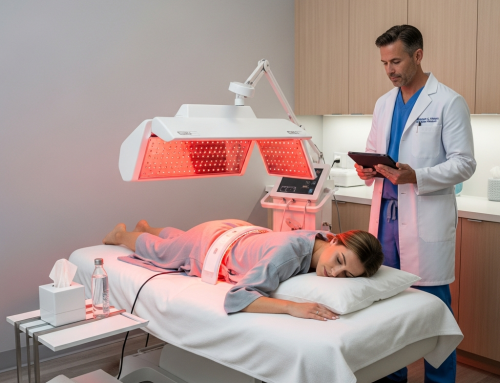
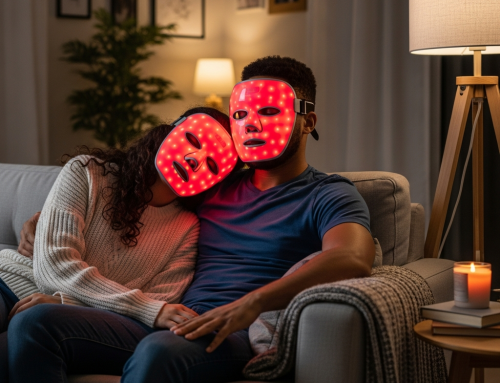
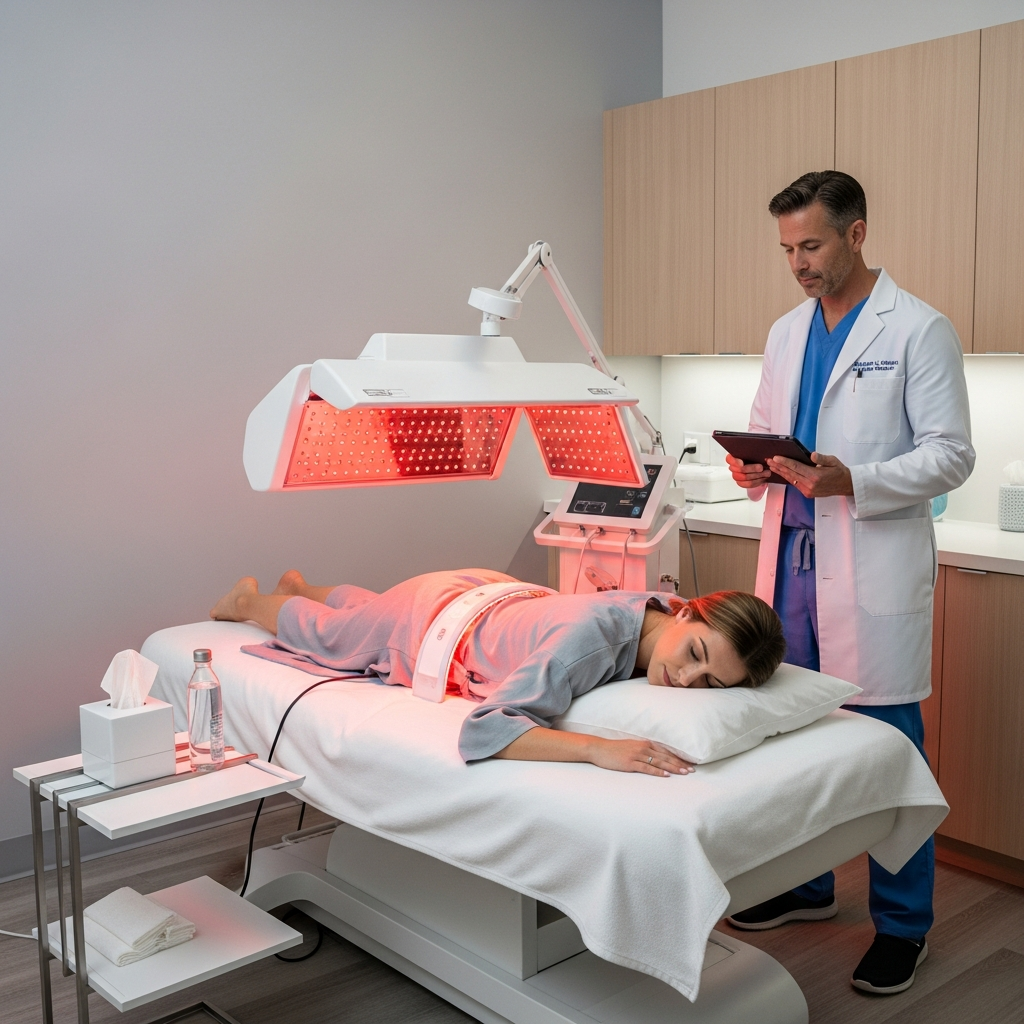
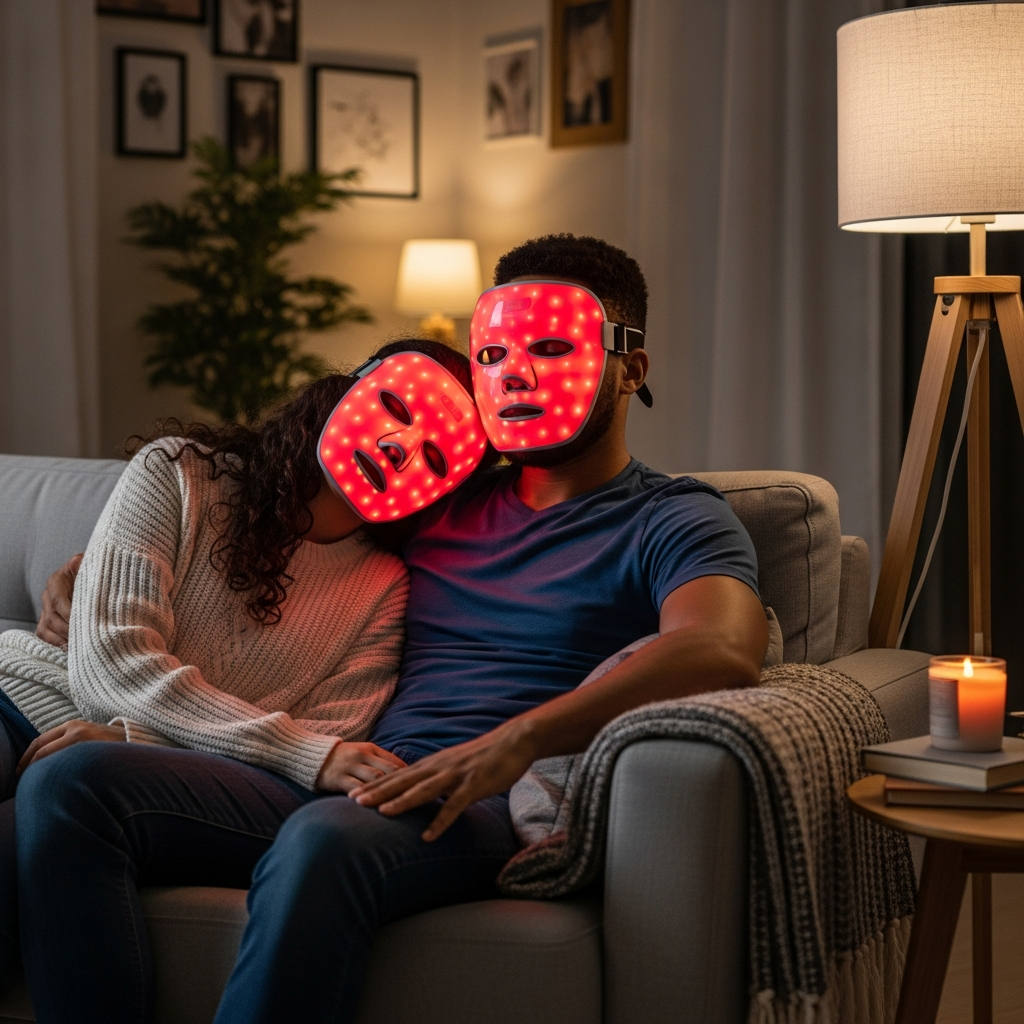
Now, before you start imagining some complicated, expensive treatment that requires multiple dermatologist visits, let me ease your mind. While professional treatments exist, red light therapy devices have become surprisingly accessible. We’re talking about panels you can use at home while catching up on Netflix, or even handheld devices you can use during your morning routine.
But here’s what I really want you to understand – this isn’t about chasing some impossible standard of eternal youth. It’s about supporting your body’s natural processes. About giving your skin the tools it needs to do what it’s already trying to do. Because here’s the beautiful truth: your body wants to heal, wants to regenerate, wants to maintain itself. Sometimes it just needs a little help.
Throughout this conversation, we’re going to explore exactly how red light therapy works its magic on collagen production. You’ll discover the specific wavelengths that matter most (spoiler: it’s not just about any red light), understand what’s actually happening in your cells when you use these devices, and get practical advice about incorporating this into your routine without turning it into another overwhelming wellness task.
We’ll also talk about realistic expectations – because while the results can be impressive, this isn’t an overnight transformation. Think of it more like… well, like building strength at the gym. Consistent, gentle progress that compounds over time.
Ready to understand how something as simple as red light might just be the missing piece in your skin health puzzle?
What Even Is Collagen Anyway?
Think of collagen as your body’s internal scaffolding – it’s literally holding you together. You know how construction workers put up those metal frameworks before building a skyscraper? That’s basically what collagen does for your skin, joints, and pretty much everything else.
Your body makes about 25-30% of all its protein in the form of collagen. It’s like your personal construction crew working 24/7, building and rebuilding the structure that keeps your skin bouncy, your joints moving smoothly, and your blood vessels strong.
But here’s the kicker – and this is where it gets a bit depressing if you’re over 25 – your collagen production starts declining by about 1% each year after your mid-twenties. By the time you hit 40? You’re making roughly 25% less collagen than you did in your twenties. No wonder everything starts feeling… different.
The Three Musketeers of Collagen
Now, not all collagen is created equal. There are actually 28 different types (I know, right?), but three main players do most of the heavy lifting
Type I is your skin’s best friend – it makes up about 80% of your skin’s structure. This is the stuff that keeps you looking plump and youthful. Type II hangs out in your cartilage, keeping your joints happy. Type III works alongside Type I in your skin but also supports your organs and blood vessels.
Think of them as different tools in your body’s toolbox. You wouldn’t use a hammer to fix a watch, and your body doesn’t use Type II collagen to fix your face… though honestly, sometimes I wish it worked that way.
How Your Body Actually Makes Collagen
This is where things get interesting – and slightly complicated. Your body doesn’t just whip up collagen like making instant coffee. It’s more like following a complex recipe that requires specific ingredients and perfect timing.
First, your cells (fibroblasts, if you want to get technical) start by making something called procollagen. They need vitamin C, zinc, copper, and amino acids like glycine and proline to pull this off. Without these building blocks, it’s like trying to bake a cake without flour – not happening.
Then comes the really cool part: this procollagen gets modified and assembled into actual collagen fibers outside your cells. It’s like your body is running its own little manufacturing plant, complete with quality control and assembly lines.
Where Red Light Enters the Picture
Here’s where conventional wisdom gets turned on its head. For years, we thought the only way to boost collagen was through topical creams (spoiler alert: they mostly don’t work because collagen molecules are too big to penetrate skin) or by taking supplements (the jury’s still out on those).
But red light therapy works differently – and honestly, when I first learned about this, it seemed almost too good to be true. Instead of trying to add collagen from the outside, it actually stimulates your own cells to ramp up production from the inside.
The magic happens at the cellular level, specifically in your mitochondria – those little powerhouses that keep your cells running. Red light wavelengths (typically between 660-850 nanometers, but don’t worry about memorizing that) can actually penetrate your skin and energize these cellular engines.
The Wavelength Sweet Spot
Not all light is created equal when it comes to collagen production. You can’t just shine a flashlight on your face and expect miracles – trust me, I’ve seen people try stranger things.
The specific wavelengths that seem to work best are in the red and near-infrared spectrum. Think of it like tuning into the right radio station – you need to hit the exact frequency to get clear reception. Too short (like blue light), and it doesn’t penetrate deep enough. Too long, and it passes right through without doing much.
It’s actually pretty fascinating how specific this process is… your cells are basically programmed to respond to certain light signals, almost like they’re remembering something from way back in our evolutionary history when sunlight was our primary source of energy regulation.
The whole thing reminds me of how plants photosynthesize, except instead of making glucose, we’re potentially making collagen. Nature’s pretty clever when you think about it.
Getting the Most Out of Your Red Light Sessions
Here’s what most people don’t tell you about red light therapy – timing matters more than you think. I’ve seen too many folks blast themselves with red light for 30 minutes thinking more equals better. That’s… not how this works.
Start with 10-15 minutes, three times a week. Your skin cells need time to actually use those photons you’re delivering. Think of it like watering a plant – you wouldn’t dump a gallon all at once, right? Same principle here. Your mitochondria can only process so much light energy before they basically say “thanks, we’re good” and stop responding.
Distance is another game-changer most people mess up. You want to be about 6-12 inches from the device. Too close and you’re wasting energy (and potentially overheating your skin). Too far and you’re basically getting expensive mood lighting.
The Before-and-After Ritual That Actually Works
Clean skin is non-negotiable – but here’s the twist. Don’t use any products with active ingredients for about 2 hours before your session. That means no vitamin C serums, no retinol, no AHAs or BHAs. These can actually interfere with how your skin absorbs the light wavelengths.
After your session though? That’s prime time. Your skin is basically primed and ready to absorb whatever you put on it. I always tell my clients this is when you want to apply your best collagen-supporting serums – hyaluronic acid, peptides, vitamin C (wait about 20 minutes after the session). It’s like your skin just did a workout and now it’s ready for its protein shake.
Choosing Your Weapon (I Mean, Device)
Not all red light devices are created equal, and honestly, some are basically expensive Christmas decorations. You want something that delivers wavelengths between 630-850 nanometers. If the manufacturer won’t tell you the exact wavelengths, that’s a red flag… pun intended.
LED panels are great if you want to treat larger areas – think full face or even your torso. Handheld devices work better for targeted spots. I’ve got clients who swear by their little handheld units for crow’s feet and smile lines.
Price-wise, you don’t need to spend your mortgage payment, but those $30 devices on Amazon? Skip ’em. Look for something in the $100-400 range from a company that’s been around for more than five minutes and actually provides clinical data.
Reading Your Skin’s Signals
Your skin will tell you if you’re overdoing it – you just need to know the signs. A little warmth during treatment is normal. Feeling like you stuck your face in an oven? Not normal. Back off the intensity or increase your distance.
Some people get what I call “the red light glow” immediately after treatment – a subtle flush that fades within an hour. That’s actually a good sign – it means blood flow is increasing. But if you’re looking like a lobster an hour later, you’ve definitely overdone it.
Here’s something interesting… some people see changes in their skin texture within 2-3 weeks. Others need a solid 6-8 weeks. Don’t get discouraged if you’re in the second camp – collagen production is like growing a garden, not microwaving dinner.
The Integration Game Plan
This isn’t meant to replace your entire skincare routine – it’s meant to supercharge it. Keep using sunscreen (obviously), keep your good cleansing habits, and don’t abandon proven ingredients like retinol just because you’re doing red light therapy.
Actually, combining retinol with red light can be pretty powerful. Just don’t use them at the same time. I usually suggest red light in the morning (after cleansing, before products) and retinol at night. Your skin gets the best of both worlds without any interference.
One last thing – consistency beats intensity every time. Three 15-minute sessions per week for three months will give you better results than daily hour-long sessions for two weeks followed by… nothing. Your skin cells have memories, but they’re not that long. Keep showing up, even when you don’t feel like it.
Trust the process, but also trust your skin. It knows what it needs.
The Reality Check: Why Your Red Light Sessions Might Not Be Working
Here’s what nobody tells you about red light therapy – it’s not like flipping a light switch. You’re not going to wake up one morning looking like you’ve had a Hollywood facial. The first few weeks? You might feel like you’re just standing there getting a weird tan from a Christmas light display.
I’ve had clients come to me frustrated after two weeks, asking why their crow’s feet haven’t disappeared. The truth is, collagen production is more like tending a garden than ordering takeout. It takes time, consistency, and… well, the right conditions to actually grow.
The Distance Dilemma (And Why Your Bathroom Setup Matters)
Most people get this wrong from day one. You buy a red light panel, hang it somewhere convenient – probably too far away – and wonder why nothing’s happening. Distance matters enormously with red light therapy.
The sweet spot is typically 6-12 inches from your skin. Closer isn’t always better (you’re not trying to cook yourself), but too far and you’re basically getting expensive mood lighting. I tell my clients to use the “warm but not hot” rule – you should feel gentle warmth on your skin, not burning.
Here’s where it gets tricky though… most people don’t want to stand 8 inches from a light panel for 15 minutes every day. It’s awkward. Your arm gets tired holding a handheld device. You end up cutting sessions short or skipping them entirely.
Solution? Make it stupid easy. Set up your device where you already spend time – maybe near your morning coffee spot or while you’re checking emails. Some of my most successful clients have small panels they use during their evening Netflix time. The key is removing friction, not adding another complicated step to your routine.
The Consistency Trap
This is probably the biggest stumbling block I see. Red light therapy isn’t like taking an aspirin – you can’t just do it when you remember and expect results. Your fibroblasts (those little collagen-making factories in your skin) need regular stimulation to keep producing.
But here’s what happens in real life: Week one, you’re motivated. Week two, you’re pretty good about it. Week three? You missed a few days. By week four, the device is collecting dust on your dresser, and you’re convinced red light therapy “doesn’t work.”
The research shows benefits with 3-5 sessions per week, but honestly? I’d rather you do 10 minutes three times a week consistently than aim for daily sessions and burn out after two weeks.
The Wavelength Confusion
Not all red light is created equal, and this trips up a lot of people. You need specific wavelengths – around 660nm for surface skin benefits and 850nm for deeper penetration. But walk into any store or browse online, and you’ll find devices claiming to do everything with whatever LED chips were cheapest that week.
I’ve seen people using regular red LED grow lights (seriously) or cheap Amazon knockoffs that put out more blue light than red. Then they wonder why their skin looks the same after months of use.
The solution isn’t necessarily buying the most expensive device, but doing a little homework. Look for devices that specify their wavelengths and have some kind of third-party testing. Yeah, it’s boring research, but it’s better than wasting months on a glorified night light.
Managing Expectations (The Unsexy Truth)
Let’s be honest about timelines. You might see some initial improvements in skin texture after 4-6 weeks, but real collagen changes? We’re talking 3-4 months of consistent use. That’s a long time in our instant-gratification world.
I tell clients to think of it like going to the gym. You wouldn’t expect visible muscle changes after a week of workouts, right? Same principle here. Your skin is rebuilding itself from the inside out, and that takes time.
Some people see faster results, others take longer. Age matters, overall health matters, what other skincare you’re using matters. There’s no magic timeline that works for everyone.
The best approach? Take progress photos (same lighting, same angle) and focus on how your skin feels rather than obsessing over what you see in the mirror every day. Small changes add up, but they’re hard to notice when you’re looking for them constantly.
Setting Realistic Expectations for Your Skin’s Timeline
Here’s the thing about collagen production – it’s not like flipping a light switch. Your skin didn’t lose its bounce overnight, and it won’t regain it that quickly either. I know, I know… we all want instant results (blame it on our Amazon Prime conditioning), but your skin cells operate on their own schedule.
Most people start noticing subtle changes around the 4-6 week mark. And I mean *subtle* – maybe your skin feels a bit firmer when you’re doing your nighttime routine, or that fine line near your eye seems less pronounced in certain lighting. Don’t expect to wake up after two weeks looking like you’ve had a professional treatment.
The real magic typically happens between months 2-4. That’s when clients usually start getting those “you look rested” comments from friends… you know, the ones where people can’t quite put their finger on what’s different, but something definitely is. Your skin might feel plumper, more hydrated, and those deeper lines may start to soften.
But here’s what I want you to remember – everyone’s skin is different. If you’re dealing with years of sun damage, if you’re a smoker, or if you’ve got certain health conditions that affect healing, your timeline might be longer. That doesn’t mean it’s not working; it just means your skin needs more time to rebuild.
What to Watch For (The Good Stuff)
The first thing most people notice isn’t visual – it’s tactile. Your skin might start feeling different before it looks dramatically different. You might notice it’s not as dry, or it bounces back a little quicker when you press on it.
Then come the visual changes, usually in this order
– Improved skin texture and smoothness – Better hydration and that “plump” look – Reduction in fine lines (especially around the eyes) – Improved skin tone and reduced redness – Gradual softening of deeper wrinkles
Some lucky folks also notice their acne scars becoming less noticeable, or old stretch marks fading a bit. The increased blood flow from red light therapy can be pretty amazing for overall skin health.
Creating Your Red Light Routine
Consistency beats intensity every single time. I’d rather see you use your device for 10 minutes every other day than go all out for 30 minutes once a week and then forget about it for two weeks straight.
Start with shorter sessions – maybe 5-10 minutes – and work your way up. Your skin needs time to adapt, just like when you start a new exercise routine. Position the light about 6-12 inches from your face (check your device instructions, though – they can vary), and make sure you’re not wearing any makeup or skincare products that might block the light.
Morning or evening? Honestly, whatever works for your schedule. Some people love starting their day with red light – it’s energizing and sets a positive tone. Others prefer it as part of their wind-down routine. Just pick a time you can stick with consistently.
The Reality Check You Need
Let me be straight with you about something – red light therapy isn’t going to erase decades of sun damage or turn back the clock by 20 years. If someone’s promising you that, run the other way.
What it *can* do is support your skin’s natural healing processes, help maintain the collagen you have, and potentially slow down some of the visible signs of aging. Think of it as a really good maintenance program for your skin, not a time machine.
You might hit plateaus where progress seems to stall. That’s normal. Your skin is constantly adapting, and sometimes the changes become more subtle as your skin reaches a new baseline.
When to Reassess and Adjust
Give it at least 8-12 weeks before you decide whether it’s working for you. I know that feels like forever when you’re eager to see results, but collagen production is a slow process. Take progress photos (same lighting, same angle) – you’ll be amazed at changes you might not notice day-to-day.
If you’re not seeing any changes after 3-4 months of consistent use, it might be time to look at other factors. Are you getting enough sleep? How’s your nutrition? Are you staying hydrated? Sometimes the best skincare device in the world can’t overcome lifestyle factors that are working against your skin.
And remember – this isn’t an all-or-nothing situation. Red light therapy works beautifully alongside other treatments, whether that’s a good skincare routine, professional treatments, or even cosmetic procedures. Your dermatologist or aesthetician can help you figure out the best combination for your specific goals.
Your Skin’s Best Friend Might Just Be Red Light
Look, I get it. You’ve probably read through all this information about wavelengths and cellular processes and you’re thinking – is this another too-good-to-be-true wellness trend? I’d be wondering the same thing.
But here’s what I love about red light therapy… it’s not asking you to completely overhaul your life or spend a fortune on complicated routines. It’s just giving your skin cells the specific light they crave – the kind they evolved with for millions of years before we started spending most of our time indoors under fluorescent bulbs.
Think of it like this: your skin is a garden, and collagen is the sturdy trellis that keeps everything looking full and structured. Over time, that trellis naturally starts to wear down. Red light therapy? It’s like giving your garden’s maintenance crew the perfect tools and energy to keep rebuilding and strengthening that support system.
The research backs it up, but honestly – what matters more is how you feel in your own skin. If you’re noticing those subtle changes that make you pause a little longer in the mirror, or if you’re just curious about supporting your body’s natural healing processes… well, that’s exactly the kind of proactive self-care I love to see.
And here’s something I always tell my clients: this isn’t about chasing some impossible standard of perfection. It’s about feeling confident and comfortable in your body, whatever stage of life you’re in. Red light therapy supports that by working with your body’s existing wisdom – not against it.
Now, you might be wondering about the practical stuff. How often? What devices actually work? How long before you see changes? (Because let’s be real, we all want to know that part.) These are all great questions, and honestly, the answers depend on your unique situation, skin type, and goals.
Some people start noticing subtle improvements in skin texture within a few weeks. Others see more dramatic changes in fine lines after a couple of months of consistent use. Your body will have its own timeline, and that’s perfectly normal.
What I really want you to remember is this – you don’t have to figure this out alone. Whether you’re dealing with specific skin concerns, looking to support your overall wellness routine, or just curious about what red light therapy could do for you… we’re here to help you sort through all the options and find what actually makes sense for your life.
Every person who walks through our doors (or calls, or emails) brings a unique story and unique needs. That’s what makes this work so rewarding – there’s no one-size-fits-all approach, just personalized support to help you feel your best.
So if any of this resonates with you, or if you’re sitting there with more questions than answers… reach out. Let’s have a real conversation about what you’re hoping to achieve and how we might be able to help. No pressure, no pushy sales tactics – just honest guidance from people who genuinely care about helping you feel confident in your own skin.