How Often Should You Use Red Light Therapy?
Picture this: You’re standing in your bathroom at 6 AM, looking at that shiny new red light therapy panel you ordered three weeks ago. It’s been sitting there, still in its box, taunting you with promises of better sleep, clearer skin, and less joint pain. You know you *should* use it – after all, you spent good money on the thing – but there’s this nagging voice in your head asking: “How often am I supposed to do this? Daily? Weekly? Will I fry my cells if I overdo it?”
Sound familiar?
Here’s the thing about red light therapy – it’s like that friend who gives amazing advice but speaks in riddles. The science is solid (we’re talking NASA-level research here), the benefits are real, and people are genuinely seeing results. But somehow, nobody talks about the most basic question: how often should you actually use it?
I get it. You’ve probably fallen down the same rabbit hole I did when I first discovered red light therapy. One website says 10 minutes daily, another swears by 20 minutes three times a week, and that wellness influencer on Instagram? She’s doing hour-long sessions while doing yoga poses that would make a pretzel jealous.
The truth is, frequency matters – probably more than you think. Too little, and you’re basically giving yourself an expensive light show with zero benefits. Too much, and… well, let’s just say your cells aren’t fans of being overstimulated. It’s like watering a plant – there’s a sweet spot between drought and drowning.
But here’s what really frustrates me about most advice out there: it treats everyone like they’re identical. Your skin type, your goals, whether you’re dealing with chronic pain or just want that post-workout recovery boost – none of that seems to matter in the “one-size-fits-all” recommendations floating around.
And don’t even get me started on the equipment variables. That little handheld device you got on Amazon? It’s not going to work the same way as those full-body panels that cost more than your car payment. The power output, the wavelengths, the distance from your skin – they all play into how often you should be using it.
I’ve been helping people navigate medical weight loss for years now, and I’ve seen firsthand how red light therapy can be a game-changer… when it’s done right. But I’ve also watched people get discouraged because they either went overboard (hello, skin irritation) or barely scratched the surface of what’s possible.
That’s exactly why we need to talk about this properly – no corporate wellness speak, no confusing technical jargon, just straight answers about what actually works.
In the next few minutes, we’re going to figure out your personal red light therapy schedule. Not some generic protocol that ignores your specific situation, but a plan that actually makes sense for your life, your goals, and your particular setup.
We’ll walk through the different frequencies for different goals – because treating acne is not the same as speeding up muscle recovery (shocking, I know). I’ll share what the research actually says about daily versus intermittent use, and more importantly, how to tell if you’re overdoing it or not doing enough.
Plus, we’ll tackle those practical questions that keep you staring at that device: Can you use it too close to bedtime? What happens if you miss a few days? Is there such a thing as red light therapy tolerance? And my personal favorite – how do you fit consistent sessions into a life that’s already packed tighter than a rush-hour subway car?
By the time we’re done here, you’ll know exactly when to flip that switch, how long to stand there (or sit, or lie down – we’ll cover positioning too), and most importantly, how to build a sustainable routine that doesn’t feel like another item on your endless to-do list.
Because here’s what I’ve learned: the best red light therapy protocol isn’t the most scientifically perfect one – it’s the one you’ll actually stick with.
Ready to finally put that investment to work?
What Actually Happens When You Shine Red Light on Your Body
Think of red light therapy like… well, imagine your cells are tiny solar panels. But instead of converting sunlight into electricity, they’re converting specific wavelengths of light into cellular energy. It’s weird when you first hear about it – I mean, how can light actually *do* something to your body beyond giving you a tan or a sunburn?
Here’s where it gets interesting (and honestly, a bit mind-bending). Your cells contain these microscopic powerhouses called mitochondria – you probably remember them from high school biology as “the powerhouse of the cell.” These little engines are constantly working to produce ATP, which is basically cellular fuel. Red light therapy uses specific wavelengths – typically between 660 to 850 nanometers – that can actually penetrate your skin and give those mitochondria a gentle nudge.
It’s like plugging your phone into a charger, except the charger is… light? Yeah, I know. Still sounds a bit sci-fi to me too.
The Wavelength Sweet Spot
Not all light is created equal – and your skin definitely knows the difference. You’ve got red light (around 660nm) that’s great for surface-level stuff, and then near-infrared light (810-850nm) that can penetrate deeper into your tissues.
Think of it like different radio stations. Your skin and cells are tuned to receive certain frequencies, and when you hit that sweet spot, things start happening. Miss the mark with the wrong wavelength, and you’re basically just… well, shining a flashlight on yourself. Which, let’s be honest, doesn’t do much beyond making you look slightly dramatic.
The deeper wavelengths can actually reach your muscles, joints, and even organs. Surface red light stays more in the skin layer, which is why you’ll see different recommendations depending on what you’re trying to accomplish.
Your Body’s Response Timeline (It’s Not Instagram-Fast)
Here’s something that trips people up – and honestly, it took me a while to wrap my head around this too. Red light therapy isn’t like taking an aspirin where you feel different in 30 minutes. It’s more like… planting a garden. You’re creating conditions for good things to happen, but you won’t see results overnight.
Your cells need time to ramp up their energy production. Some people notice subtle changes – maybe better sleep or less morning stiffness – within the first week or two. But the real magic? That typically takes 4-8 weeks of consistent use. Your body is literally changing how it functions at a cellular level, and that just takes time.
Actually, that reminds me of something my grandmother used to say about her arthritis cream – “It doesn’t work until it works, and then it really works.” Same principle here, except instead of menthol, we’re talking about photons.
The Power Game: Intensity Matters
This is where things get a bit technical, but stick with me. Light intensity is measured in something called irradiance – basically how much light energy hits each square inch of your skin. Too little, and you’re wasting your time. Too much, and you might actually inhibit the very processes you’re trying to encourage.
It’s like watering plants. A gentle sprinkle helps them grow, but blast them with a fire hose and you’ll drown the roots. Most effective devices deliver between 20-200 milliwatts per square centimeter, but honestly? The math gets confusing fast. What matters more is understanding that bigger isn’t always better, and distance from the light source really affects how much energy your skin actually receives.
Why Consistency Beats Intensity Every Time
Here’s what I’ve learned from watching hundreds of people use red light therapy – the folks who see the best results aren’t necessarily using the most powerful devices or doing marathon sessions. They’re the ones who show up consistently, day after day.
Your cells respond to patterns. Give them a little boost every day, and they start to adapt and improve their energy production. Skip a bunch of days, then blast yourself for an hour? Your cells get confused, like they’re not sure if they should be ramping up or shutting down.
It’s honestly a lot like exercise in that way. Fifteen minutes of walking every day will get you further than running a marathon once a month and then sitting on the couch for weeks.
Start Small and Build Your Tolerance
Here’s something most people get wrong right out of the gate – they think more is better and blast themselves for 30 minutes on day one. Don’t do this. Your skin needs time to adapt, just like when you’re building a tan (except this is actually good for you).
Start with 5-10 minutes per session for the first week. I know, I know… it feels like nothing. But trust me on this one. Some people experience mild fatigue or headaches when they jump in too aggressively – it’s your mitochondria basically doing jumping jacks when they’re used to sitting on the couch.
After that first week, you can bump it up to 10-15 minutes, then gradually work your way to 20 minutes max per session. More than that? You’re just wasting electricity and your time.
The Sweet Spot for Different Goals
This is where it gets interesting – and where most articles just throw generic advice at you. Your frequency should actually match what you’re trying to accomplish.
For general wellness and anti-aging: 3-4 times per week works beautifully. Think of it like a gentle, consistent nudge to your cellular machinery. Monday, Wednesday, Friday, Sunday… something like that. Your cells get the stimulation, then they get recovery time to actually do the repair work.
For active recovery and muscle soreness: Daily use is fine here, especially if you’re hitting it hard at the gym. But – and this is important – keep those sessions shorter. Maybe 10-15 minutes max. You’re using it more like a recovery tool than a deep cellular renovation project.
For specific skin concerns or wound healing: This is where you might go daily for a few weeks, then dial it back. I’ve seen people get great results with 5-7 days a week for 2-3 weeks, then dropping to 3-4 times weekly for maintenance.
Timing That Actually Matters
Most people obsess over the perfect time of day, but honestly? The best time is whenever you’ll actually do it consistently. That said, there are a few timing tricks worth knowing…
Morning sessions can be energizing – some people find it helps with their circadian rhythm. But if you’re already a morning person buzzing with energy, evening might work better for you. The red light can be surprisingly relaxing.
What I wouldn’t recommend? Right before bed if you’re using a device with any blue light mixed in. Check your specs – some panels include blue wavelengths that could mess with your sleep.
Distance and Power – The Variables Nobody Talks About
Here’s where most guidance gets frustratingly vague. The distance between you and your device changes everything, and most people are winging it.
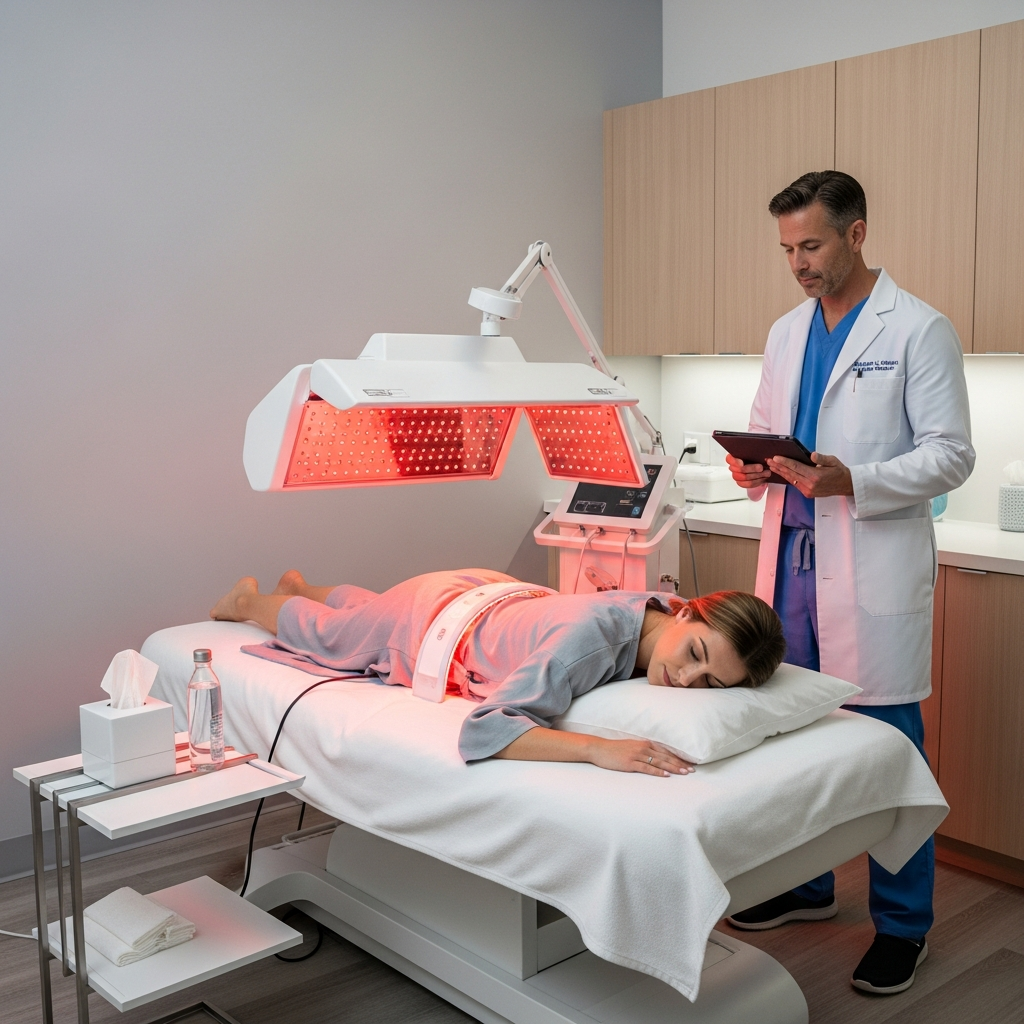
For LED panels, 6-12 inches is your sweet spot for most applications. Closer isn’t necessarily better – you might actually get less coverage and create hot spots. Too far? You’re diluting the dose to almost nothing.
If you’ve got one of those handheld devices, follow the manufacturer’s guidelines religiously. These are usually designed for specific distances, and the power output can vary wildly between brands.
Listen to Your Body (It’s Smarter Than Any Schedule)
This might sound touchy-feely, but your body will tell you what’s working. Good signs? Better sleep, faster recovery from workouts, improved skin texture, maybe even better mood. You shouldn’t feel worse.
If you’re dragging after sessions or getting headaches, you’re probably overdoing it. Scale back the frequency or duration – or both.
Some people notice benefits within a week. Others take a month or more. Don’t get discouraged if you’re not seeing Instagram-worthy before-and-after photos in week two.
The Consistency Factor
I’d rather see someone do 10 minutes three times a week for six months than someone who goes hard for three weeks then quits. This isn’t a sprint – think of it more like brushing your teeth. Regular, consistent, sustainable.
Mark it on your calendar. Set reminders. Whatever it takes to make it automatic rather than something you have to remember and motivate yourself to do.
And here’s a reality check – you’ll probably miss sessions sometimes. Life happens. Don’t let perfect be the enemy of good enough. Just pick up where you left off.
The Reality Check: What Actually Goes Wrong
Let’s be honest – even the most well-intentioned red light therapy routine can go sideways. And it usually isn’t because you’re doing anything dramatically wrong… it’s because real life has a way of throwing curveballs when you least expect them.
The biggest issue I hear about? Consistency. You start strong – maybe even religiously using your device for two weeks straight – then life happens. Your kid gets sick, work explodes, or you’re just exhausted and the thought of standing in front of a light panel for 20 minutes feels like climbing Mount Everest.
Here’s what I’ve learned works: start ridiculously small. I’m talking 5 minutes, three times a week. That’s it. You can always build up, but if you crash and burn trying to do 20-minute sessions daily right out of the gate, you’re likely to give up entirely. Think of it like building a habit muscle – you wouldn’t start lifting with the heaviest weights, right?
The Impatience Trap
Another thing that trips people up? Expecting to see dramatic changes within days. I get it – we live in an instant-gratification world, and when you’re investing in red light therapy (both time and money), you want results yesterday.
But here’s the truth… most people start noticing subtle changes around the 2-4 week mark. Maybe you sleep a little better, or that persistent shoulder tension eases up slightly. The big, obvious changes – like significant improvements in skin texture or noticeable pain reduction – often take 6-8 weeks of consistent use.
The solution isn’t to use the device more intensely or for longer sessions (that can actually backfire). Instead, keep a simple log. Just jot down how you feel before and after each session. You’ll be surprised how those small improvements add up – and having that record helps you see progress you might otherwise miss.
Timing Troubles and Schedule Chaos
Finding the “perfect” time for red light therapy can feel impossible. Morning people swear by dawn sessions, night owls prefer evening treatments, and shift workers… well, they’re just trying to figure out what day it is half the time.
Here’s something that might surprise you: the “optimal” time is whatever time you’ll actually stick to consistently. Yes, there’s some research suggesting certain times might be slightly better for specific goals, but the difference is marginal compared to the massive benefit of just doing it regularly.
I’ve seen people succeed with 6 AM sessions (they set up the panel next to their coffee maker), lunch break treatments (10 minutes while eating), and bedtime routines. The key is linking it to something you already do religiously. Already check your phone for 10 minutes every morning? Do red light therapy instead.
Equipment Overwhelm and Second-Guessing
Walk into the red light therapy world and you’ll quickly find yourself drowning in specifications, wavelengths, power densities… it’s enough to make your head spin. And once you finally choose a device, you’ll inevitably start second-guessing whether you picked the “right” one.
The dirty little secret? Most quality devices from reputable manufacturers will work fine for general wellness goals. You don’t need to obsess over every technical detail. Focus on getting a device that fits your budget and space, then actually use it consistently rather than spending months researching the “perfect” option that may or may not exist.
That said, if you’re dealing with specific medical conditions, definitely consult with a healthcare provider who understands red light therapy. They can guide you toward more targeted wavelengths and protocols.
When Progress Stalls (And It Will)
Here’s something nobody talks about enough – sometimes your progress will plateau. You’ll be cruising along, feeling great, seeing improvements… then suddenly it feels like nothing’s happening.
This is completely normal, actually. Your body adapts to stimuli over time. The solution isn’t necessarily to increase intensity or duration – sometimes it’s about changing up your routine slightly. Maybe shift from daily sessions to every other day, or try targeting different areas.
Sometimes a plateau just means you need to be patient and trust the process. Your body might be making internal improvements that aren’t immediately visible or noticeable.
The bottom line? Red light therapy isn’t magic, and it’s not always easy to stick with. But if you can navigate these common pitfalls with realistic expectations and flexible approaches, you’re much more likely to see the benefits everyone’s talking about.
What to Expect (And When to Expect It)
Here’s the thing about red light therapy – it’s not like taking an aspirin where you feel relief in thirty minutes. It’s more like… well, think of it like starting a garden. You plant the seeds, water them consistently, and then you wait. And wait some more.
Most people start noticing subtle changes around the 2-4 week mark. I’m talking really subtle – maybe your skin looks a bit more even, or that shoulder pain isn’t quite as sharp in the mornings. Don’t expect dramatic transformations in week one. Your cells are busy doing their thing behind the scenes, but they’re not exactly posting progress updates on social media.
The real magic typically happens between weeks 4-8 of consistent use. That’s when patients often tell me, “You know what? I think this stuff actually works.” Muscle recovery feels faster, sleep patterns start improving, or those fine lines around the eyes seem less… pronounced.
But here’s what I need you to understand – and this is important – red light therapy works cumulatively. It’s building on itself with each session. Miss a bunch of sessions, and you’re basically hitting the reset button on your progress. Frustrating? Absolutely. But that’s how cellular repair works.
Reading Your Body’s Signals
Your body will tell you if the therapy is working, but you need to know what to listen for. Some people get so focused on dramatic visual changes that they miss the more subtle improvements happening underneath.
Energy levels are often the first thing to shift. You might find yourself less sluggish in the afternoons, or maybe you’re not reaching for that third cup of coffee. Sleep quality improves for many people too – not necessarily falling asleep faster, but staying asleep and waking up more refreshed.
For skin concerns, look for improved texture before dramatic color changes. Your skin might feel smoother, more hydrated, or just… healthier somehow. Pain and inflammation responses can be tricky to track because they fluctuate naturally, but many people notice they’re not reaching for ibuprofen as often.
Actually, that reminds me – keep a simple log for the first month or two. Nothing fancy, just a quick note about how you’re feeling. It’s amazing how much we forget week to week, and having that record helps you see patterns you might otherwise miss.
When Things Aren’t Going as Planned
Let’s talk about the elephant in the room – what if you’re doing everything right and still not seeing results? First, take a breath. This doesn’t mean red light therapy doesn’t work for you.
Check your basics first. Are you actually being consistent? Like, really consistent? It’s easy to think we’re doing something daily when we’re actually skipping sessions here and there. Distance matters too – if you’re sitting too far from your device, you might not be getting therapeutic doses of light.
Some people are slower responders. It’s just genetics and individual biology. If you’re not noticing anything after 6-8 weeks of consistent use, it might be time to adjust your protocol. Maybe you need longer sessions, or perhaps your specific concern requires a different wavelength combination.
Moving Forward With Confidence
Here’s what I want you to remember as you continue with your red light therapy routine – this isn’t about perfection. You’ll miss sessions sometimes. Life happens. The key is getting back to your routine quickly rather than throwing in the towel completely.
Consider red light therapy part of your long-term wellness strategy, not a quick fix. Most people who see the best results are those who make it a habit for months, not weeks. Think of it like exercise or eating well – the benefits compound over time.
And please, please don’t compare your results to someone else’s before-and-after photos on Instagram. Everyone’s starting point is different, everyone’s body responds differently, and honestly… lighting and camera angles can work miracles that have nothing to do with red light therapy.
Stay patient with the process. Your cells are doing exactly what they’re supposed to do – they just work on their own timeline, not yours. Keep showing up consistently, pay attention to the subtle changes, and trust that the science is working behind the scenes.
You know what? After diving into all the science, timing charts, and device specifications, here’s what I want you to remember most: your body knows what it needs.
I’ve watched so many people get caught up in the perfect protocol – should it be 10 minutes or 20? Three times a week or daily? Morning or evening? – that they forget to actually *listen* to how they’re feeling. And honestly? That’s the most important part.
Your skin might feel amazing after those consistent 15-minute sessions… or maybe you’re one of those people who thrives on shorter, more frequent treatments. Some folks see dramatic changes in their energy levels right away, while others need a solid month before they notice that their usual afternoon slump has mysteriously disappeared.
The beautiful thing about red light therapy is that it’s forgiving. Unlike some wellness trends that demand perfection (I’m looking at you, strict elimination diets), this one meets you where you are. Missed a few days? No problem. Accidentally went a little longer than usual? Your cells will thank you.
But here’s where I get a little excited… because red light therapy isn’t just another gadget collecting dust in your wellness arsenal. When you find your sweet spot – that perfect combination of frequency, duration, and timing that works for *your* life – it becomes this gentle, consistent support system. Think of it like having a reliable friend who’s always there, quietly helping your body do what it does best: heal, recover, and thrive.
I’ll be honest though – navigating all this on your own can feel overwhelming sometimes. Between work, family, and everything else on your plate, adding another “should” to your list might feel like too much. And if you’re dealing with specific health concerns, figuring out how red light therapy fits into your bigger picture… well, that’s where having someone in your corner makes all the difference.
That’s actually why we’re here. Not to sell you on the latest trend or push expensive equipment, but to help you figure out what actually works for your body, your schedule, your goals. Whether you’re curious about starting red light therapy, wondering if it might complement your current wellness routine, or just need someone to help you make sense of all the information out there – we get it.
Your health isn’t one-size-fits-all, and neither should your approach to it be. Maybe red light therapy becomes a game-changer for you, or maybe it’s just one helpful piece of a bigger puzzle. Either way is perfectly fine.
If any of this resonates with you, or if you’re sitting there thinking “okay, but what would this look like for *me* specifically?” – reach out. Seriously. We love these conversations. There’s no pressure, no sales pitch waiting for you. Just real people who genuinely want to help you feel better in your own skin.
Because at the end of the day, that’s what this is all about – helping you feel like the best version of yourself, whatever that looks like for you.